US Notes

The Series 1928 $1 Silver Certificate: Varieties, Mule Notes, and Wide vs. Narrow Margins Explained
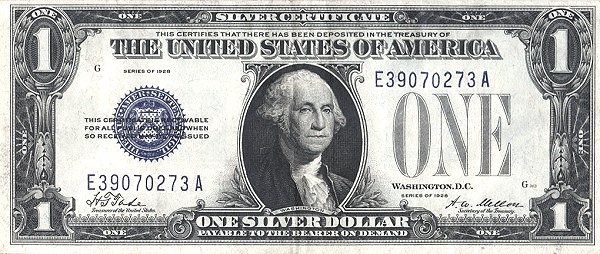
The Series 1928 $1 Silver Certificate is one of the most variety-rich issues in small-size currency history, packed with signature combinations, mule notes, and margin differences that can mean the difference between a common note and a serious key date. Whether you are just starting out or fine-tuning a specialized collection, understanding these distinctions is essential to building a meaningful set.

Read More →
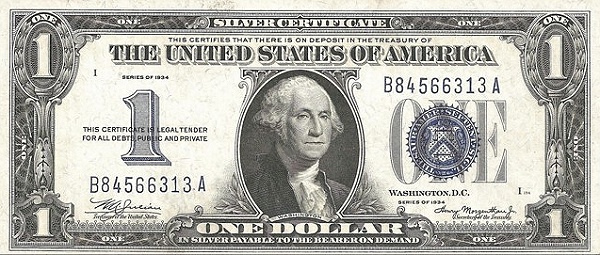
The Series 1934A $1 Silver Certificate Experimental Issues: Identifying the R and S Varieties by Serial Number Range

In 1944, the Bureau of Engraving and Printing conducted a quiet but historically significant experiment on ordinary $1 Silver Certificates, printing select notes on two different paper stocks and marking them with a red ‘R’ or ‘S’ suffix to track results. Understanding how to identify these experimental varieties by their serial number ranges opens the door to one of the most fascinating and accessible specialty areas in small-size note collecting.

Read More →

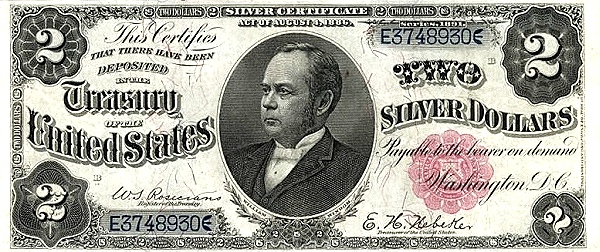
William Windom on the 1891 $2 Silver Certificate: The Treasury Secretary Who Made It Onto American Paper Money

William Windom served as Treasury Secretary under two presidents and left a lasting mark on American monetary policy, but his most visible legacy may be his portrait on the rare 1891 $2 Silver Certificate. This deep dive explores the man, the note, and why collectors still chase this striking piece of American currency history.

Read More →

The Standard Electric Engraving Machine and How It Transformed BEP Portrait Work After 1900

Before electric engraving arrived at the Bureau of Engraving and Printing, every portrait on American currency was painstakingly cut by hand, a process measured in months. Discover how the Standard Electric Engraving Machine revolutionized the craft after 1900, reshaped the faces on your notes, and left lasting clues that collectors can still read today.

Read More →

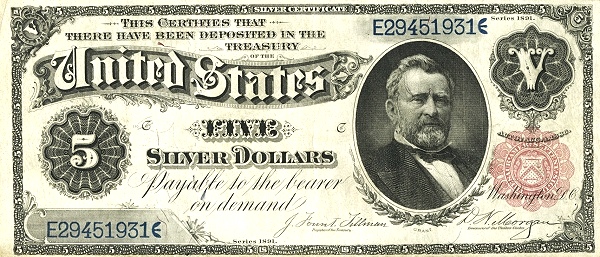
The Series 1891 $5 Silver Certificate Ulysses Grant Portrait: The Predecessor to the Tombstone and Why It Is Overlooked

Before the iconic Tombstone note captured collectors’ imaginations, the Series 1891 $5 Silver Certificate bore Ulysses S. Grant’s portrait in a design that bridged two eras of American currency artistry. Understanding this overlooked issue reveals a rich story of transitional design, scarce signature combinations, and undervalued collecting opportunities.

Read More →

The Architecture of American Currency: Buildings Depicted on US Notes Through History

From the stately columns of the Treasury Building to the iconic dome of the Capitol, America’s most recognizable structures have graced federal banknotes for over 160 years. This deep dive into the architectural imagery on US currency reveals surprising design choices, forgotten buildings, and the collector insights hidden in plain sight on every note in your wallet.

Read More →

The Series 1891 $1 Silver Certificate: Stanton, Martha Washington, and the Transition Between Portrait Subjects

The Series 1891 $1 Silver Certificate stands at a fascinating crossroads in American currency design, featuring two entirely different portrait subjects across its signature combinations. Understanding the shift from Edwin M. Stanton to Martha Washington reveals as much about political priorities as it does about numismatic treasure.

Read More →

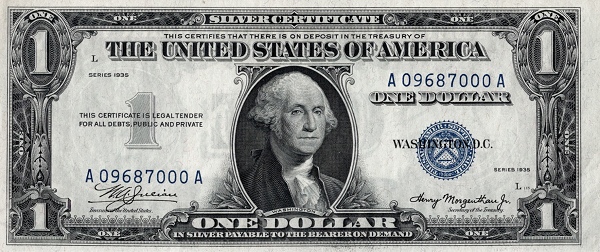
The Series 1934 $1 Silver Certificate Varieties: The Six Signature Combinations and How to Attribute Them

The Series 1934 $1 Silver Certificate is far more complex than it first appears, spanning six distinct signature combinations that reflect over a decade of Treasury Department leadership changes. Knowing how to attribute each variety can mean the difference between paying common-note prices and recognizing a genuinely scarce piece worth multiples more.

Read More →

Currency Collecting During the Depression: How Hobbyists Saved Notes Others Spent

When millions of Americans were spending every dollar they could find, a dedicated handful of collectors were quietly squirreling away Federal Reserve Notes, Silver Certificates, and National Bank Notes that would otherwise have vanished forever. This is the story of how Depression-era hobbyists, often at personal sacrifice, preserved the paper money history that modern collectors treasure today.

Read More →

The Reverse Design of the 1896 $5 Educational Silver Certificate: Grant and Sheridan as Icons of Union Victory

The reverse of the 1896 $5 Educational Silver Certificate features one of the most ambitious and artistically daring designs ever placed on American paper money, pairing the portraits of Ulysses S. Grant and Philip Sheridan within an allegory of military triumph. Understanding the iconography, the artists behind it, and the political context of this extraordinary note reveals why collectors and historians alike consider it a crown jewel of 19th-century American currency.

Read More →