US Notes

The Reverse Design of the 1896 $5 Educational Silver Certificate: Grant and Sheridan as Icons of Union Victory
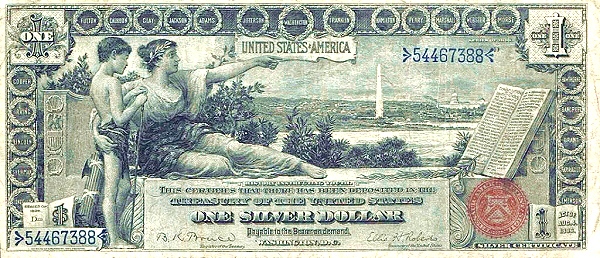
The reverse of the 1896 $5 Educational Silver Certificate features one of the most ambitious and artistically daring designs ever placed on American paper money, pairing the portraits of Ulysses S. Grant and Philip Sheridan within an allegory of military triumph. Understanding the iconography, the artists behind it, and the political context of this extraordinary note reveals why collectors and historians alike consider it a crown jewel of 19th-century American currency.

Read More →
Circulated Grades for Large-Size Notes: Why Fine-15 Can Still Be a Spectacular Note

Grading large-size US currency is a nuanced art, and a Fine-15 note is far from the consolation prize many newcomers assume it to be. This guide breaks down what circulated grades really mean for pre-1929 paper money and why condition-obsessed thinking can cause collectors to miss genuinely stunning pieces of American monetary history.

Read More →

The Currency of the Philippine Insurrection 1899–1902: How American Forces Used US Federal Notes in a Guerrilla War

When American troops shipped out to suppress Emilio Aguinaldo’s insurgency in the Philippines, they carried US federal currency into one of the most chaotic monetary environments in American colonial history. Understanding which notes circulated, how they were used, and what survives today gives collectors a rare window into a forgotten chapter of American numismatic history.

Read More →

The Allegorical Figure of Electricity on the 1896 $2 Educational Silver Certificate: Art Nouveau Meets Currency

The 1896 $2 Educational Silver Certificate is widely considered the most beautiful piece of paper money ever issued by the United States, featuring an allegorical figure of Electricity that brought genuine fine art to American currency. Understanding the design history, signature varieties, and grading nuances of this iconic note is essential knowledge for any serious collector of large-size currency.

Read More →

Silverites vs. Gold Bugs: How the 1890s Currency Debates Transformed Silver Certificate Production

The fierce monetary battles of the 1890s, culminating in William Jennings Bryan’s legendary ‘Cross of Gold’ speech, directly shaped the design, volume, and ultimate fate of Silver Certificate production in America. Understanding this political firestorm helps collectors decode the rarest and most historically charged notes of the era.

Read More →

The Series 1896 $5 Educational Silver Certificate: Why Grant and Sheridan Appear in Reverse Order and the Fascinating Printing History Behind It

The Series 1896 $5 Educational Silver Certificate is one of the most artistically celebrated notes in American currency history, yet its portrait arrangement of Ulysses S. Grant and Philip Sheridan has puzzled collectors for over a century. This deep dive uncovers the printing decisions, engraving choices, and series history that make this note a cornerstone of any advanced collection.

Read More →

Typography on United States Currency: How Lettering Styles Changed from 1861 to the Present

From the ornate Gothic scripts of Civil War-era Demand Notes to the clean sans-serif fonts of modern Federal Reserve Notes, the typography on US currency tells a fascinating story of art, technology, and national identity. This deep dive examines every major lettering transition, explains why certain typefaces were chosen, and shows collectors which typographic varieties command serious premiums.

Read More →

Free Silver, Bryan’s Cross of Gold, and the Crisis of Paper Money: How the 1896 Election Permanently Shaped U.S. Currency Policy

The 1896 presidential election was not merely a political contest between William McKinley and William Jennings Bryan, it was a referendum on the very nature of American money that shook public confidence in paper currency to its foundation. Understanding this pivotal moment unlocks the backstory behind some of the most historically significant Treasury notes, Silver Certificates, and Gold Certificates of the late nineteenth century.

Read More →

The Crime of 1873 and Its Effect on Silver Certificate Legislation: How a Congressional Act Reshaped American Paper Money

The Coinage Act of 1873 quietly demonetized silver and ignited one of the most bitter currency debates in American history, ultimately driving Congress to authorize the Silver Certificate series that collectors prize today. Understanding this political firestorm helps explain why certain series exist, why some denominations were issued only briefly, and why the notes themselves carry such rich historical weight.

Read More →