
US Notes

The Allegorical Figure of Peace on the 1899 $5 Silver Certificate: How the BEP Paired a Native Chief with Classical Allegory
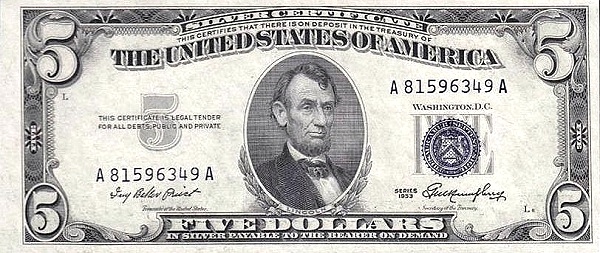
The 1899 $5 Silver Certificate stands as one of the most artistically ambitious notes ever produced by the Bureau of Engraving and Printing, combining a dignified portrait of Running Antelope with a soaring allegorical figure of Peace. Understanding the design history, signature varieties, and condition nuances of this iconic ‘Chief’ note can mean the difference between a shrewd purchase and a costly mistake.

Read More →
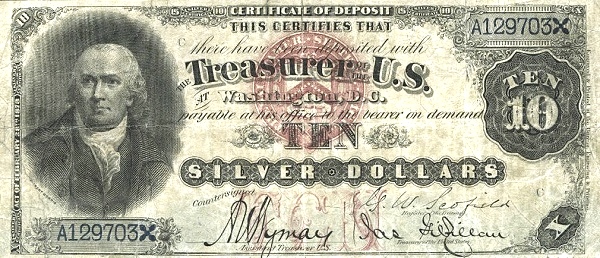
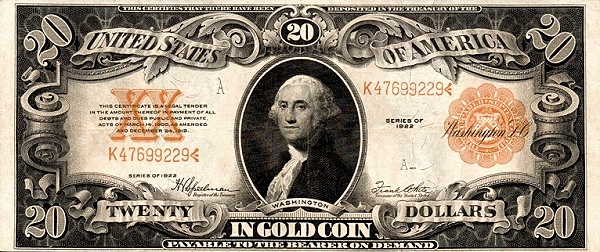
The Seal of the Treasury Department on US Currency: How Its Design Changed from 1862 to the Present

Few elements of American paper money carry more historical weight than the Treasury seal, yet most collectors overlook its evolution across 160 years of currency design. This deep dive traces every major change to the seal’s appearance, color, and placement, giving you the tools to date, attribute, and value notes more precisely.

Read More →

The Series 1878 $1 Silver Certificate: The Very First Silver Certificate Issue and What Makes It Unique

The Series 1878 $1 Silver Certificate holds a singular place in American monetary history as the very first silver certificate ever issued by the United States government. Understanding its design varieties, signature combinations, and surviving populations is essential knowledge for any collector serious about large-size currency.

Read More →

The Series 1922 $5 Gold Certificate: Porthole Notes and Why Collectors Chase High Grades

The Series 1922 $5 Gold Certificate is one of the most visually striking pieces of American paper money ever printed, featuring a circular vignette of Abraham Lincoln that collectors have nicknamed the ‘Porthole’ note. Understanding its design quirks, survival rates, and grading pitfalls is essential for anyone serious about building a meaningful Gold Certificate collection.

Read More →

Series 1902 National Bank Note Blue Seal Third Charter: Understanding the Three Date Back Varieties

The Third Charter National Bank Notes of 1902 represent one of the most nuanced collecting challenges in large-size US currency, with three distinct varieties distinguished by their back designs and date panels. This guide breaks down every variety, signature combination, and rarity tier so you can identify, evaluate, and confidently pursue these fascinating blue-seal notes.

Read More →

Steel Rails and Paper Money: How the Transcontinental Railroad Transformed National Bank Chartering in the American West

The driving of the golden spike at Promontory Summit in 1869 did not just connect two coastlines by rail, it ignited a wave of National Bank formations across the frontier West that produced some of the most coveted large-format currency in American numismatics. Understanding this economic explosion helps collectors identify scarce territorial and early-state nationals from California, Nevada, Utah, and beyond.

Read More →

The Series 1880 $1 United States Note: Large Seal vs. Small Seal Varieties and the Signature Combinations That Separate Them

The Series 1880 $1 United States Note presents collectors with one of the most fascinating variety puzzles in large-size currency, where seal size and signature combinations create a hierarchy of rarity that spans from readily available to genuinely elusive. Understanding exactly which seal type pairs with which signatures, and what those distinctions mean for grading and value, can make the difference between a savvy buy and a costly mistake at auction.

Read More →

The Agriculture and Commerce Vignette on Series 1914 Federal Reserve Notes: Allegory in the Machine Age

The Series 1914 Federal Reserve Notes introduced sweeping allegorical imagery to American paper money, most notably the iconic Agriculture and Commerce vignette that graced the reverse of several denominations. Understanding this artwork, its engravers, and the varieties it appears on unlocks a fascinating collecting specialty that rewards both visual appreciation and historical scholarship.

Read More →

The Series 1882 National Bank Note Brown Back: The Most Common Large-Size Charter Issue Explained

The Series 1882 Brown Back National Bank Notes represent the backbone of large-size National Currency collecting, issued by hundreds of banks across all denominations from 1882 to 1908. Understanding their varieties, charter numbers, signature combinations, and what separates a common example from a genuine rarity can transform how you approach this fascinating series.

Read More →

Salmon Chase’s Audacious Self-Portrait: How the Treasury Secretary Put His Own Face on the 1861 $1 Demand Note and Sparked a Congressional Firestorm

In 1861, Treasury Secretary Salmon P. Chase made the unprecedented decision to place his own likeness on the first federally issued paper currency in American history, the $1 Demand Note. The political fallout was immediate and lasting, and today these notes rank among the most historically significant and collectible pieces in all of United States numismatics.

Read More →