US Notes

The Series 1875 $5 United States Note: The Pioneering ‘Family Back’ Design and Why Attribution Is Difficult for New Collectors

The Series 1875 $5 United States Note introduced one of the most visually striking reverse designs in American currency history, yet its many signature combinations and subtle plate varieties make accurate attribution a genuine challenge. This guide breaks down every major variety, explains the Treasury seal changes, and gives collectors the tools to confidently identify what they actually hold.

Read More →
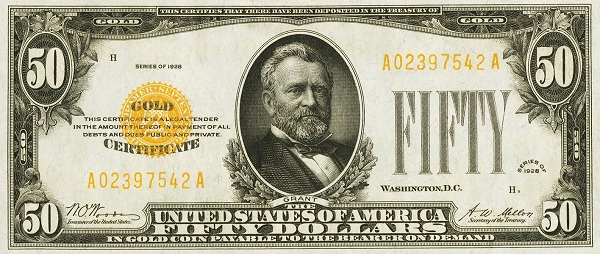
The Gold Recall of 1933: How FDR’s Executive Order 6102 Killed Gold Certificates

On April 5, 1933, Franklin Roosevelt signed Executive Order 6102 and effectively ended the era of circulating Gold Certificates in the United States overnight. For currency collectors, this moment created some of the most legally complex, historically significant, and financially valuable notes in all of American numismatics.

Read More →

The United States Notes Act of 1878: Why Congress Forced Treasury to Maintain $346,681,016 in Legal Tender Notes Permanently

In 1878, Congress passed landmark legislation locking the volume of United States Notes at exactly $346,681,016 forever, a political and monetary decision that would shape American currency for the next century. Understanding this act unlocks the collecting story behind every Legal Tender Note issued after that date, from common circulated examples to the rarest high-denomination survivors.

Read More →

The Series 1890 $50 Treasury Note: William Seward’s Portrait and One of the Most Ornate Back Designs in US Currency History

The Series 1890 $50 Treasury Note stands among the most visually spectacular pieces of American paper money ever produced, combining a dignified portrait of statesman William H. Seward with an incredibly dense, engraved back design that earned these notes a lasting nickname among collectors. Whether you are new to large-size currency or a seasoned specialist, understanding what makes this note remarkable can transform how you approach 19th-century American paper money.

Read More →

The Series 1899 $1 Silver Certificate Black Eagle Star Notes: Why Replacement Notes from This Issue Are Among the Scarcest Small-Series Stars

The Series 1899 $1 Silver Certificate is one of the most beloved large-size notes in American currency history, but its star note replacements occupy a rarefied tier that few collectors ever hold in hand. This guide unpacks the printing history, known populations, and practical guidance for anyone chasing one of the great white whales of large-size paper money.

Read More →

The Series 1890 $20 Treasury Note: The Jewel Back Design and Why Only a Few Hundred Are Known to Survive

The Series 1890 $20 Treasury Note is one of the most visually spectacular and genuinely scarce large-size notes ever issued by the United States government. In this deep-dive, collectors will learn exactly what makes the Jewel Back design so extraordinary, how many survive today, and what to realistically expect when hunting one for your collection.

Read More →

Franklin on the $100: Comparing Every Engraved BEP Portrait from Large-Size Gold Certificates to the Modern Note

Benjamin Franklin has appeared on American currency longer than any other non-president, yet his portrait has changed dramatically across more than a century of engraving. This deep-dive compares every distinct BEP-engraved Franklin portrait, from the ornate large-size issues of the 1870s through the high-security small-size notes of 2013, giving collectors the specific details they need to identify, grade, and appreciate each era.

Read More →

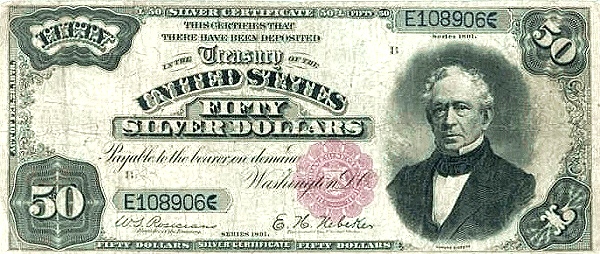
The Series 1891 $50 Silver Certificate Edward Everett Portrait: An Almost Unknown Large-Size Type

The Series 1891 $50 Silver Certificate featuring Edward Everett is one of the rarest and most overlooked large-size notes in American numismatics, with surviving examples numbering in the dozens. This deep-dive explores its history, design, signature combinations, and why collectors fortunate enough to encounter one should treat it as a once-in-a-lifetime opportunity.

Read More →

Series 1902 $10 National Bank Note Blue Seal: Plain Back vs. Date Back and How to Attribute Them by Charter Period

The Series 1902 $10 National Bank Note survives in two visually distinct varieties, the Date Back and the Plain Back, each tied to specific charter periods and printing windows that define their rarity and value. This guide walks collectors through the precise attribution points, signature combinations, and market realities that separate a common type note from a genuine treasure.

Read More →

The Currency of the Alaska Gold Rush: How Klondike Prospectors Used and Abused Federal Reserve and National Bank Notes

When gold fever swept the Klondike in 1896 and ignited the stampede to Alaska and the Yukon, paper money took an extraordinary beating in some of the most brutal conditions on earth. Understanding which notes circulated during this era, how they survived, and what collectors should look for today opens a fascinating window into one of American history’s most dramatic episodes.

Read More →