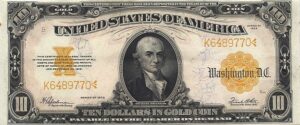
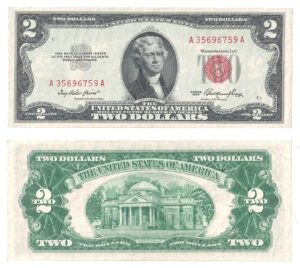
There are banknotes that are old, and then there are banknotes that stop you cold the moment you see them. The Series 1890 $20 Treasury Note is firmly in the second category. Turn one over and you are confronted with an engraved back design so densely ornate, so aggressively beautiful, that it earned a nickname still used by collectors more than 130 years later: the Jewel Back. These notes were not designed to be subtle. They were designed to be impossible to counterfeit and, as a happy side effect, impossible to forget.
What Exactly Is a Treasury Note?
Before diving into the design itself, it is worth situating this note within the broader American currency landscape. Treasury Notes, sometimes called Coin Notes, were authorized by the Sherman Silver Purchase Act of July 14, 1890. That legislation required the U.S. Treasury to purchase 4.5 million ounces of silver per month, paying for those purchases with a new class of paper obligation redeemable in either gold or silver coin at the discretion of the Secretary of the Treasury. They are not Legal Tender Notes, not Silver Certificates, and not National Bank Notes. They occupy their own short-lived category, issued only for the Series 1890 and Series 1891, before the financial panic of 1893 and the subsequent repeal of the Sherman Act effectively ended the experiment.
The $20 denomination was issued across both series, but it is the 1890 version, specifically with its elaborately engraved back, that commands the attention of serious collectors. The 1891 $20 Treasury Note used a dramatically simplified back design to reduce production costs and address counterfeiting concerns of a different kind, which makes the 1890 version a unique, one-series artifact.
The Portrait: John Marshall on the Face
The obverse of the Series 1890 $20 Treasury Note features a portrait of John Marshall, the fourth Chief Justice of the Supreme Court, whose tenure from 1801 to 1835 fundamentally shaped American constitutional law. It is one of the few times Marshall has appeared on U.S. paper currency, which itself adds a layer of historical interest for collectors. The engraving is crisp and detailed, framed by lathe-work patterns and the large ornamental numeral “20” in the upper corners. The obligation text reads: “This certifies that there have been deposited with the Treasurer of the United States Twenty Dollars in coin payable to the bearer on demand.”
Two signature combinations exist for this note, corresponding to the two Friedberg numbers. Fr. 373 carries the signatures of Register of the Treasury Genio Scott Rosecrans and Treasurer of the United States Enos Herbert Huston, with a brown Treasury seal. Fr. 374 carries the signatures of Rosecrans paired with Daniel N. Nebeker, who replaced Huston as Treasurer in April 1891, and features a red seal. Both varieties share the same iconic back design.
When examining signature combinations, use a loupe on an original note or a high-resolution scan. The Rosecrans signature appears as a flowing cursive script on both varieties, but the Huston and Nebeker signatures are distinct enough to confirm variety attribution even on circulated examples. The brown seal of Fr. 373 can sometimes appear darker and more oxidized than expected, so compare seal color under consistent neutral lighting before attributing a note.
The Jewel Back: An Engraver’s Tour de Force
Turn the note over and the conversation changes entirely. The back of the Series 1890 $20 Treasury Note is a masterwork of 19th-century security printing. The Bureau of Engraving and Printing filled virtually every square inch of the green back with an interlocking web of counter numerals, lathe work, guilloché patterns, and ornamental lettering that creates an almost three-dimensional visual effect. The large numeral “20” appears multiple times, rendered in an elaborate style where each numeral is itself filled with tiny, precisely engraved internal patterns. These internal counter designs within the numerals are the feature that earned the note its Jewel Back nickname: the numerals resemble faceted gemstones under magnification, each face of the “cut” catching the engraved light differently.
The complexity was intentional. Treasury officials and Bureau engravers in the late 1880s and early 1890s believed that the best defense against photographic counterfeiting, a growing threat as photoengraving technology improved, was a design so intricate that even a skilled craftsman could not replicate it by hand, and no photographic process could capture its full depth. Whether or not that theory was fully sound, the result was indisputably beautiful. Many numismatic writers, including those working in the early 20th century, referred to the 1890 Treasury Notes collectively as among the most attractive pieces of paper money ever produced by any government.
The design was ultimately deemed too expensive and too time-consuming to print. When the Series 1891 Treasury Notes were prepared, the Bureau simplified the back dramatically, substituting a cleaner, less labor-intensive layout. That decision transformed the 1890 version into an immediate rarity from a production standpoint, though collectors at the time had no reason to preserve circulating notes they might spend at face value.
The Jewel Back design reproduces extraordinarily well under high-resolution scanning and photography, which is useful when buying from dealers or auction platforms. Request or examine images of the back at a minimum of 600 DPI if purchasing online. Genuine examples will show crisp, clean internal counter patterns within the numerals. Blurry, soft, or filled-in internal lines on an otherwise attractive note can indicate heavy circulation wear, cleaning, or in rare cases, a sophisticated fake. Have any example over $5,000 authenticated and graded by PCGS Currency or PMG before finalizing a purchase.
Print Runs, Rarity, and Survival Rates
The Series 1890 $20 Treasury Note was not printed in enormous quantities to begin with. Total production across both signature varieties is estimated to have been in the range of 950,000 to just over 1,000,000 notes, a modest figure compared to Legal Tender or Silver Certificate issues of the same era. However, the survival rate from that original population is brutally low. Notes in this denomination circulated actively in 1890s commerce. The silver coin redemption feature meant many were presented at Treasury offices. Large quantities were eventually redeemed and destroyed as U.S. monetary policy shifted away from bimetallism following 1893.
Today, population reports from PCGS Currency and PMG, combined with auction records and dealer inventories, suggest that somewhere between 300 and 500 examples survive across both Friedberg varieties. Of those, the overwhelming majority grade Fine to Very Fine. Uncirculated examples are genuinely exceptional. Only a handful of examples have ever graded 63 or above at either major grading service, and examples at the Choice Uncirculated (64) or Gem Uncirculated (65) level can be counted on two hands. The Rosecrans/Nebeker red seal variety (Fr. 374) is considered scarcer than the brown seal Fr. 373, with fewer documented survivors, though both present meaningful challenges to the collector seeking a problem-free example.
Values and the Auction Market
The $20 Jewel Back occupies a price tier that reflects its genuine rarity rather than just its age or fame. In Fine condition (F-12 to F-15), collector values for Fr. 373 typically run from approximately $2,500 to $4,500 depending on originality, centering, and eye appeal. Very Fine examples (VF-20 to VF-35) with strong color and no issues have realized $5,000 to $9,000 at major auction houses including Heritage Auctions and Stack’s Bowers. Extremely Fine and About Uncirculated examples cross into five-figure territory, and the handful of certified Uncirculated survivors have brought $40,000 to well over $100,000 at auction, with the finest known examples potentially commanding more in a strong market.
The scarcer Fr. 374 red seal typically carries a premium of 20 to 40 percent over comparable Fr. 373 examples at the same grade, reflecting its lower survivor population and stronger collector demand relative to supply. A problem-free VF Fr. 374 is genuinely difficult to source at any price in a given year.
Do not dismiss lightly circulated examples of the Series 1890 $20 simply because they are not high grade. A problem-free Fine or Very Fine note with original paper, honest wear, and good color is far more desirable than a high-grade example that has been cleaned, pressed, or chemically treated. When evaluating any large-size rarity, originality is everything. PMG and PCGS Currency both note alterations on their holders, but even an unqualified “Very Fine 25” can hide subtle restoration. Learn to feel for artificial stiffness in the paper and watch for unnatural uniformity in fold patterns under raking light.
Condition Census and Notable Examples
The condition census for the Series 1890 $20 Treasury Note has shifted modestly over the decades as private collections have come to market. Heritage Auctions has offered several exceptional examples over the past twenty years, including a PMG-graded Extremely Fine 45 EPQ example of Fr. 373 that realized over $30,000 in a 2019 sale. A PCGS-graded Very Fine 35 Fr. 374 appeared in a 2021 Stack’s Bowers sale and brought approximately $18,000 against an estimate of $12,000, reflecting strong collector competition for the red seal variety. The finest certified Uncirculated examples of Fr. 373 known to the hobby have graded 64 PPQ at PMG and have appeared in specialized large-size type note collections sold by major firms.
It is worth noting that the broader Series 1890 Treasury Note family, including the $1, $2, $5, $10, $50, and $100 denominations, all share the Jewel Back design and all are individually scarce to rare. But the $20 holds a particular place in the hierarchy because it represents a mid-denomination note that would have circulated actively, and yet the survival numbers are comparable to the far more intrinsically valuable $50 and $100 issues. The attrition rate tells you everything about how little thought was given to preservation by ordinary Americans spending paper money in the 1890s.
| Friedberg No. | Signatures / Seal | Estimated Survivors | Rarity |
|---|---|---|---|
| Fr. 373 | Rosecrans / Huston, Brown Seal | ~250 to 350 known | Rare |
| Fr. 374 | Rosecrans / Nebeker, Red Seal | ~75 to 150 known | Key Date |
| Fr. 373 (VF or better) | Rosecrans / Huston, problem-free | ~100 to 150 examples | Rare |
| Fr. 374 (VF or better) | Rosecrans / Nebeker, problem-free | ~30 to 50 examples | Key Date |
| Fr. 373 (EF or better) | Rosecrans / Huston, all grades | ~25 to 40 examples | Key Date |
| Fr. 374 (EF or better) | Rosecrans / Nebeker, all grades | Fewer than 15 known | Key Date |
| Fr. 373 (Unc, 63+) | Rosecrans / Huston, certified UNC | Fewer than 10 known | Key Date |
| Fr. 374 (Unc, 63+) | Rosecrans / Nebeker, certified UNC | 2 to 4 examples | Key Date |
Building Context: Where the $20 Fits in Your Collection
For collectors assembling a type set of large-size U.S. currency, the Series 1890 $20 Treasury Note represents one of the most satisfying acquisitions possible precisely because it is hard. It takes patience, budget, and a willingness to wait for the right example. Many advanced collectors choose to represent the Jewel Back type with a lower-denomination note from the same series, particularly the $1 (Fr. 347 to 349) or $2 (Fr. 353 to 356) Treasury Notes, which are similarly designed and considerably more available. That is a perfectly legitimate collecting strategy. But if the $20 specifically is your goal, the combination of the Marshall portrait, the Jewel Back, the short-lived Treasury Note series, and the genuine rarity across both varieties makes it one of the true prize pieces in American large-size numismatics.
For specialists who focus exclusively on Treasury Notes, completing a full set across all denominations and signature varieties of the 1890 series is a multi-decade project that very few collectors have accomplished. The population of notes fine enough to satisfy a serious registry set collector is simply too thin. Even acquiring one solid example of the $20 puts a collector in rare company.
Conclusion: Beauty and Scarcity in Perfect Alignment
The Series 1890 $20 Treasury Note succeeds on every level that matters to a currency collector. The design is extraordinary by any measure, the historical context is rich and specific to a fascinating era of American monetary policy, the portraits and signatures carry real biographical weight, and the survival numbers ensure that every legitimate example carries genuine scarcity. It is not simply a note that is old or expensive. It is a note that rewards knowledge, patience, and discernment.
If you encounter one in a dealer’s case or in an online auction, take your time. Examine the paper quality, the color of the seal, the sharpness of the engraving, and above all the back. Hold a high-resolution image of that Jewel Back close and see if you can find a single square centimeter that the engravers left unadorned. You will not find one. That is the point, and that is why collectors still talk about this note with something close to reverence more than a century after it left the Bureau of Engraving and Printing.