US Notes

How the Federal Reserve Seal Typography Evolved from 1914 to 1969: Letter Spacing, Weight, and the Districts That Printed Longest
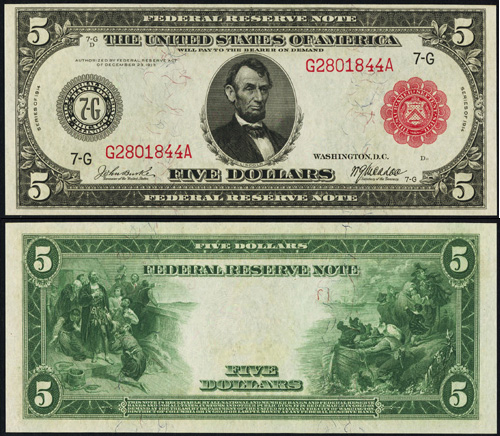
The circular seal pressed onto every Federal Reserve Note tells a surprisingly detailed story about American printing history, bureaucratic change, and regional banking politics. From the heavy Gothic lettering of 1914 to the streamlined sans-serif district identifiers of 1969, collectors who learn to read these subtle typographic shifts unlock a powerful tool for dating, authenticating, and valuing their notes.

Read More →
The Panic of 1907: The Banking Crisis That Forced America to Create the Federal Reserve Dollar

The Panic of 1907 brought the United States financial system to its knees in a matter of weeks, exposing the catastrophic vulnerability of a nation without a central bank. Understanding this crisis is essential for collectors, because every Federal Reserve Note in your album exists directly because of the chaos that unfolded on Wall Street that October.

Read More →

The Agriculture and Commerce Vignette on Series 1914 Federal Reserve Notes: Allegory in the Machine Age

The Series 1914 Federal Reserve Notes introduced sweeping allegorical imagery to American paper money, most notably the iconic Agriculture and Commerce vignette that graced the reverse of several denominations. Understanding this artwork, its engravers, and the varieties it appears on unlocks a fascinating collecting specialty that rewards both visual appreciation and historical scholarship.

Read More →

William Gibbs McAdoo and the Federal Reserve’s First Years: How Wilson’s Treasury Secretary Shaped Early FRN Design

William Gibbs McAdoo served as Treasury Secretary from 1913 to 1918, overseeing the birth of the Federal Reserve System and signing the very first Federal Reserve Notes ever issued. Understanding his role unlocks the story behind some of the most historically significant and collectible paper money in American numismatic history.

Read More →

The Series 1914 $10 Federal Reserve Note Red Seal Issues: First-Year Production and District Scarcity

The Series 1914 $10 Federal Reserve Note with red Treasury seal represents the very first year of Federal Reserve currency production, making it one of the most historically significant issues in all of American paper money. This deep dive covers print runs by district, signature combinations, grading considerations, and which notes command serious premiums in today’s collector market.

Read More →

The Teapot Dome Scandal and Federal Reserve Notes: How 1920s Corruption Shook Public Trust in Paper Currency

The Teapot Dome Scandal of the early 1920s did more than topple a cabinet secretary — it cast a long shadow over public faith in government institutions, including the Federal Reserve System and its paper currency. Understanding this political crisis helps collectors appreciate why certain Series 1923 and 1928 Federal Reserve Notes carry such historical weight beyond their catalog values.

Read More →

Series 1914 $20 Federal Reserve Note: Blue Seal, Red Seal, and District Varieties Explained

The Series 1914 $20 Federal Reserve Note stands as one of the most historically significant large-size issues in American currency, spanning two distinct seal colors and twelve Federal Reserve Districts. Whether you’re hunting a complete district set or chasing the elusive red seal varieties, this guide breaks down everything collectors need to know about print runs, signature combinations, and current market values.

Read More →

Series 1914 $50 Federal Reserve Note Blue Seal: The Panama Pacific Vignette, Red Seal First Printings, and What Collectors Need to Know

The Series 1914 $50 Federal Reserve Note represents one of the most historically rich large-size issues ever produced by the United States government, bridging the dawn of the Federal Reserve System with the grandeur of the Panama Pacific Exposition era. From the scarce red seal first printings to the more familiar blue seal issues, this guide covers varieties, signature combinations, print run data, and collecting strategies in genuine depth.

Read More →

District 2 and the Politics of Early FRN Production: How the Federal Reserve Bank of New York Dominated Currency Distribution

When the Federal Reserve System launched its first paper currency in 1914, one district emerged with a commanding advantage in both print volume and political influence. Understanding how and why the New York Fed shaped early Federal Reserve Note production is essential context for collectors pursuing Series 1914 and 1918 large-size notes today.

Read More →

The BEP Labor Strikes of the Early 20th Century: How Worker Unrest Interrupted Currency Production and Left Gaps in Print Runs

Between 1900 and 1920, a series of labor strikes at the Bureau of Engraving and Printing disrupted federal currency production in ways that left permanent marks on print run data and created genuine collecting opportunities that most hobbyists overlook. Understanding when presses stopped and why can help today’s collectors identify low-mintage notes that flew under the radar for decades.

Read More →