US Notes

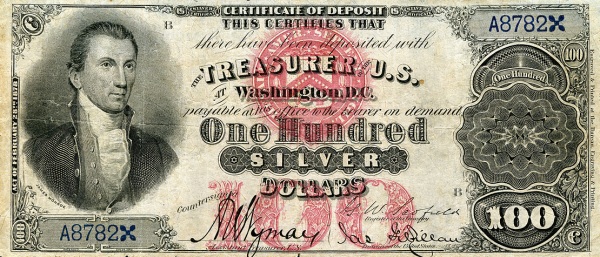
The Portrait of James Monroe on the 1923 $500 Gold Certificate: Why a Former President Appeared on Only One Note
The Series 1922 $500 Gold Certificate stands as one of the most fascinating and elusive notes in all of American paper money, featuring the only appearance of President James Monroe on U.S. currency. Understanding its history, design origins, and survival rate transforms this note from a mere rarity into a window on a pivotal era of monetary policy.

Read More →
Justice and Liberty on the 1869 Rainbow Notes: Allegorical Women in Reconstruction-Era Currency Art

The 1869 Legal Tender ‘Rainbow Notes’ feature some of the most striking allegorical figures ever engraved on American paper money, including personifications of Justice, Liberty, and Commerce that reflect the ideals and anxieties of the Reconstruction era. Understanding these designs unlocks a richer appreciation for the notes as historical documents, not just collectibles.

Read More →

Independence Hall on the $100 Bill: A Collector’s Guide to Architectural Accuracy and Artistic Evolution

The reverse of the $100 Federal Reserve Note has depicted Philadelphia’s Independence Hall since 1928, but the engraving has changed in subtle and significant ways across nearly a century of production. Understanding these artistic shifts helps collectors identify varieties, spot alterations, and appreciate the extraordinary craftsmanship behind America’s highest-circulation large denomination.

Read More →

The Color Scheme of the 1882 Gold Certificate Brown Back: Why Gold and Orange Were Chosen to Signal Bullion Convertibility

The 1882 Gold Certificate Brown Back series is one of the most visually striking issues in American paper money history, with its warm amber and orange-brown tones carrying deliberate meaning about the note’s bullion-backed status. This article unpacks the design philosophy, printing technology, and collecting landscape surrounding these remarkable large-size notes.

Read More →

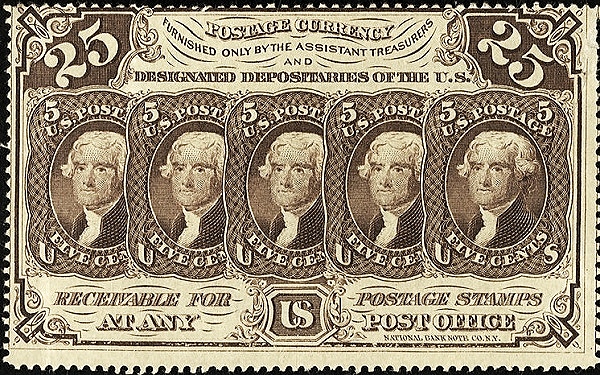
The Fasces Symbol on US Currency: Roman Authority, Bundled Strength, and Its Appearances from Fractional Currency to Modern FRNs

Few symbols carry as much historical weight as the fasces, a bundle of rods bound around an axe that signified Roman magisterial power for centuries before appearing on American coins and paper money. This deep dive traces every significant fasces appearance on US currency, from Civil War-era fractional notes to the Lincoln Memorial reverse, with specific catalog numbers and collector values to guide your hunt.

Read More →

The Indian Chief Vignette on $5 and $10 Silver Certificates: How Native American Imagery Was Used and Later Retired

Among the most visually striking notes in all of American paper money history, the $5 and $10 Silver Certificates featuring Native American portrait vignettes occupy a unique and contested place in numismatic lore. This deep dive explores the origins, printing history, signature combinations, and collector market for these iconic 19th-century issues.

Read More →

The Frigate Constitution on the 1918 $2 Federal Reserve Bank Note: Naval History Meets Currency Art

The 1918 $2 Federal Reserve Bank Note carries one of the most dramatic vignettes in American currency history: the legendary warship USS Constitution under full sail. This deep dive explores why the Treasury chose a naval scene for a circulating banknote, how to identify and grade these notes, and which district issues are the true keys to a complete collection.

Read More →

The Allegorical Figure of Electricity on the 1896 $2 Educational Silver Certificate: Art Nouveau Meets Currency

The 1896 $2 Educational Silver Certificate is widely considered the most beautiful piece of paper money ever issued by the United States, featuring an allegorical figure of Electricity that brought genuine fine art to American currency. Understanding the design history, signature varieties, and grading nuances of this iconic note is essential knowledge for any serious collector of large-size currency.

Read More →

Faces of Money: How the BEP Chose Which Portraits Appeared on Which Denominations

The portraits on US currency were not chosen by artists or historians alone. Behind every face on every bill lies a fascinating intersection of political maneuvering, aesthetic debate, Congressional pressure, and Treasury Department policy stretching back more than 150 years. Understanding this history gives collectors a richer appreciation for the notes they hold and sharper insight into why certain portrait changes make specific series so collectible.

Read More →

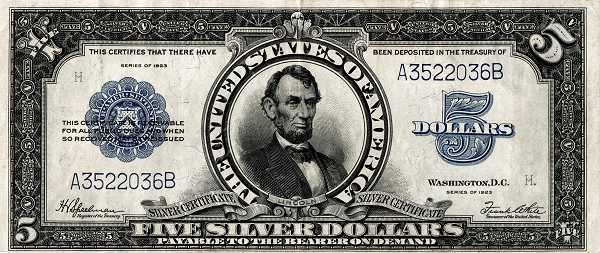
The Lincoln Memorial Under Construction: How the 1923 $5 Silver Certificate Depicted a Building Not Yet Complete

The 1923 $5 Silver Certificate captured an extraordinary historical moment, featuring the Lincoln Memorial on its reverse at a time when the monument had barely opened to the public. For collectors, this note represents a fascinating intersection of architectural history and currency design that makes it one of the most narratively rich pieces in any collection.

Read More →