
US Notes

The Helmeted Head of Minerva on Fractional Currency: Classical Allegory on Small-Change Emergency Notes
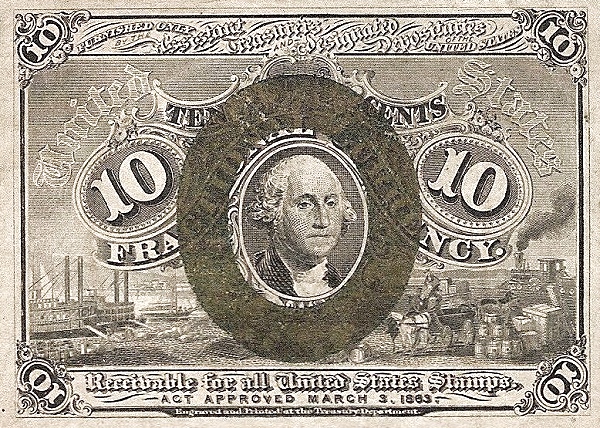
During the Civil War and Reconstruction era, the United States turned to classical mythology to grace its smallest emergency currency, placing the helmeted visage of Minerva on several Fractional Currency issues. Understanding these allegorical design choices, their catalog numbers, and their rarity unlocks one of the most fascinating and accessible collecting specialties in American paper money.

Read More →

Wings Over the Dollar: How the Bald Eagle Evolved as a Currency Motif From Demand Notes to Modern Federal Reserve Notes

The bald eagle has appeared on American paper money in some form for over 160 years, shifting from bold engraved centerpieces to subtle watermarks and security features. Understanding how this symbol changed across series, denominations, and printing technologies reveals a fascinating window into both American monetary history and the art of banknote design.

Read More →

The Star in the Serial Number: How the Replacement Star Became an Iconic Design Element

That tiny star at the end of a Federal Reserve Note’s serial number tells a surprisingly rich story about printing errors, quality control, and decades of collector obsession. Whether you are brand new to paper money or a seasoned numismatist hunting low-print-run rarities, understanding star notes can transform how you look at every bill in your wallet.

Read More →

The Spread Eagle Back Designs of the 1880s United States Notes: Symbolism and Artistic Intent

The large-size United States Notes of the 1880s featured some of the most ambitious and patriotically charged back designs ever printed on American paper money, centered on a majestic spread eagle motif that remains iconic among collectors today. This deep dive unpacks the artistic program, engraving details, series varieties, and collecting strategy for these stunning legal tender notes.

Read More →

The Baptism of Pocahontas Vignette on the $20 National Bank Note: Art, History, and Capitol Rotunda Connections

The $20 National Bank Note Series of 1875 and its predecessors feature one of the most historically significant vignettes ever printed on American currency: the Baptism of Pocahontas, drawn directly from John Gadsby Chapman’s massive painting in the U.S. Capitol Rotunda. Understanding this artistic connection transforms how collectors evaluate these notes and reveals the deliberate storytelling the Treasury Department embedded in nineteenth-century bank note design.

Read More →

The Running Antelope on the 1899 $5 Silver Certificate: The Most Controversial Portrait Choice in US Currency History

The 1899 $5 Silver Certificate features the only Native American portrait ever printed on US paper currency, and the story behind it is far more complicated than most collectors realize. From the identity dispute surrounding Running Antelope to the spectacular engraving work of the Bureau of Engraving and Printing, this note remains one of the most historically significant and visually stunning pieces in American numismatics.

Read More →

The Blue and Red Fiber Threads in US Currency Paper: Security Feature or Artistic Choice?

Those tiny colored threads embedded in your dollar bill are one of the oldest and most misunderstood security features in American currency history, dating back to 1942. This deep dive traces their origin, evolution, and surprising significance to collectors hunting varieties and high-grade examples.

Read More →