US Notes

Series 1935A $1 Silver Certificate Varieties: The R and S Experimental Notes Explained
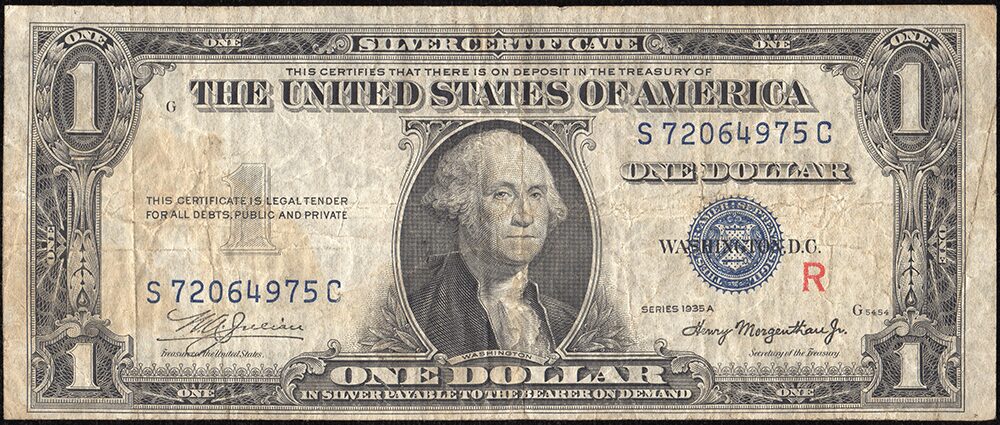
In 1944, the U.S. Bureau of Engraving and Printing conducted a rare printing experiment that produced two distinct varieties of the Series 1935A $1 Silver Certificate, each stamped with a red ‘R’ or ‘S’ suffix. These experimental notes represent one of the most fascinating and collectible chapters in modern U.S. currency history, and understanding them can make a real difference at auction.

Read More →

Steel, Silver, and Paper: How the 1942–1944 Wartime Coin Shortage Drove Americans to Hoard Currency and Shaped Note Survivorship Forever

When wartime metal demands stripped coins from American pockets between 1942 and 1944, millions of citizens turned to paper currency as an everyday substitute, unknowingly creating one of the most fascinating survivorship patterns in modern US note collecting. Understanding this hoarding behavior unlocks why certain series from this era survive in unexpectedly high grades today, while others remain stubbornly scarce.

Read More →

Series 1934A $500 and $1000 Federal Reserve Notes: Brown Seal Hawaii and Yellow Seal Africa Emergency Issues

The Series 1934A high-denomination emergency overprint notes issued for Hawaii and North Africa during World War II represent some of the most historically significant and collectibly rare pieces in all of American paper money. This deep-dive covers their origins, distinguishing characteristics, known populations, and what collectors should realistically expect to pay today.

Read More →

The BEP’s Wartime Conversion of 1942: How Ink Formulas, Paper Supplies, and Engravers Were Redirected to Support the War Effort

When the United States entered World War II, the Bureau of Engraving and Printing underwent one of the most dramatic operational transformations in its history, quietly reshaping the look, feel, and composition of American paper money. Understanding these wartime changes is essential for collectors who want to properly attribute, grade, and value the fascinating transitional notes produced between 1942 and 1945.

Read More →

The Series 1934A $5 Federal Reserve Note: Hawaii Brown Seal Issues and How to Distinguish Them from Standard Notes

The Series 1934A $5 Hawaii overprint notes represent one of the most historically significant emergency currency issues in American history, produced under wartime secrecy following the attack on Pearl Harbor. This guide breaks down every identifying feature, known varieties, and current collector values to help you confidently authenticate and acquire these remarkable wartime relics.

Read More →

The BEP in World War I: Printing Liberty Bonds, Stamps, and Currency Under Wartime Pressure

When the United States entered the First World War in April 1917, the Bureau of Engraving and Printing faced an unprecedented production crisis, churning out billions in Liberty Bonds, war stamps, and currency while its workforce was depleted by military service. Understanding this era unlocks some of the most historically significant and underappreciated notes in American numismatics.

Read More →

The Blue and Red Fiber Threads in US Currency Paper: Security Feature or Artistic Choice?

Those tiny colored threads embedded in your dollar bill are one of the oldest and most misunderstood security features in American currency history, dating back to 1942. This deep dive traces their origin, evolution, and surprising significance to collectors hunting varieties and high-grade examples.

Read More →