US Notes

McKinley’s Assassination and Roosevelt’s Currency Revolution: How One Bullet Changed the Faces on American Money
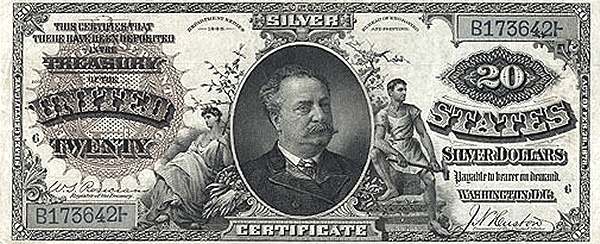
When an anarchist’s bullet struck President William McKinley on September 6, 1901, the ripple effects reached far beyond politics, reshaping the very faces Americans saw on their paper currency for decades. This deep-dive examines how Theodore Roosevelt’s Treasury appointments and the currency reforms of 1902 to 1923 transformed the visual landscape of US banknotes, with specific guidance on the key series, signature combinations, and collectible varieties that resulted.

Read More →
The Series 1896 $5 Educational Silver Certificate: Why Grant and Sheridan Appear in Reverse Order and the Fascinating Printing History Behind It

The Series 1896 $5 Educational Silver Certificate is one of the most artistically celebrated notes in American currency history, yet its portrait arrangement of Ulysses S. Grant and Philip Sheridan has puzzled collectors for over a century. This deep dive uncovers the printing decisions, engraving choices, and series history that make this note a cornerstone of any advanced collection.

Read More →

Engraved Portraits on US Currency: How BEP Artists Transformed Photographs into Steel

The hand-engraved portraits on American banknotes represent one of the most demanding artistic disciplines ever applied to government printing, with master craftsmen spending thousands of hours cutting a single face into a steel die. Understanding this process, and the artists behind it, gives collectors a deeper appreciation for the notes in their hands and the specific varieties that make certain issues especially desirable.

Read More →

Star Note Varieties of the Series 1934A $1 Silver Certificate: Block Letters, Print Runs, and District Differences

The Series 1934A $1 Silver Certificate star notes represent one of the most nuanced collecting areas in mid-20th century American paper money, with dramatic print run differences between Federal Reserve districts creating significant value disparities. This guide breaks down every known block, district, and print run so collectors can identify exactly what they hold and what it is worth.

Read More →

Silver Certificates Series 1891 $5 Jumping Deer Back: A Rarely Discussed Large-Size Type

The Series 1891 $5 Silver Certificate with its distinctive ‘Jumping Deer’ reverse design stands as one of the most visually striking and overlooked large-size notes in American currency history. This deep dive covers the history, varieties, signature combinations, grading realities, and collector values that every serious large-size enthusiast needs to know.

Read More →

The BEP’s Wartime Conversion of 1942: How Ink Formulas, Paper Supplies, and Engravers Were Redirected to Support the War Effort

When the United States entered World War II, the Bureau of Engraving and Printing underwent one of the most dramatic operational transformations in its history, quietly reshaping the look, feel, and composition of American paper money. Understanding these wartime changes is essential for collectors who want to properly attribute, grade, and value the fascinating transitional notes produced between 1942 and 1945.

Read More →

The Sailing Ship Vignette on Early United States Notes: Which Vessels Were Depicted and How Artists Chose Them

The sailing ship vignettes engraved on early United States paper money represent some of the most artistically ambitious work ever produced by the Bureau of Engraving and Printing and its predecessor firms. Understanding which vessels appear on which notes, how engravers selected and adapted their subjects, and what makes certain vignette varieties collectible can transform the way you look at nineteenth-century American currency.

Read More →

The Series 1935D $1 Silver Certificate Wide vs. Narrow Back: How a Plate Modification Created a Permanent Variety

The Series 1935D $1 Silver Certificate harbors one of the most fascinating production-driven varieties in all of small-size currency collecting: the Wide Back and Narrow Back distinction born from a mid-run plate redesign. Understanding exactly what changed, when it changed, and why it matters can sharpen your eye and meaningfully upgrade your collection.

Read More →

The Currency Act of 1965: Why Silver Was Removed from US Coinage and Its Effect on Silver Certificates

The Coinage Act of 1965 marked the end of an era for American monetary history, stripping silver from circulating coins and accelerating the death of the Silver Certificate. Understanding this pivotal legislation helps collectors appreciate why surviving Silver Certificates are among the most historically significant pieces of 20th-century American paper money.

Read More →

The 1923 $5 Silver Certificate Porthole Note: Abraham Lincoln Behind the Oval Window

The Series 1923 $5 Silver Certificate, nicknamed the ‘Porthole Note’ for its striking oval portrait of Abraham Lincoln, stands as one of the most visually distinctive large-size notes ever issued by the United States Treasury. This deep dive covers its design history, signature varieties, survival rates, and what collectors should know before pursuing one of these century-old beauties.

Read More →