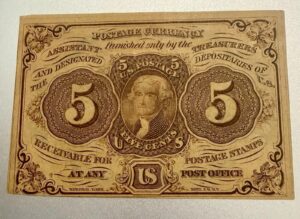
Walk into any serious currency dealer’s shop today and you will find Silver Certificates displayed with a reverence that plain Federal Reserve Notes rarely receive. There is a reason for that. Silver Certificates represent a direct, legally binding promise from the United States government to pay the bearer in actual silver metal. That promise did not disappear quietly. It was legislated away, step by step, between 1963 and 1968, as a mounting silver shortage forced Washington’s hand. The story begins in earnest with the Coinage Act of 1965, a piece of legislation that reshaped American currency more profoundly than almost anything since the Federal Reserve Act of 1913.
The Silver Shortage That Changed Everything
To understand why Congress acted so dramatically in 1965, you have to look at what was happening to the silver market throughout the late 1950s and early 1960s. Industrial demand for silver was surging, driven by the photography, electronics, and aerospace industries. At the same time, the government was legally obligated to redeem Silver Certificates at one troy ounce of silver per dollar in face value, and it was also minting coins that contained substantial silver content: dimes at 90 percent silver, quarters at 90 percent silver, and half dollars at 90 percent silver.
The math became brutal. By 1963, the market price of silver was climbing toward $1.29 per troy ounce, which was the precise point at which the silver in a silver dollar became worth exactly one dollar in face value. The government’s silver stockpile at the Treasury was being drained from two directions simultaneously: industrial redemptions of Silver Certificates and the cost of minting new silver coins. Treasury Secretary C. Douglas Dillon warned Congress that the situation was unsustainable. Something had to give.
Congress had actually taken the first step in 1963 by authorizing the Federal Reserve to issue one-dollar and two-dollar Federal Reserve Notes, denominations previously restricted to Silver Certificates and United States Notes. This allowed the Treasury to begin winding down new Silver Certificate production. The Series 1957B one-dollar Silver Certificate, bearing the signatures of Treasurer Kathryn O’Hay Granahan and Secretary C. Douglas Dillon, became the last series printed, with the bulk of production completed by late 1963.
When examining Series 1957, 1957A, and 1957B one-dollar Silver Certificates, pay close attention to the blue Treasury seal and blue serial numbers. These are the hallmark identifiers of a Silver Certificate versus a Federal Reserve Note. The blue ink is specific to this obligation class and will never appear on a genuine Federal Reserve Note of the same era.
What the Coinage Act of 1965 Actually Did
President Lyndon B. Johnson signed the Coinage Act of 1965 on July 23, 1965. The ceremony was deliberately staged at the White House with considerable fanfare, as the administration was sensitive to public perception that the government was debasing the currency. Johnson himself made a memorable speech attempting to reassure the American public, famously stating that the new clad coins would be “just as good” as their silver predecessors. Numismatists have been repeating that quote with raised eyebrows ever since.
The act did three central things. First, it removed silver entirely from dimes and quarters. Second, it reduced the silver content of half dollars from 90 percent to 40 percent, a compromise measure that acknowledged the Kennedy half dollar’s enormous public popularity. Third, it prohibited anyone from melting or exporting silver coins for a period of five years, a measure designed to prevent immediate mass melting of the old 90 percent silver coins that would still be circulating alongside the new clad pieces.
The act also contained a crucial provision regarding Silver Certificates. It reaffirmed that the Treasury would continue to honor Silver Certificate redemptions, but it set a firm framework for terminating that obligation. Executive Order and subsequent legislation followed quickly. On June 24, 1967, Treasury Secretary Henry Fowler announced that Silver Certificate redemption in actual silver bullion would end exactly one year later, on June 24, 1968. After that date, Silver Certificates would remain legal tender for transactions but could no longer be exchanged for silver metal at any government office.
The Final Years of Silver Certificate Production
By the time the Coinage Act passed, production of Silver Certificates had already essentially ceased for circulation purposes. The Bureau of Engraving and Printing’s records indicate that the Series 1957B run was the last substantial printing. However, it is worth understanding the full production context of the final decade of Silver Certificates for collectors.
The Series 1957 (Fr. 1619), signed by Ivy Baker Priest and Robert B. Anderson, represents the transition-era note. The 1957A (Fr. 1620), signed by Elizabeth Rudel Smith and C. Douglas Dillon, was issued during the Kennedy administration. The 1957B (Fr. 1621), with Granahan and Dillon signatures, closed out the series. Among these, star note replacements are particularly collectible. The 1957B star notes carry a premium in higher grades, with well-centered examples in PMG 65 EPQ or better trading in the $40 to $80 range depending on the dealer, while common circulated examples remain affordable at $5 to $15.
Star note Silver Certificates from the Series 1957 through 1957B carry a star symbol (*) at the beginning of the serial number. These are replacement notes printed when a regular note was damaged during production. Star notes from this era consistently command a 30 to 100 percent premium over regular-issue notes in comparable grades, making them excellent targets for type set collectors building a representative Silver Certificate collection.
Higher Denomination Silver Certificates: The Real Rarities
While one-dollar Silver Certificates dominate the popular imagination, collectors should not overlook the higher denominations, which were discontinued much earlier and represent far greater numismatic value. The five-dollar Silver Certificates (Fr. 1650 through Fr. 1655) run from the Series 1934 through Series 1953B. The ten-dollar Silver Certificates (Fr. 1700 through Fr. 1706) are similarly organized. Beyond ten dollars, the denominations become truly rare and museum-grade territory.
The Series 1934A five-dollar Silver Certificate with a narrow back design and the Series 1953 five-dollar with its distinctive blue seal are both accessible to intermediate collectors. A circulated Very Fine example of the 1953B five-dollar (Fr. 1655) typically trades at $15 to $25, while a Gem Uncirculated 65 EPQ example can bring $80 to $150. The ten-dollar Series 1953B (Fr. 1706) is slightly tougher, with nice uncirculated examples in the $150 to $250 range.
The legendary rarities are the high-denomination notes: the $500 and $1,000 Silver Certificates of the 19th and early 20th centuries. These are genuinely rare museum pieces. But even within the more recent 20th-century series, the five-hundred-dollar and one-thousand-dollar Federal Reserve Bank Notes that predated the final Silver Certificate era command five- and six-figure prices at major auctions.
Public Reaction and the Silver Rush of 1967 to 1968
When Treasury Secretary Fowler made his June 1967 announcement that silver redemption would end in exactly one year, it triggered a quiet national scramble. Collectors and speculators immediately began pulling Silver Certificates from circulation and submitting them to Treasury offices for redemption in silver granules, rather than silver dollar coins. The government had already run low on Morgan and Peace dollars and had shifted to paying out silver in granule form at Treasury windows in the late 1960s.
This created a fascinating numismatic side effect. Because millions of Silver Certificates were being redeemed for their metal content, circulated low-grade examples were effectively destroyed. This, paradoxically, means that heavily worn, low-grade Silver Certificates from the final series are somewhat harder to find than you might expect. Crisp uncirculated examples that were saved as souvenirs survived in larger numbers than the circulated pieces that were fed into the redemption process.
If you are building a Silver Certificate type set on a budget, consider focusing on the Series 1935 and 1935A one-dollar notes (Fr. 1613 and Fr. 1614) rather than exclusively chasing the final 1957 series. The 1935A with the HAWAII overprint (Fr. 2300) and the 1935A with North Africa yellow seal (Fr. 2306) are among the most historically compelling emergency-issue variants of any US paper money series, and well-circulated examples can still be found in the $25 to $125 range, making them accessible history.
What Happened to Unredeemed Silver Certificates After 1968
After June 24, 1968, Silver Certificates remained legal tender for all debts, public and private, just like Federal Reserve Notes. But the silver redemption obligation was permanently extinguished. A note that once had a legally enforceable claim on actual silver metal became, monetarily speaking, equivalent to a Federal Reserve Note of the same denomination.
Estimates vary, but historians believe that several hundred million one-dollar Silver Certificates remained in circulation or in collections at the time of the redemption deadline. The Treasury made no effort to recall them, and they continued to appear in circulation well into the 1970s. Today, Silver Certificates remain legal tender, and some collectors have reportedly successfully used them in transactions, though any numismatist would wince at the thought.
| Series / Fr. Number | Denomination and Variety | Approx. Print Run | Rarity |
|---|---|---|---|
| 1957B (Fr. 1621) | $1, Regular Issue | 590,720,000 | Common |
| 1957B (Fr. 1621*) | $1, Star Note | Approx. 12,960,000 | Scarce |
| 1935A (Fr. 2300) | $1, HAWAII Overprint | 35,052,000 | Scarce |
| 1935A (Fr. 2306) | $1, North Africa Yellow Seal | 26,916,000 | Scarce |
| 1953B (Fr. 1655) | $5, Final Five-Dollar Series | 21,072,000 | Scarce |
| 1953B (Fr. 1706) | $10, Final Ten-Dollar Series | 10,440,000 | Scarce |
| 1934 (Fr. 1650) | $5, First Modern Silver Cert. Series | Approx. 3,600,000 | Rare |
| 1899 (Fr. 271) | $5, Chief Note, Early Series | Est. under 1,000,000 surviving | Rare |
| 1891 (Fr. 321) | $10, Tombstone Back | Est. several hundred thousand | Key Date |
| 1880 (Fr. 305) | $100, Large Size Silver Cert. | Unknown, very limited survivors | Key Date |
Why This History Matters to Collectors Today
The Coinage Act of 1965 and the subsequent demonetization of Silver Certificates represent the final severing of the direct link between American paper money and precious metals. Every Silver Certificate, regardless of series or denomination, is a tangible artifact of a monetary philosophy that held that paper money should represent something real. When you hold a Series 1935A one-dollar Silver Certificate, you are holding a document that once obligated the most powerful government in the world to hand you silver in exchange for it.
From a pure collecting standpoint, the Silver Certificate series offers tremendous depth. A collector can spend a lifetime and a modest budget assembling a representative collection of 20th-century small-size Silver Certificates, or can pursue the daunting and expensive challenge of large-size 19th-century examples. The war emergency overprints (HAWAII and North Africa) add a fascinating historical dimension. The star note variants reward patient searching. And the sheer variety of signature combinations across the series gives date-and-signature specialists plenty to pursue.
The Coinage Act of 1965 did not just remove silver from coins. It closed a chapter in American monetary history that had lasted since the Legal Tender Act of 1862 and the formalization of the Silver Certificate program in 1878. For currency collectors, that closed chapter is the very thing that makes these notes worth collecting. They are the paper record of a promise the United States government once made to its citizens, and then, piece by piece, legislature by legislature, withdrew forever.