📷 Image source: U.S. Currency Education Program (uscurrency.gov). Images are selected by AI to represent the article topic and may not depict the exact note(s) described.
A Nation Running on Foreign Silver
Walk into any American market in 1850 and the coins you might receive as change were as likely to be Spanish, Mexican, or French as they were to bear the face of Liberty stamped in Philadelphia. For the better part of seven decades after independence, the United States operated with a monetary system that was, in practice, thoroughly international. Spanish milled dollars, Mexican reales, French francs, and a constellation of other foreign silver and gold pieces circulated alongside domestic coinage as fully recognized legal tender. Congress had officially sanctioned this arrangement as far back as 1793 and reaffirmed it repeatedly, because the simple truth was that American mints could not produce enough domestic coin to meet the country’s surging commercial needs.
What the Act Actually Did
Signed into law by President Franklin Pierce on February 21, 1857, the Coinage Act of 1857 accomplished several things at once. Most famously among numismatists, it introduced the small-diameter copper-nickel Flying Eagle cent, replacing the cumbersome large copper cent that had circulated since 1793. But the provision that had the most profound economic consequences was buried deeper in the statute: the formal revocation of legal tender status for all foreign coinage circulating in the United States.
The Act set a grace period during which holders of foreign silver could bring their coins to U.S. Mint facilities and exchange them at rates pegged to bullion value. Spanish and Mexican silver coins, which had been the workhorses of retail trade across the South and West, were to be surrendered and melted. The U.S. Mint, newly productive thanks to California Gold Rush silver and gold receipts, was confident it could finally flood the market with enough domestic coinage to fill the gap. That confidence, as events would shortly prove, was somewhat optimistic.
When examining pre-Civil War bank notes, look for vignettes and denominations that reflect the fractional values of Spanish colonial coinage, such as 12.5-cent and 6.25-cent notes issued by some state banks. These unusual denominations are direct artifacts of the “bit” system inherited from Spanish reales and make for a fascinating thematic collection tied directly to the monetary transition of 1857.
The Small Change Crisis and the Paper Money Vacuum
Almost immediately after the Act took effect, American commerce discovered a painful truth. Stripping foreign coins from circulation created a small-change vacuum that domestic Mint production could not quickly fill. The new Flying Eagle cent was well-received but took time to reach sufficient quantities. Silver fractional coins in denominations of three cents, half dimes, and dimes were being produced, but distribution networks were slow, and much of the domestic silver coinage that did exist was hoarded or exported whenever silver’s commodity price nudged above its face value.
Into this vacuum stepped paper money, primarily in the form of state-chartered bank notes. By 1857, the United States had no national paper currency. Instead, hundreds of state-chartered banks issued their own notes in denominations as low as one dollar, and some issued fractional currency scrip that circulated locally. The sudden removal of the familiar Spanish “bit” (12.5 cents) and “picayune” (6.25 cents) from everyday use forced merchants, employers, and local governments to improvise. Many turned to privately printed scrip, store notes, and low-denomination bank paper to make change and pay wages.
This scramble for paper substitutes was not lost on monetary reformers in Washington. The crisis of 1857 demonstrated, with uncomfortable clarity, that the American public’s relationship with paper money was no longer a matter of choice but of necessity. That lesson would be remembered with great urgency just four years later when the Civil War made the question of national paper currency not merely convenient but existential.
State bank notes issued between 1857 and 1862 represent one of the most underappreciated collecting niches in American numismatics. Notes from banks in states that had heavy concentrations of foreign coin use, particularly Louisiana, Texas, and California, often show dramatic price premiums in Fine or better grades because they saw heavy circulation during the transitional period and survivors are genuinely scarce. The Standard Catalog of United States Paper Money is an essential reference for attributing these issues.
The Panic of 1857 Compounds the Problem
Fate, with characteristic bad timing, chose the same year to deliver the Panic of 1857. Triggered partly by the failure of the Ohio Life Insurance and Trust Company in August 1857 and accelerated by speculative excess in western land and railroad stocks, the Panic produced a wave of bank suspensions across the North. State bank notes, already filling the void left by departing foreign coins, suddenly became suspect as the institutions backing them tottered or collapsed outright.
The result was a public that simultaneously needed paper money more than ever, to replace vanished foreign coin, and trusted it less than ever, because the banks issuing it were visibly failing. This paradox deepened public and legislative discussion about the desirability of a federally backed, nationally uniform paper currency. Arguments that had once seemed theoretical and academic took on practical urgency. By 1857, the intellectual groundwork for the Legal Tender Act of 1862 and the National Banking Acts of 1863 and 1864 was being laid, fertilized in no small part by the disruptions the Coinage Act itself had set in motion.
California and the Western Exception
Collectors of obsolete currency and early paper money should note one significant regional wrinkle. California, which had operated on a hard-money culture since the Gold Rush of 1848 to 1855, was deeply resistant to paper money of any kind well into the 1860s. California state law actually prohibited the circulation of bank notes below five dollars for much of this period, and Californians showed a pronounced preference for gold coin over paper. When foreign coin legal tender was revoked, California simply absorbed the shock through its enormous gold coin supply rather than pivoting to paper as the East and South had done.
This makes California-issued paper money from the late 1850s and early 1860s extraordinarily rare. The few banks that did operate and issue notes in the state did so in a hostile environment, and survivorship rates for those notes are very low. A collector who manages to acquire an authenticated California state bank note from 1857 to 1861 in any grade above Good has something genuinely remarkable on their hands.
When attributing obsolete bank notes from the 1857 to 1862 period, pay close attention to charter dates, officer signatures, and overprint dates. Many banks reissued earlier-dated notes with new countersignatures or date overprints as they scrambled to meet demand after the foreign coin withdrawal. These overprinted varieties are often catalogued separately and can represent significant value differences within what appears to be a single note type at first glance.
The Legislative Thread to Greenbacks
The direct line from the Coinage Act of 1857 to the Demand Notes of 1861 and the Legal Tender “Greenback” Notes beginning in 1862 is one of the most instructive narratives in American monetary history. Secretary of the Treasury Salmon P. Chase, drafting the framework for national paper currency in 1861 and 1862, was working in a country that had already been jolted into paper dependency by the events of 1857. Public resistance to government-issued paper, while real, was measurably lower than it would have been had the foreign coin system remained intact. Americans in 1862 had already been living with an imperfect, fragmented paper currency system for five years. The leap to accepting United States Notes with the simple declaration that they were legal tender for all debts public and private was large, but it was not taken from a standing start.
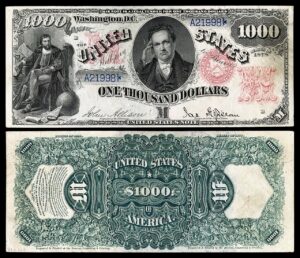
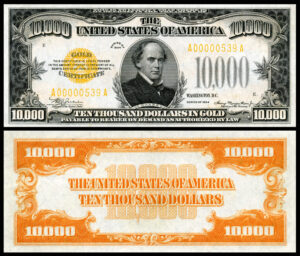
The Series 1862 Legal Tender Notes, the first true “greenbacks,” carry a historical weight that is impossible to appreciate fully without understanding the monetary disruptions of the preceding decade. When collectors handle a Fine example of a $1 Legal Tender Note from 1862, with its distinctive red Treasury seal and the ornate face featuring a portrait of Salmon P. Chase himself on the one-dollar denomination (later moved to the $10,000 denomination), they are holding the direct institutional descendant of the crisis the Coinage Act of 1857 helped create.
| Issue Type / Series | Denomination or Variety | Estimated Survivors | Rarity |
|---|---|---|---|
| California State Bank Notes, 1857-1862 | Any denomination | Fewer than 50 known | Key Date |
| Louisiana State Bank Notes, 1857-1860 | $1 and $2 denominations | Approx. 200-400 known | Rare |
| Demand Notes, Series 1861 | $5 (Boston, “For the” variety) | Fewer than 30 known | Key Date |
| Demand Notes, Series 1861 | $10 and $20, all cities | 300-600 known combined | Rare |
| Legal Tender Notes, Series 1862 | $1 (Fr. 16c, third obligation) | Approx. 500-800 known | Scarce |
| Legal Tender Notes, Series 1862 | $2 (Fr. 41, second obligation) | Approx. 1,000 known | Scarce |
| Legal Tender Notes, Series 1863 | $1 and $2, common varieties | Several thousand known | Common |
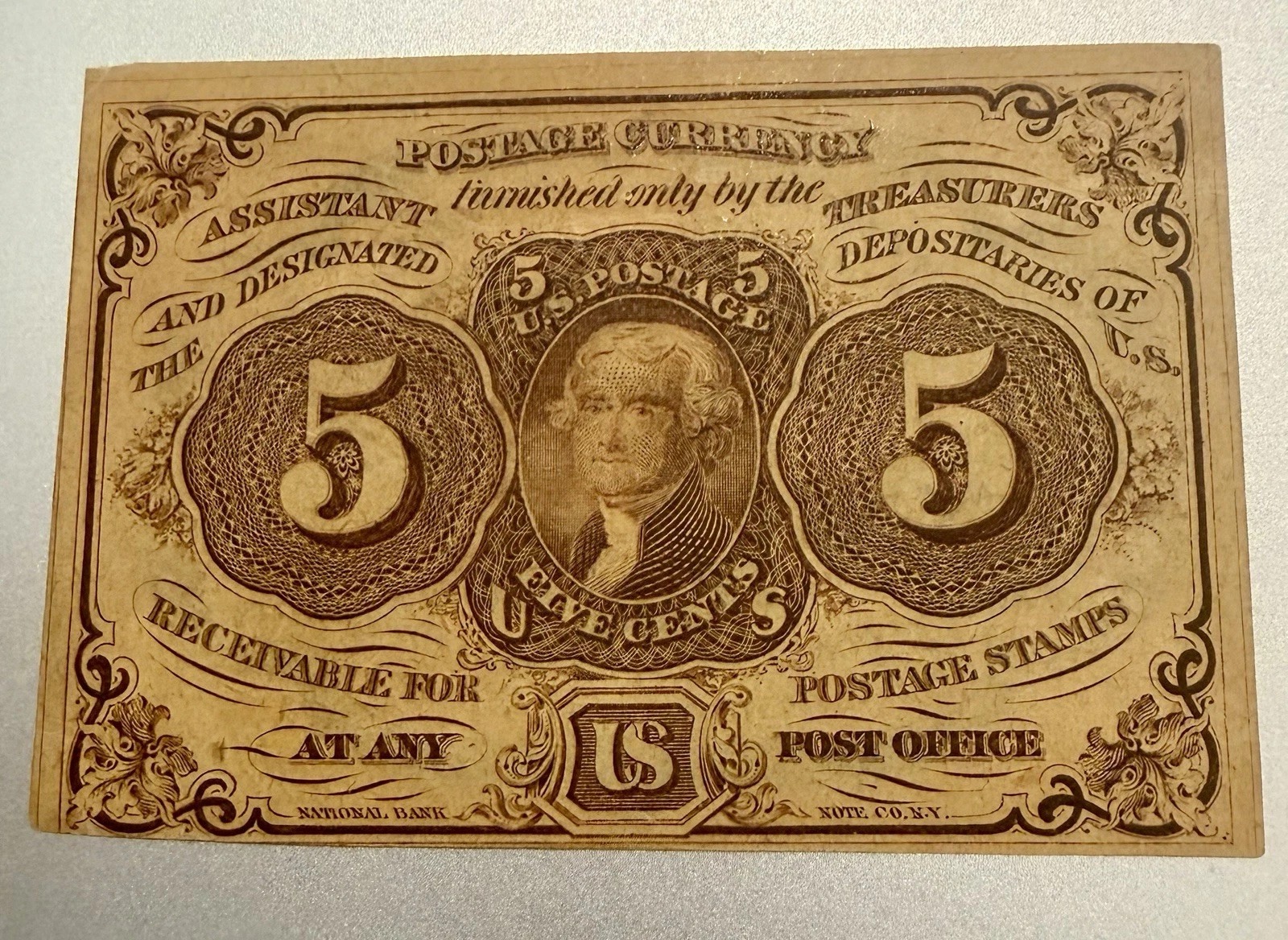
| Fractional Currency, First Issue 1862 | 5-cent (perforated edge) | Approx. 3,000-5,000 known | Scarce |
| National Bank Notes, Original Series 1863-1865 | $1 (First Charter Period) | Varies widely by bank | Rare |
| Texas Obsolete Bank Notes, 1857-1861 | Any surviving circulated example | Fewer than 150 known per type | Rare |
Collecting the Transition: What to Look For
For collectors drawn to this pivotal era, the field divides naturally into three overlapping categories. First, there are the obsolete state bank notes of 1857 to 1862, issued by state-chartered banks during the gap between foreign coin withdrawal and federal paper currency. These vary enormously in rarity and condition, and attribution resources like the Whitman Encyclopedia of Obsolete Paper Money by Q. David Bowers are indispensable. Second are the federal Demand Notes of 1861, the government’s first emergency paper issue, which are among the most coveted notes in American numismatics. Third are the early Legal Tender series from 1862 and 1863, which represent the permanent institutionalization of the paper money system the Coinage Act of 1857 had inadvertently accelerated.
Grading standards for notes from this period deserve special attention. Paper quality was inconsistent in the 1850s and 1860s, and many surviving notes carry edge splits, folds, or rust staining from improper storage. The Paper Money Guaranty (PMG) and PCGS Currency grading scales treat these impairments differently depending on whether they are considered normal circulation wear versus environmental damage. A note graded PMG 20 Very Fine with a “stain” qualifier is a fundamentally different collectible from the same type graded PMG 20 without qualifiers, and the price difference at auction can be substantial.
Conclusion: A Single Law, a Decade of Consequences
The Coinage Act of 1857 was, on its surface, a housekeeping measure, a tidying-up of an untidy monetary system that had tolerated foreign coins out of necessity rather than preference. But its consequences cascaded outward in ways that its drafters did not fully anticipate. By removing foreign coinage from the legal tender framework, it created a small-change vacuum that paper money filled. By arriving just months before the Panic of 1857, it ensured that the resulting paper currency expansion occurred in conditions of maximum financial stress. And by demonstrating, once and for all, that ordinary Americans could and would use paper money for daily transactions, it cleared the psychological and institutional path for the greenback revolution of the Civil War years.
For collectors of United States paper money, this legislative moment is not a footnote. It is a foundation. The notes we prize most from the 1861 to 1865 era did not emerge from nothing. They emerged from a decade of monetary improvisation, a process that the Coinage Act of 1857 set decisively in motion.