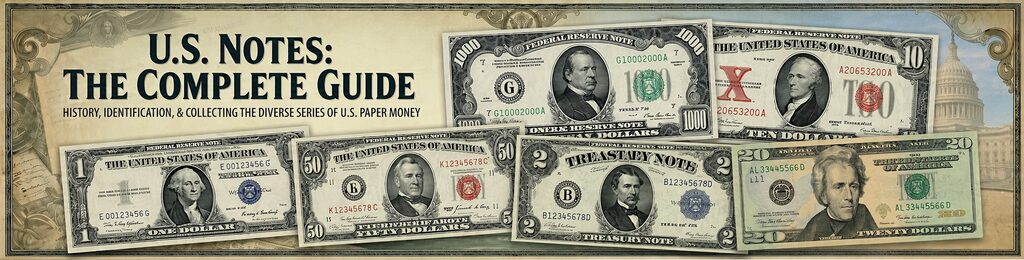
US Notes

The Eagle and Shield on the Reverse of the 1882 National Bank Note Brown Back: Heraldic Symbolism in Gilded Age Currency

The 1882 Brown Back National Bank Note series features one of the most elaborately heraldic reverse designs in American currency history, blending patriotic symbolism with the self-confident aesthetic of the Gilded Age. Understanding the eagle and shield imagery on these notes unlocks both their historical context and their enduring appeal to serious collectors.

Read More →
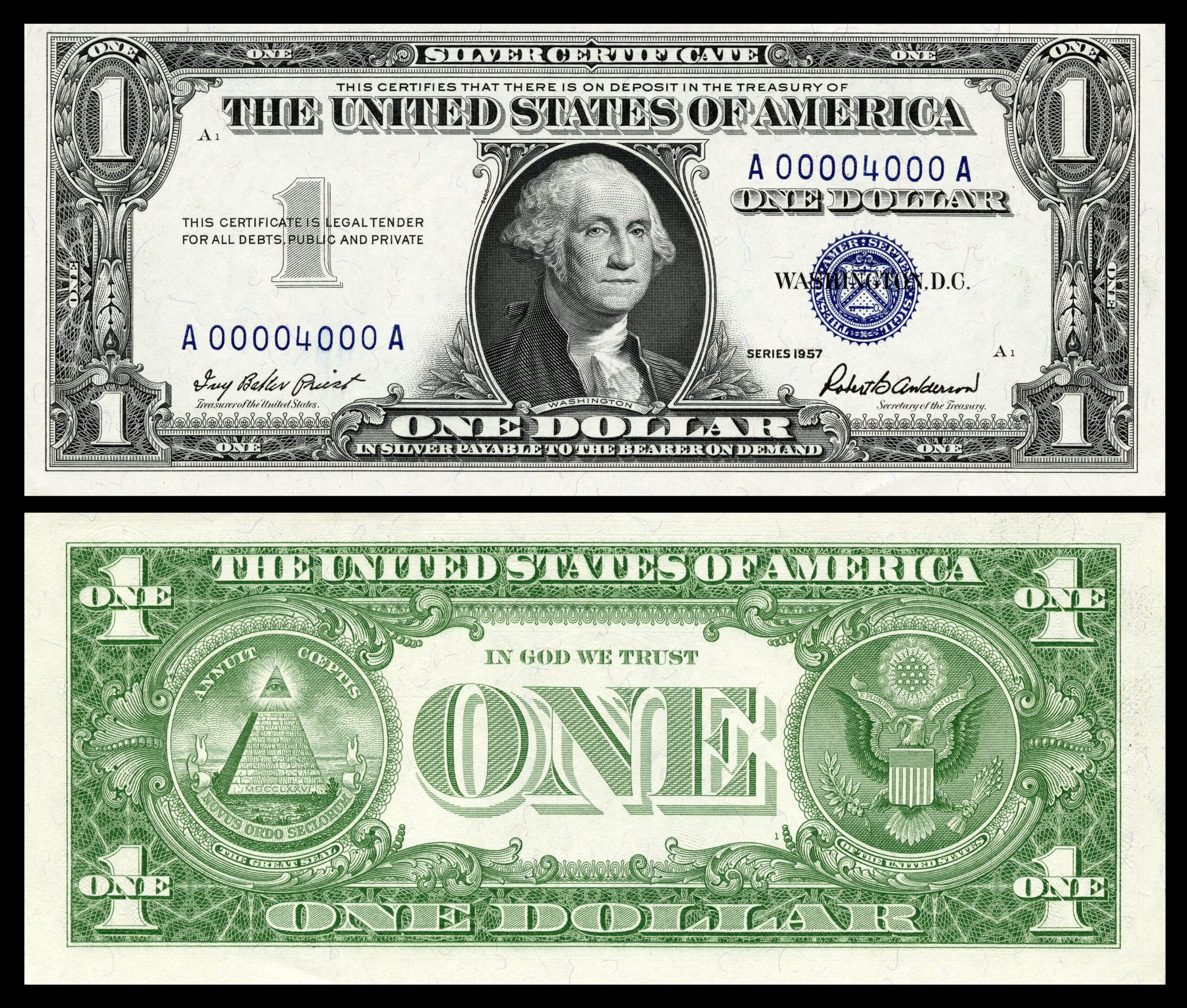
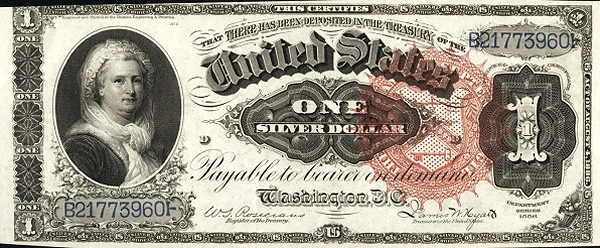
United States Notes: Red Seal Issues from 1862 to 1966 and What Survives Today

From the first Legal Tender Acts of the Civil War era to the final small-size red seals retired in 1971, United States Notes represent over a century of American monetary history unlike any other currency class. This deep dive covers every major series, key rarities, survival populations, and what collectors should know before pursuing these iconic red-seal notes.

Read More →

Tape Repairs on Paper Money: How to Detect Them Under UV Light and Their Catastrophic Effect on Value

Tape repairs are among the most damaging and deceptive alterations a collector can encounter on paper money, capable of slashing a note’s value by 80 percent or more. Learn how professional graders detect hidden repairs under ultraviolet light, which tape types leave which signatures, and how to protect yourself at shows, auctions, and dealer tables.

Read More →

The Role of Originality in Currency Grading: Why a 64 with Original Embossing Beats a Pressed 65

In the world of paper money grading, a note’s numerical grade tells only part of the story. Understanding why original embossing and surface integrity often make a lower-graded note more desirable, and more valuable, than a technically higher-graded but artificially improved example is essential knowledge for any serious collector.

Read More →

How Split Grades Work at PMG: When a Note’s Face Earns a Higher Grade Than Its Back and How the Final Number Is Determined

Split grades are one of the most misunderstood concepts in paper money grading, yet they can significantly affect a note’s value and collectibility. This guide breaks down exactly how PMG handles grade differentials between a note’s obverse and reverse, and what that final number really means for your collection.

Read More →

Portrait Engraving at the BEP: Dies, Transfer Rolls, and Printing Plates Explained for Collectors

Understanding how the Bureau of Engraving and Printing transforms a master engraver’s work into millions of printed notes reveals why subtle differences between plates can create dramatic value swings in your collection. From the steel die to the final sheet, every step in this process leaves its own fingerprint on the notes we collect.

Read More →

Crosshatching and Stippling in US Currency Portraits: The BEP’s Master Engravers and the Art of Tonal Depth

The Bureau of Engraving and Printing’s master craftsmen spent decades perfecting the intaglio techniques of crosshatching and stippling to render lifelike portraits on American banknotes. Understanding these methods transforms how collectors evaluate engraving quality and helps explain why certain notes command significant premiums.

Read More →

Paper Restoration and Conservation: Legitimate Archival Treatments vs. Fraud in Currency Collecting

Understanding the difference between legitimate archival conservation and fraudulent restoration is one of the most critical skills a currency collector can develop. This guide breaks down accepted treatments, deceptive practices, and how to protect your collection from altered notes masquerading as originals.

Read More →

Circulated Grades for Large-Size Notes: Why Fine-15 Can Still Be a Spectacular Note

Grading large-size US currency is a nuanced art, and a Fine-15 note is far from the consolation prize many newcomers assume it to be. This guide breaks down what circulated grades really mean for pre-1929 paper money and why condition-obsessed thinking can cause collectors to miss genuinely stunning pieces of American monetary history.

Read More →

The Series 1886 $10 Silver Certificate: Tombstone Predecessor Designs and the Tiffany Back Varieties

The Series 1886 $10 Silver Certificate stands among the most visually dramatic large-size notes ever produced by the U.S. Bureau of Engraving and Printing, featuring the iconic ‘Tombstone’ reverse and a suite of rare signature combinations that challenge even advanced collectors. This deep dive covers every major variety, known populations, and what separates a mediocre example from a condition-census specimen.

Read More →