US Notes

How America Abandoned the Gold Standard in Two Steps: 1933 Domestic and 1971 International

The United States did not leave the gold standard overnight. Understanding the two pivotal breaks, FDR’s 1933 domestic suspension and Nixon’s 1971 international closure of the gold window, reveals why certain paper currency series are historically significant collectibles today.

Read More →
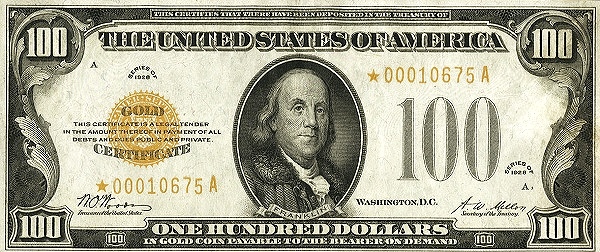
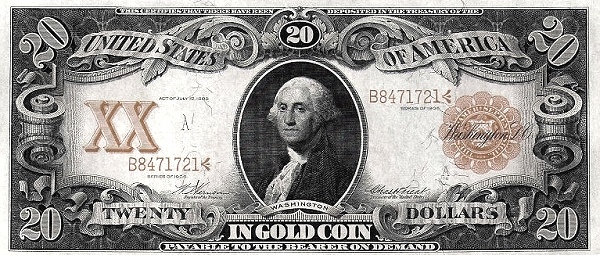
Gold Certificates, Serial Numbers, and a Kidnapper’s Ransom: How Marked Currency Caught Bruno Hauptmann

The 1932 Lindbergh kidnapping ransom payment, made in Gold Certificates and Federal Reserve Notes, became one of the most consequential currency investigations in American history. For collectors, the notes involved offer a rare intersection of numismatic history and criminal legend that continues to shape the value and fascination of 1928 and 1934 Gold Certificate series.

Read More →

PMG Very Fine 30 vs. Extremely Fine 40 for Large-Size Notes: A Practical Field Comparison

The single grade point separating PMG Very Fine 30 and Extremely Fine 40 can mean hundreds of dollars on a desirable large-size note, yet many collectors struggle to articulate the difference in hand. This guide walks through every diagnostic criterion, with real examples from Series 1899 Silver Certificates to 1922 Gold Certificates, so you can grade confidently before you bid.

Read More →

The $100 Gold Certificate Series 1922: Large-Size Eagles and Why Collectors Prize Them

The Series 1922 $100 Gold Certificate stands as one of the most visually stunning and historically significant notes ever issued by the United States Treasury, featuring the iconic eagle vignette that has captivated collectors for over a century. This deep-dive covers everything from print run data and signature varieties to grading pitfalls and current market values, giving you the knowledge to pursue this remarkable note with confidence.

Read More →

The Assassination of President Garfield and Its Unexpected Effect on Currency Portrait Selection in the 1880s

When Charles Guiteau shot President James A. Garfield on July 2, 1881, the political shockwaves reached all the way to the Bureau of Engraving and Printing, reshaping which faces appeared on American paper money for decades. This deep dive explores how mourning, politics, and Treasury Department policy collided to redirect US currency portrait selection in ways that still affect the notes collectors hunt today.

Read More →

McKinley’s Assassination and Roosevelt’s Currency Revolution: How One Bullet Changed the Faces on American Money

When an anarchist’s bullet struck President William McKinley on September 6, 1901, the ripple effects reached far beyond politics, reshaping the very faces Americans saw on their paper currency for decades. This deep-dive examines how Theodore Roosevelt’s Treasury appointments and the currency reforms of 1902 to 1923 transformed the visual landscape of US banknotes, with specific guidance on the key series, signature combinations, and collectible varieties that resulted.

Read More →

The Series 1907 $20 Gold Certificate: The Large-Size Porthole Note That Collectors Overlook in Favor of the $10 Version

The Series 1907 $20 Gold Certificate features one of the most striking portrait designs in all of large-size US currency, yet it consistently plays second fiddle to its $10 counterpart in collector circles. This deep-dive reveals why the $20 deserves a second look, covering its design history, signature varieties, grading realities, and why current market pricing may represent a genuine opportunity.

Read More →

Corner Wear on Large-Size Notes: Why Soft Rounded Corners Grade Better Than Hard Creased Folds

Not all corner wear is created equal, and on large-size notes the difference between a soft rounded tip and a hard diagonal crease can mean hundreds of dollars in collector value. This guide breaks down exactly how graders evaluate corner condition, what to look for under magnification, and how to apply that knowledge to your own collection.

Read More →