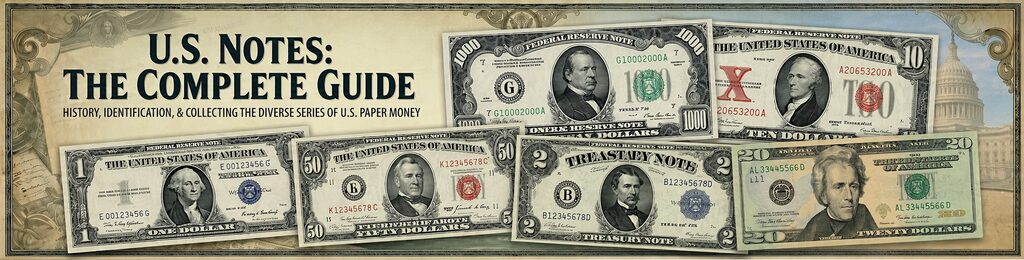
US Notes

The Federal Reserve Seal Redesign of 1969: From Black Regional Seals to Unified Federal Seals

In 1969, Federal Reserve Notes underwent one of the most visually significant changes in twentieth-century American currency: the replacement of district-specific black seals with a single unified Federal Reserve seal. Understanding this transition is essential for collectors dating notes, identifying varieties, and appreciating why certain pre-1969 series command serious premiums.

Read More →
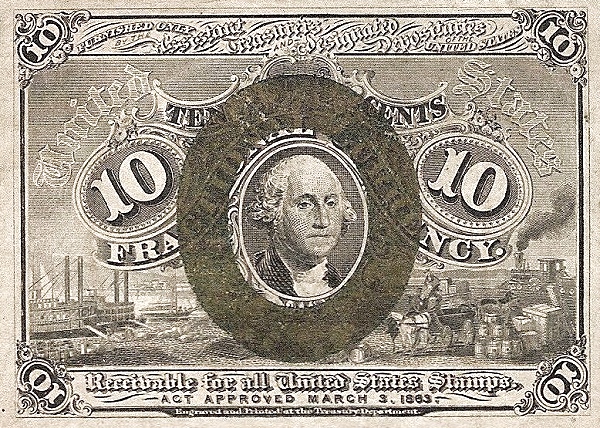
The Helmeted Head of Minerva on Fractional Currency: Classical Allegory on Small-Change Emergency Notes

During the Civil War and Reconstruction era, the United States turned to classical mythology to grace its smallest emergency currency, placing the helmeted visage of Minerva on several Fractional Currency issues. Understanding these allegorical design choices, their catalog numbers, and their rarity unlocks one of the most fascinating and accessible collecting specialties in American paper money.

Read More →

Counting House Pinholes: How Graders Detect Them and Why They Crush Your Note’s Value

Pinholes left by 19th and early 20th century counting house practices remain one of the most penalized defects in modern currency grading, yet many collectors struggle to spot them before submitting notes. This guide walks through detection techniques, grading penalties, and which series are most commonly affected so you can protect your collection.

Read More →

Inverted Back Errors: How Upside-Down Printing Happens and What These Notes Are Worth

Inverted back errors rank among the most visually dramatic mistakes in U.S. currency production, created when a sheet of paper passes through the press a second time in the wrong orientation. Understanding exactly how these errors occur, which series produced the most collectible examples, and what they command at auction can mean the difference between recognizing a fortune and passing one by.

Read More →

The Series 1934B $5 Federal Reserve Note: The Rarest Postwar Small-Size Five-Dollar Issue by District

Among postwar small-size currency, the Series 1934B $5 Federal Reserve Note stands out as one of the most district-specific rarity puzzles a collector can chase. This guide breaks down print runs, signature combinations, key districts, and grading considerations to help you identify and value these elusive green-seal fives.

Read More →

The Series 1907 $5 United States Note Woodchopper: Why This Note Has a Cult Following Among Collectors

The Series 1907 $5 United States Note featuring the iconic ‘Woodchopper’ vignette is one of the most visually striking and historically significant large-size notes ever issued by the U.S. Treasury. Learn what makes this note a perennial favorite, how to identify key varieties, and what condition really means when you are hunting one for your collection.

Read More →

The Blue and Red Fiber Threads in US Currency Paper: Security Feature or Artistic Choice?

Those tiny colored threads embedded in your dollar bill are one of the oldest and most misunderstood security features in American currency history, dating back to 1942. This deep dive traces their origin, evolution, and surprising significance to collectors hunting varieties and high-grade examples.

Read More →

Mule Notes Explained: Mismatched Plate Combinations and How to Identify Them

Mule notes are among the most fascinating transitional varieties in US paper money collecting, created when face and back plates of different microprint sizes were accidentally paired during production. Understanding how to identify them, which series to target, and what drives their premiums can transform how you approach a currency collection.

Read More →