
US Notes

The Gold Recall of 1933: How FDR’s Executive Order 6102 Killed Gold Certificates
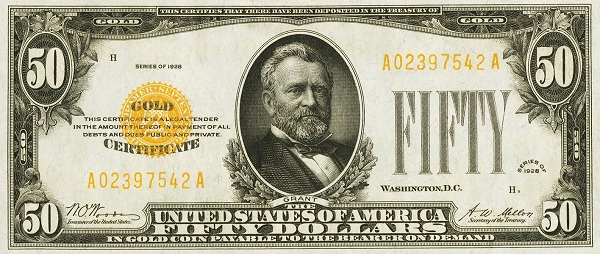
On April 5, 1933, Franklin Roosevelt signed Executive Order 6102 and effectively ended the era of circulating Gold Certificates in the United States overnight. For currency collectors, this moment created some of the most legally complex, historically significant, and financially valuable notes in all of American numismatics.

Read More →
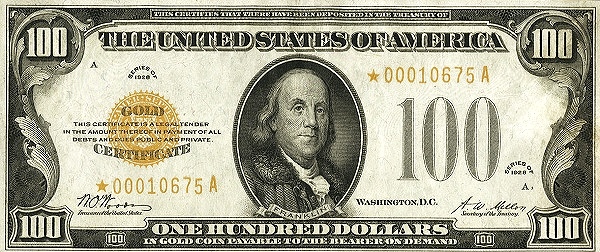
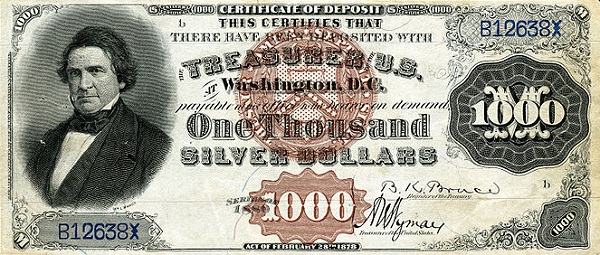
The United States Notes Act of 1878: Why Congress Forced Treasury to Maintain $346,681,016 in Legal Tender Notes Permanently

In 1878, Congress passed landmark legislation locking the volume of United States Notes at exactly $346,681,016 forever, a political and monetary decision that would shape American currency for the next century. Understanding this act unlocks the collecting story behind every Legal Tender Note issued after that date, from common circulated examples to the rarest high-denomination survivors.

Read More →

The Seal of the Treasury Department on US Currency: How Its Design Changed from 1862 to the Present

Few elements of American paper money carry more historical weight than the Treasury seal, yet most collectors overlook its evolution across 160 years of currency design. This deep dive traces every major change to the seal’s appearance, color, and placement, giving you the tools to date, attribute, and value notes more precisely.

Read More →

The Signatures on US Currency: A Visual History of How Treasury Secretary and Register Autographs Changed from Handwritten to Engraved

The signatures appearing on United States paper money tell a surprisingly rich story about the evolution of American currency production, from hand-signed notes of the 1860s to the precision-engraved facsimiles of today. Understanding signature combinations, their dates of use, and their relative scarcity is one of the most rewarding areas of study for serious currency collectors.

Read More →

The Currency of Alaska Before Statehood: How Frontier Settlements Used and Abused Federal Notes

Long before Alaska became the 49th state in 1959, its remote settlements, mining camps, and trading posts subjected federal paper money to conditions unlike anywhere else in the continental United States. Understanding how these notes circulated, deteriorated, and were replaced reveals a fascinating collecting niche with genuine scarcity and compelling history.

Read More →

Gold Certificates, Serial Numbers, and a Kidnapper’s Ransom: How Marked Currency Caught Bruno Hauptmann

The 1932 Lindbergh kidnapping ransom payment, made in Gold Certificates and Federal Reserve Notes, became one of the most consequential currency investigations in American history. For collectors, the notes involved offer a rare intersection of numismatic history and criminal legend that continues to shape the value and fascination of 1928 and 1934 Gold Certificate series.

Read More →

Continental Currency and Why It Failed: Lessons from America’s First Paper Money

Continental Currency was the young United States’ bold experiment in paper money, and its catastrophic collapse shaped American monetary policy for generations. Understanding why it failed, what the notes looked like, and how to identify and collect genuine specimens makes this one of the most historically rich areas in all of American numismatics.

Read More →

The Teapot Dome Scandal and Federal Reserve Notes: How 1920s Corruption Shook Public Trust in Paper Currency

The Teapot Dome Scandal of the early 1920s did more than topple a cabinet secretary — it cast a long shadow over public faith in government institutions, including the Federal Reserve System and its paper currency. Understanding this political crisis helps collectors appreciate why certain Series 1923 and 1928 Federal Reserve Notes carry such historical weight beyond their catalog values.

Read More →

Lincoln on the $5 Note: How the Treasury Navigated the Politics and Grief of Putting a Martyred President on American Currency

The story of Abraham Lincoln’s journey onto the $5 Federal Reserve Note is far more complicated than most collectors realize, stretching across decades of political caution, public sentiment, and Treasury debate. Understanding this history adds profound context to every Lincoln $5 note in your collection.

Read More →

Silverites vs. Gold Bugs: How the 1890s Currency Debates Transformed Silver Certificate Production

The fierce monetary battles of the 1890s, culminating in William Jennings Bryan’s legendary ‘Cross of Gold’ speech, directly shaped the design, volume, and ultimate fate of Silver Certificate production in America. Understanding this political firestorm helps collectors decode the rarest and most historically charged notes of the era.

Read More →