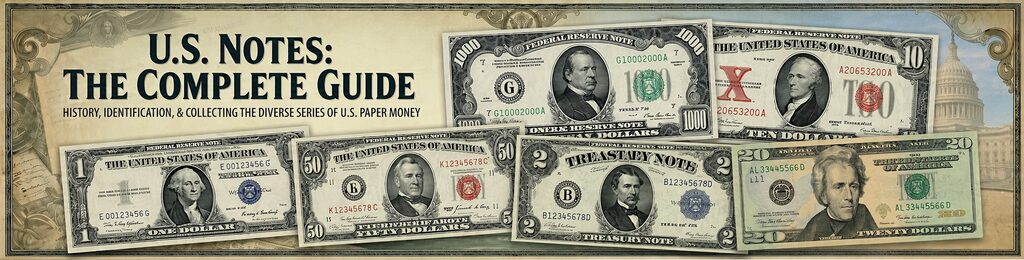
US Notes

United States Notes Series 1966 $100 Red Seal: The Last Legal Tender Note Issued for General Circulation

The Series 1966 $100 United States Note holds a singular place in American monetary history as the final large-denomination Legal Tender Note ever issued for general circulation. Understanding its origins, varieties, and collector market will help you evaluate and appreciate one of the most historically significant pieces of 20th-century American paper money.

Read More →
Federal Reserve Notes Series 1928 $5 through $100: Collecting the First Small-Size Issue Denomination by Denomination

The Series 1928 Federal Reserve Notes represent one of the most historically significant transitions in American currency, marking the shift from large-size to the compact format still used today. This denomination-by-denomination breakdown reveals which notes are common finds and which are genuine rarities that command serious premiums in today’s market.

Read More →

The Series 1969 Federal Reserve Notes: When the Treasury Seal Changed from Gold to Green

In 1969, the Bureau of Engraving and Printing quietly made one of the most visually significant changes to modern Federal Reserve Notes, swapping the traditional gold Treasury seal for a bold green one. Understanding this transition, its varieties, and what it means for your collection can unlock hidden value in notes you might already own.

Read More →

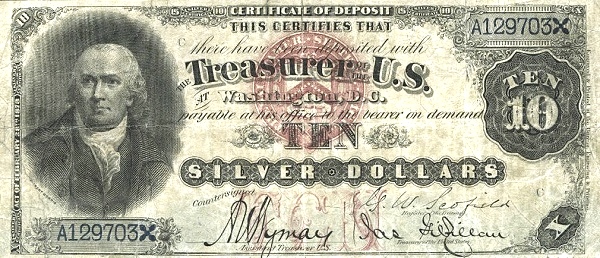
The Series 1878 $1 Silver Certificate: The Very First Silver Certificate Issue and What Makes It Unique

The Series 1878 $1 Silver Certificate holds a singular place in American monetary history as the very first silver certificate ever issued by the United States government. Understanding its design varieties, signature combinations, and surviving populations is essential knowledge for any collector serious about large-size currency.

Read More →

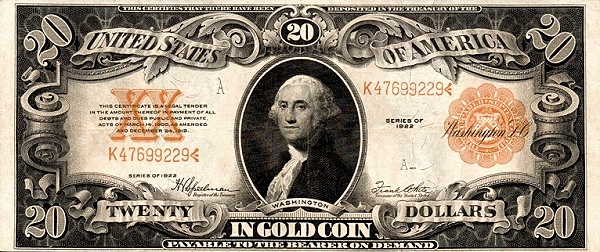
The Series 1922 $5 Gold Certificate: Porthole Notes and Why Collectors Chase High Grades

The Series 1922 $5 Gold Certificate is one of the most visually striking pieces of American paper money ever printed, featuring a circular vignette of Abraham Lincoln that collectors have nicknamed the ‘Porthole’ note. Understanding its design quirks, survival rates, and grading pitfalls is essential for anyone serious about building a meaningful Gold Certificate collection.

Read More →

The Series 1934C $5 Federal Reserve Note: Why Certain Federal Reserve Districts Produced Dramatically Fewer Examples

The Series 1934C $5 Federal Reserve Note is one of the most district-dependent collecting puzzles in mid-century US currency, with print runs varying by factors of ten or more across the twelve Federal Reserve Banks. Understanding which districts are genuinely scarce, which signature combinations to watch for, and how Treasury seal colors factor into value can transform a casual acquisition into a sharp collecting strategy.

Read More →

Series 1902 National Bank Note Blue Seal Third Charter: Understanding the Three Date Back Varieties

The Third Charter National Bank Notes of 1902 represent one of the most nuanced collecting challenges in large-size US currency, with three distinct varieties distinguished by their back designs and date panels. This guide breaks down every variety, signature combination, and rarity tier so you can identify, evaluate, and confidently pursue these fascinating blue-seal notes.

Read More →

Series 1934 $100 Federal Reserve Note Light Green Seal Varieties: Which Districts Are the Rarest

The Series 1934 $100 Federal Reserve Note with its distinctive light green Treasury seal is one of the most nuanced and rewarding collecting pursuits in large-size and transitional U.S. currency. This guide breaks down every Federal Reserve district, their relative scarcities, known print runs, and what separates a common circulated example from a genuinely elusive prize.

Read More →

Federal Reserve Notes Series 1950D $5: The Scarcest Suffix Letter of the Postwar Five-Dollar Issue

Among the postwar Federal Reserve Note five-dollar series, the 1950D stands apart as the most elusive suffix letter issued, with critically low print runs at several Federal Reserve Districts. Understanding exactly why this series is scarce, which districts to prioritize, and how to authenticate genuine examples can transform your collecting strategy for mid-century small-size currency.

Read More →

The Series 1929 $20 National Bank Note Type 2: How the Added Charter Number Changed the Design

The Series 1929 $20 National Bank Note underwent a subtle but significant redesign when the Bureau of Engraving and Printing added the issuing bank’s charter number in black ink to the face of the note, creating the Type 2 variety that collectors prize today. Understanding the differences between Type 1 and Type 2, which banks issued each variety, and how to grade and value these Depression-era nationals is essential knowledge for any serious currency collector.

Read More →