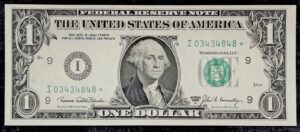
Pick up a well-circulated 1963 Federal Reserve Note and compare it side by side with a 1969 note of the same denomination. The difference jumps out immediately once you know what to look for: the Treasury Department seal on the right side of the face shifted from a bright, warm gold (sometimes described as yellow or ochre) to the same bold green used for the serial numbers and Federal Reserve district seal. It sounds like a minor cosmetic tweak, but this change touched every denomination in circulation, affected multiple signature combinations, and created a collecting landscape rich with varieties, transitional notes, and genuine rarities. The Series 1969 Federal Reserve Notes represent a definitive modern watershed, and savvy collectors ignore them at their peril.
Why the Seal Color Changed
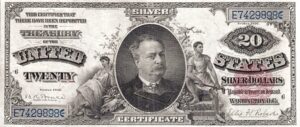
The gold-colored Treasury seal had appeared on Federal Reserve Notes since the series of 1963, when FRNs replaced the older design that carried red seals (on United States Notes) and blue seals (on Silver Certificates). The gold ink used for that Treasury seal was a source of periodic printing headaches at the Bureau of Engraving and Printing. The specialized gold ink required separate press runs, additional quality control steps, and was more costly to maintain than the green ink already used throughout the production process for serial numbers and Federal Reserve district seals. By standardizing to a single green ink for all three seal and number elements, the BEP streamlined production considerably.
The decision was implemented starting with the Series 1969 notes, which carried the signatures of Treasurer Dorothy Andrews Elston and Secretary of the Treasury David M. Kennedy. The change was not announced with any particular fanfare, and most Americans handling the new notes in daily commerce never noticed the difference. For collectors, however, the contrast between a gold-seal 1963-B note and a green-seal 1969 note is unmistakable and historically meaningful.
The Signature Combinations: A Collector’s Roadmap
The Series 1969 designation is not a single issue. It encompasses five distinct suffix varieties, each defined by a change in at least one of the two facsimile signatures printed on the face of the note. Understanding who signed what, and when, is foundational to building a meaningful collection of this era.
Series 1969 (No Suffix)
Treasurer Dorothy Andrews Elston (later Dorothy Andrews Kabis after her marriage in 1970) signed alongside Secretary David M. Kennedy. This base series introduced the green Treasury seal across all six denominations and all twelve Federal Reserve districts. Kennedy had been appointed by President Nixon at the start of 1969, making these notes distinctly associated with the early Nixon administration. Star note production for this series is substantial enough that most denominations are collectible without excessive difficulty, though district-specific stars vary considerably in scarcity.
When searching for Series 1969 base notes in higher grades, focus on the $50 and $100 denominations from smaller Federal Reserve districts such as Minneapolis (I) and Kansas City (J). These see lower print runs than New York or Chicago issues and are significantly underappreciated in MS-63 and above.
Series 1969-A
When Dorothy Elston married and legally changed her name, the BEP updated the Treasurer’s signature plate to read Dorothy Andrews Kabis, creating the 1969-A series. Secretary Kennedy remained in place. This name-change variety is one of the more charming quirks of American currency history and makes the 1969-A notes a distinct collectible in their own right. The $1 Federal Reserve Note in Series 1969-A is plentiful in circulated grades, but gem uncirculated examples with sharp corners and bright paper are harder to find than their abundance in change jars might suggest.
Series 1969-B
John B. Connally replaced David Kennedy as Treasury Secretary in February 1971, producing the Kabis-Connally signature pairing of the 1969-B series. This is one of the shorter-lived pairings of the era, and several denomination-district combinations were printed in comparatively small quantities. The $100 Federal Reserve Note in Series 1969-B is particularly sought after by high-denomination collectors, and star notes from certain districts command strong premiums.
Series 1969-C
Romana Acosta Bañuelos became the 34th Treasurer of the United States in December 1971, paired here with Secretary Connally. The Bañuelos-Connally notes carry the 1969-C designation. Bañuelos was the first Mexican-American to hold the Treasurer’s office, and her appointment generated widespread public interest at the time. The $1 1969-C is common in circulated grades, but the higher denominations from low-volume districts reward patient searching.
Series 1969-C star notes in the $5 denomination from the Minneapolis (I) and San Francisco (L) districts are genuinely scarce in grades above Very Fine. Population reports from PCGS Currency and PMG show very few examples above EF-40, making raw examples in that range strong candidates for professional grading before sale or trade.
Series 1969-D
George P. Shultz succeeded Connally as Treasury Secretary in June 1972, creating the Bañuelos-Shultz pairing of the 1969-D notes. This final suffix of the 1969 family bridges directly into the Series 1974 notes that followed. The 1969-D $1 Federal Reserve Note was printed in very large quantities for most districts, keeping common examples affordable. However, the $50 and $100 denominations in 1969-D are underrated as collectibles, and star notes in these denominations from districts like Minneapolis, Kansas City, and Dallas are legitimately difficult to locate in Choice Uncirculated condition.
Denomination by Denomination: What to Look For
The Series 1969 family was produced across all six denominations then in active circulation. Each denomination presents its own collecting challenges and opportunities.
The $1 Federal Reserve Note is the entry point for most collectors. Printed by the billions across the full 1969 series run, circulated examples are found in pocket change even today. Collectors should target star notes, low serial numbers (below 00001000), and solid or repeating serial numbers in any suffix for real value. A Series 1969-B $1 star note from the Atlanta (F) district in gem uncirculated condition can bring $75 to over $150 depending on centering.
The $5, $10, and $20 denominations represent the mid-range collecting tier. These see heavier circulation wear and are harder to locate in the higher Uncirculated grades. A 1969-A $10 from the Richmond (E) district in PMG 65 EPQ commands respect at auction. The $20 in any 1969 suffix is a workhorse note, and gem examples with full original paper quality are genuinely satisfying finds.
The $50 and $100 denominations are where serious collectors focus attention. Lower production volumes, higher face values discouraging casual saving, and the tendency of larger notes to be pressed flat rather than bag-stored all combine to make high-grade examples genuinely scarce. A 1969-C $100 from the Kansas City (J) district graded PMG 66 EPQ sold at a 2021 Heritage auction for well above typical retail estimates.
Original paper quality (the EPQ or PPQ designation from major grading services) matters enormously for Series 1969 notes. Many survivors were stored in wallets, money clips, or paper bags that introduced moisture or chemical contamination. When buying ungraded examples, look for bright white or cream paper with no musty smell and crisp, unrounded corners. These characteristics often separate a 64 from a 66 once the note is submitted.
Star Notes: The Heart of the Collection
Star notes for the Series 1969 family were produced at both the Washington, D.C. printing facility and, beginning in 1968, the Fort Worth, Texas facility (though Fort Worth notes are more prominently associated with later series). Star replacement notes substitute for misprinted sheets and carry an asterisk at the end of the serial number. For the 1969 series, key star note scarcities include the 1969-B $50 from Minneapolis, which saw fewer than 64,000 star notes printed, and the 1969-C $100 from Kansas City, with a similarly constrained run.
The Friedberg catalog numbers (from Paper Money of the United States by Arthur and Ira Friedberg) provide the standard reference system for these notes. Collectors serious about the 1969 series should work from the current edition, as print run data and population figures are updated periodically. The relevant Friedberg numbers for the 1969 base series run from F-1904 through F-2172 depending on denomination, district, and suffix, with star note varieties carrying the asterisk designation in the catalog.
Grading Considerations Specific to This Series
Series 1969 notes present some distinctive grading challenges. The green Treasury seal on these notes can show light ink wear even on notes that otherwise grade Very Fine or Extremely Fine, because the seal area is physically prominent and receives friction during handling. Examine the Treasury seal carefully: full, sharp detail in the scale and chevron elements suggests a higher-circulated grade, while flattening or rubbing indicates significant wear regardless of what the rest of the note looks like.
Centering is another critical variable. The BEP’s sheet-fed presses of this era produced notes with variable margins, and a well-centered example with even borders on all four sides commands a premium. Eye appeal, always a factor in currency grading, is particularly relevant for type collectors who want a single representative example of each denomination or signature combination.
| Series / Suffix | Denomination and District | Approx. Star Print Run | Rarity |
|---|---|---|---|
| 1969 (Base) | $1, New York (B) Star | 3,200,000 | Common |
| 1969-A | $1, Boston (A) Star | 640,000 | Scarce |
| 1969-B | $1, Minneapolis (I) Star | 128,000 | Key Date |
| 1969-B | $50, Minneapolis (I) Star | 64,000 | Rare |
| 1969-C | $5, Minneapolis (I) Star | 128,000 | Scarce |
| 1969-C | $100, Kansas City (J) Star | 64,000 | Rare |
| 1969-D | $1, Atlanta (F) Star | 640,000 | Scarce |
| 1969-D | $50, Dallas (K) Star | 64,000 | Rare |
| 1969-B | $100, San Francisco (L), Regular Issue | Not applicable | Scarce |
| 1969-A | $50, Richmond (E) Star | 72,000 | Scarce |
Building a Series 1969 Type Set
For collectors who do not want to chase every district and denomination combination, a type set approach offers a structured and achievable goal. A complete signature-variety type set would include one example of each denomination for each of the five suffixes, totaling thirty notes. A more focused version might collect just the $1 note across all five suffix varieties, or just the $100 notes across all five. Either path produces a historically cohesive collection that tells the story of the Nixon-era Treasury Department through paper currency.
Budget-conscious collectors can complete a circulated $1 type set for well under $50 total, making this an ideal project for newcomers to modern note collecting. Those with deeper pockets targeting gem uncirculated examples of the $100 denomination across all five suffixes are looking at a more demanding hunt, but the resulting set would be a genuinely impressive numismatic achievement.
Do not overlook the $2 Federal Reserve Note when studying this era. The $2 FRN was discontinued after Series 1963-B and did not return until the Bicentennial $2 United States Note of 1976. This means the Series 1969 family has a natural gap at the $2 denomination, which is itself a useful conversation starter when displaying the collection.
Conclusion: A Transition Worth Collecting
The Series 1969 Federal Reserve Notes occupy a unique position in American currency history. They mark the end of the gold Treasury seal era and the beginning of the fully standardized green-ink design that persists today. Across five suffix varieties, six denominations, and twelve Federal Reserve districts, the 1969 family offers hundreds of collectible combinations suited to every budget and collecting philosophy. Whether you are drawn to the historical significance of the seal change, the challenge of completing a star note run, or simply the visual appeal of a well-centered gem uncirculated $100, the Series 1969 notes reward careful attention. Start by comparing a pre-1969 gold-seal note with a 1969 green-seal example side by side. Once you see the difference, you will never look at modern Federal Reserve Notes the same way again.