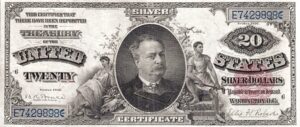
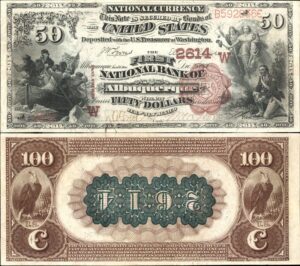
On July 10, 1929, Americans reached into their wallets and found something unfamiliar: paper money roughly the size of a playing card. The transition from the large-size notes that had defined American currency since the Civil War era to the new small-size format was one of the most sweeping redesigns in the history of United States paper money. The Series 1928 Federal Reserve Notes, authorized under the Federal Reserve Act and issued beginning in 1928 with broader circulation starting in 1929, formed the backbone of that transition. Every denomination from $5 through $100 carries its own distinct story, its own quirks of production, and its own collecting challenges. Whether you are just beginning to explore small-size type collecting or you are hunting the final pieces for a complete set, understanding each denomination on its own terms is essential.
Setting the Stage: What Makes Series 1928 FRNs Unique
All Series 1928 Federal Reserve Notes share the signature combination of Register of the Treasury Walter O. Woods and Secretary of the Treasury Andrew W. Mellon. The green Federal Reserve seal appears to the left of the portrait, and a green Treasury seal appears to the right. The notes bear a redeemability clause reading “Redeemable in Gold on Demand at the United States Treasury, or in Gold or Lawful Money at Any Federal Reserve Bank,” a promise that would be altered in subsequent series as the country moved away from the gold standard. That specific gold-redemption clause makes Series 1928 FRNs historically compelling objects, representing the last gasp of a monetary era.
Because these notes were issued across all twelve Federal Reserve Districts, from Boston (A) through San Francisco (L), collecting a complete set by denomination and district is a substantial undertaking. Some district and denomination combinations are genuinely scarce; others turn up regularly in dealer inventories. Star notes, used to replace defective notes during printing, command significant premiums across all denominations and districts.
When purchasing Series 1928 FRNs, always verify that the gold-redemption clause is fully legible. Heavy circulation can soften this text significantly, and notes with a clear, readable clause often command a modest premium even at the same technical grade.
The Series 1928 $5 Federal Reserve Note
The $5 note features Abraham Lincoln in the center portrait position, with the Lincoln Memorial vignette on the reverse, a pairing that has defined the $5 bill for nearly a century. In Friedberg catalog terms, the Series 1928 $5 FRNs are listed as Fr. 1950-A through Fr. 1950-L for the twelve districts. Total production across all districts ran into the hundreds of millions of notes, making this the most commonly encountered denomination from the series in circulated grades.
That said, condition is everything. Finding a Series 1928 $5 in Very Fine (VF-25 to VF-35) is straightforward, with prices typically ranging from $15 to $40 depending on district. Extremely Fine (XF-40 to XF-45) examples can fetch $50 to $90, while genuine uncirculated specimens grading MS-63 or better by PMG or PCGS Currency standards can command $150 to $400. The Minneapolis (I) and Kansas City (J) districts tend to show slightly lower surviving populations in high grade and carry modest premiums over Boston or New York issues.
Star notes for the $5 denomination are cataloged separately (Fr. 1950-A* through 1950-L*) and are universally scarcer than their regular counterparts. Boston and Atlanta stars in particular show small replacement runs and are genuinely difficult to locate in any grade above Fine.
The Series 1928 $10 Federal Reserve Note
Alexander Hamilton anchors the $10 note, with the United States Treasury building depicted on the reverse. Friedberg numbers Fr. 2000-A through Fr. 2000-L cover the standard district issues. Print runs for the $10 were substantial but somewhat lower than the $5, reflecting the denomination’s lower velocity in everyday transactions of the late 1920s.
Circulated examples in Fine to Very Fine condition are plentiful and affordable, typically priced between $20 and $60. The real collecting interest in the $10 Series 1928 lies in the star notes and the higher-grade uncirculated survivors. A PMG Gem Uncirculated 65 EPQ example of a common district like New York (B) or Chicago (G) might sell at auction for $400 to $700. Stars from the Dallas (K) and San Francisco (L) districts are particularly sought after, with XF examples sometimes exceeding $400 and uncirculated pieces reaching into four figures at major auction houses like Heritage and Stack’s Bowers.
For Series 1928 $10 and $20 notes, insist on third-party grading (PMG or PCGS Currency) for any note you are paying more than $100 for. Cleaned or pressed notes are surprisingly common in this series, and artificial brightening can be nearly invisible to the naked eye without ultraviolet examination.
The Series 1928 $20 Federal Reserve Note
The $20 note, bearing Andrew Jackson’s portrait and the White House vignette on the reverse, is cataloged as Fr. 2050-A through Fr. 2050-L. The $20 was arguably the workhorse denomination of American commerce in 1929, and production figures reflect that: combined district print runs easily surpassed one billion notes over the life of the type.
The sheer volume printed means that circulated Series 1928 $20s are the most available of any denomination in the series, often found for $25 to $50 in VF condition. However, the same high circulation rate means that truly original, high-grade uncirculated examples are proportionally rarer than one might expect. A crisp, original PMG 64 or 65 EPQ example is a legitimate trophy, with auction realizations for premium pieces from scarcer districts routinely exceeding $500 to $1,200.
Star notes for the $20 denomination follow Fr. 2050-A* through 2050-L* in the Friedberg catalog. The Minneapolis star is a recognized key, with surviving examples in any grade above Very Fine being genuinely uncommon. Collectors building a district star set for the $20 denomination should budget accordingly for Minneapolis, Kansas City, and Dallas stars.
The Series 1928 $50 Federal Reserve Note
Here is where the collecting challenge intensifies considerably. The $50 note, featuring Ulysses S. Grant and the United States Capitol building on the reverse, was produced in far smaller quantities than the lower denominations. The Friedberg catalog lists these as Fr. 2100-A through Fr. 2100-L, but not all twelve districts issued the $50 in Series 1928, and surviving populations in collectible grades are limited.
A circulated Series 1928 $50 in Very Fine condition typically retails between $100 and $200, while an XF example can approach $300 to $450. Uncirculated specimens are legitimately scarce: a PMG 63 or better example from virtually any district is a premium collectible, and auction results for gem examples regularly exceed $1,000 to $2,500. Star notes for the $50 are rare across all districts, with some district stars being among the most elusive items in the entire small-size Federal Reserve Note series.
The Series 1928 $50 and $100 notes are prime targets for counterfeiting by alteration: unscrupulous sellers occasionally alter lower-denomination notes or create fraudulent high-denomination impressions. Buy these denominations only from established dealers or with full third-party certification and a solid provenance trail.
The Series 1928 $100 Federal Reserve Note
The flagship denomination of the series places Benjamin Franklin on the obverse and Independence Hall on the reverse, a combination that has remained iconic ever since. Cataloged as Fr. 2150-A through Fr. 2150-L, the $100 note represents the pinnacle of the Series 1928 type set and the most significant challenge for completionists.
Even circulated examples in Fine to Very Fine condition can command $150 to $300, reflecting both the face value premium and genuine collector demand. Extremely Fine pieces frequently bring $350 to $600, and the uncirculated market is robust: PMG 64 EPQ or better examples have realized $2,000 to $5,000 at major auction sales, depending on district and eye appeal. The Boston (A), Richmond (E), and Minneapolis (I) districts are notably scarcer in high grade for the $100 denomination.
Star notes for the Series 1928 $100 are among the most coveted items in all of small-size currency collecting. Most district stars saw extremely limited replacement runs, and several are unknown or reported in only single-digit surviving examples. Any star note for this denomination and series should be considered a major rarity regardless of district, and auction appearances generate significant bidding interest from advanced collectors.
Comparing the Denominations: A Collector’s Framework
Stepping back and looking at all five denominations together, a clear pattern emerges. Accessibility decreases and rarity increases as the denomination rises, but the relationship is not perfectly linear. The $20, despite its massive print run, can be surprisingly hard to find in original, problem-free uncirculated condition due to heavy circulation wear. The $50 occupies a middle ground where even circulated examples carry meaningful numismatic value. And the $100 star notes occupy rarefied air that overlaps with the most advanced level of small-size currency collecting.
For collectors entering the series, building a type set (one example of each denomination, any district, in a consistent grade) is a satisfying and achievable goal. A VF type set of all five denominations can be assembled for under $500 with patience. An XF type set might run $700 to $1,200. A fully uncirculated, graded type set is a multi-thousand-dollar project that represents genuine numismatic accomplishment.
When building a type set, prioritize notes with original paper surfaces and natural color. A VF-30 note with original embossing and bright color is often more desirable, and sometimes more valuable, than a technically higher-graded note that has been cleaned or has a musty, washed-out appearance.
| Denomination | Variety / District | Approx. Combined Print Run | Rarity |
|---|---|---|---|
| $5 | Regular Issue, New York (B) or Chicago (G) | 200,000,000+ | Common |
| $5 | Star Note, Minneapolis (I) or Kansas City (J) | Est. under 500,000 each | Scarce |
| $10 | Regular Issue, Boston (A) or Philadelphia (C) | 100,000,000+ | Common |
| $10 | Star Note, Dallas (K) or San Francisco (L) | Est. under 300,000 each | Rare |
| $20 | Regular Issue, Any Major District | 1,000,000,000+ | Common |
| $20 | Star Note, Minneapolis (I) | Est. under 200,000 | Key Date |
| $50 | Regular Issue, Any District, VF or Better | Under 50,000,000 combined | Scarce |
| $50 | Star Note, Any District | Extremely limited per district | Rare |
| $100 | Regular Issue, Boston (A) or Minneapolis (I), Unc. | Low survivors in high grade | Rare |
| $100 | Star Note, Any District | Single digits to low dozens known | Key Date |
Conclusion: A Series Worth Pursuing at Every Level
The Series 1928 Federal Reserve Notes occupy a foundational place in American numismatic history. They launched the small-size format that defined the twentieth century, carried a gold-redemption clause that was soon to be eliminated, and came packaged in a design vocabulary that still resonates today. Whether you are drawn to the accessible affordability of a circulated $5 note or the thrill of chasing a $100 star note that may have only a handful of known survivors, the Series 1928 FRNs offer an endlessly rewarding collecting landscape. The denomination-by-denomination framework outlined here provides a practical roadmap, but the real reward is handling these remarkable pieces of economic history and appreciating the moment, nearly a century ago, when American money became the size it is today.