
US Notes

McKinley’s Assassination and Roosevelt’s Currency Revolution: How One Bullet Changed the Faces on American Money
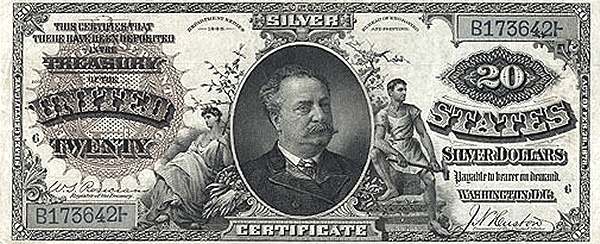
When an anarchist’s bullet struck President William McKinley on September 6, 1901, the ripple effects reached far beyond politics, reshaping the very faces Americans saw on their paper currency for decades. This deep-dive examines how Theodore Roosevelt’s Treasury appointments and the currency reforms of 1902 to 1923 transformed the visual landscape of US banknotes, with specific guidance on the key series, signature combinations, and collectible varieties that resulted.

Read More →
The BEP’s Production Records During the Korean War: How Military Spending Drove Currency Print Runs to Post-Depression Highs

The Korean War (1950-1953) triggered an explosive surge in Federal Reserve Note production, pushing the Bureau of Engraving and Printing to output levels not seen since World War II mobilization. Understanding these production peaks helps collectors identify high-mintage common notes versus scarcer transitional series from this pivotal era.

Read More →

How the National Bank Act of 1864 Tightened Charter Requirements and Standardized the Look of National Bank Notes

The National Bank Act of 1864 fundamentally reshaped American banking and produced one of the most visually cohesive yet regionally diverse series of notes in US currency history. Understanding its provisions unlocks the collecting logic behind thousands of National Bank Note varieties still sought by specialists today.

Read More →

How the Spanish-American War of 1898 Strained the Bureau of Engraving and Printing: Stamps, Bonds, and the Battle for Federal Currency Production

The four-month conflict of 1898 forced the Bureau of Engraving and Printing into a production crisis that reshaped how the federal government printed money, stamps, and war bonds simultaneously. Collectors who understand this period gain critical context for dating transitional notes, identifying overworked press signatures, and spotting the fiscal instruments that financed America’s first overseas war.

Read More →

The Chase National Bank and the Politics Behind National Bank Note Charters

Chase National Bank’s rise from a modest 1877 New York charter to one of America’s most powerful financial institutions left a fascinating trail of collectible currency spanning multiple charter periods. Understanding the political machinery behind National Bank Note charters unlocks why certain Chase notes command premium prices today and reveals the surprising story of how banking ambition shaped American paper money.

Read More →

The Maryland Colonial Currency Acts: Paper Money Before the United States Existed

Long before the Continental Congress printed its first notes, Maryland colonists were already wrestling with the politics, economics, and practicalities of paper money through a series of landmark Currency Acts. This deep dive into Maryland’s colonial paper currency reveals a fascinating collecting field rich with historical significance, genuine rarity, and surprisingly accessible entry points for today’s numismatists.

Read More →

Dried Up and Blown Away: How the Dust Bowl Killed Rural National Banks and Ended Small-Town Charter Notes in Oklahoma and Kansas

Between 1930 and 1939, hundreds of small national banks across Oklahoma and Kansas collapsed under the combined weight of agricultural devastation, deposit flight, and falling crop prices, taking with them some of the rarest and most historically resonant charter notes ever issued. For collectors, these Depression-era survivors represent the final chapter of frontier banking, and understanding which banks failed, when, and why dramatically sharpens the hunt for genuinely scarce paper.

Read More →

The Pecora Commission of 1933: How Banking Scandals Killed the National Bank Note Era

The dramatic Senate hearings of 1933 exposed corruption at America’s largest financial institutions, accelerating sweeping banking reforms that rendered National Bank Notes obsolete within two years. Understanding this political and financial upheaval is essential for collectors who want to appreciate why certain late-series National Bank Notes are among the scarcest and most historically significant pieces in American paper money.

Read More →

How the Federal Reserve Handled the 2008 Financial Crisis: Currency Production Spikes and What Collectors Saw

The 2008 financial crisis triggered some of the most dramatic shifts in Federal Reserve Note production in modern history, with print runs surging and new series notes entering circulation under extraordinary economic pressure. For currency collectors, the crisis years left behind a fascinating paper trail of high-print-run notes, transitional series, and subtle production anomalies that continue to reward careful study today.

Read More →

The BEP’s Wartime Conversion of 1942: How Ink Formulas, Paper Supplies, and Engravers Were Redirected to Support the War Effort

When the United States entered World War II, the Bureau of Engraving and Printing underwent one of the most dramatic operational transformations in its history, quietly reshaping the look, feel, and composition of American paper money. Understanding these wartime changes is essential for collectors who want to properly attribute, grade, and value the fascinating transitional notes produced between 1942 and 1945.

Read More →