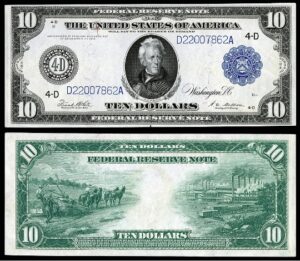
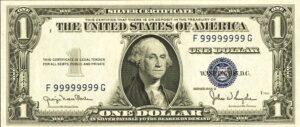
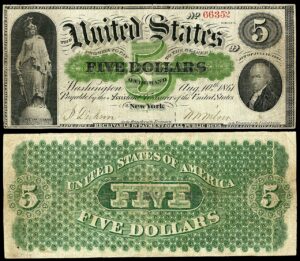
Pick up a well-preserved $5 Silver Certificate from the 1899 series and hold it under a loupe. The portrait of a Native American chief rendered in the center vignette is not simply printed, it is sculpted in ink, with microscopic ridges of pigment that rise almost imperceptibly from the paper surface. That tactile quality is the direct inheritance of a chain of steel tools that begins with a single master engraver and ends, many steps later, at a press running 10,000 sheets a day. Collectors who understand that chain, specifically the relationship between the die, the transfer roll, and the printing plate, are equipped to spot varieties, assess condition with greater precision, and understand why certain notes command prices that seem irrational until the tooling history behind them is understood.
The Master Die: Where Every Note Begins
The engraving process at the Bureau of Engraving and Printing starts with a blank piece of polished, softened steel called the master die. An engraver, working entirely by hand with a hardened steel tool called a burin, cuts the portrait or vignette directly into this steel surface in intaglio, meaning the image is recessed into the metal rather than raised above it. The lines the engraver cuts will ultimately hold ink and transfer it to paper under enormous pressure.
This is painstaking, irreversible work. George F.C. Smillie, one of the most celebrated BEP engravers of the late 19th and early 20th centuries, spent weeks or months on a single portrait. His rendering of Abraham Lincoln, used on numerous issues including the 1899 and 1923 $1 Silver Certificates, required cutting thousands of individual lines at varying depths and angles to simulate the tonal range of a photograph. A mistake in the die at this stage cannot be corrected with any meaningful invisibility; the die is either repaired with great difficulty or abandoned.
Once the engraver is satisfied, the soft steel die undergoes a hardening process, locking the image permanently. The hardened master die is now the genetic source of every note bearing that image. It is never used directly in a press. Its job is solely to produce the next link in the chain: the transfer roll.
Original BEP master dies are occasionally displayed at the National Museum of American History in Washington D.C. If you ever have the opportunity to examine one under magnification, you will immediately understand why intaglio-printed notes feel so different from modern offset-printed documents. The depth of the recessed lines in a die is visibly dramatic even to the naked eye.
The Transfer Roll: Duplicating Perfection in Steel
To make a printing plate, the BEP needs the image in relief, raised above the surface rather than recessed into it. This is where the transfer roll comes in. A transfer roll is a small cylinder of softened steel that is rocked under high pressure across the hardened master die. The raised portions of the die bite into the soft roll, creating a perfect mirror-image relief of the original engraving.
The transfer roll is then itself hardened. Now you have a small steel cylinder carrying the portrait in raised, reversed form. This hardened roll is the tool used to produce printing plates. The roll is rocked across a fresh, soft steel plate in a rocking-in press, impressing the image into the plate at each designated subject position. A 32-subject plate, for example, requires 32 separate rockings of the transfer roll, each one depositing the full portrait design into a precisely measured location on the plate surface.
Here is where the numismatic significance becomes acute. Each rocking of the transfer roll onto the plate is a mechanical event subject to slight variations in pressure, alignment, and steel condition. Over decades of use, a transfer roll accumulates microscopic wear. Early rockings from a fresh roll produce crisp, deeply defined images. Later rockings from a worn roll may show slightly shallower line definition, particularly in delicate areas like the fine crosshatching in a portrait’s shadow regions.
When examining large-size notes from the same series under 10x magnification, compare the sharpness of the portrait’s finest lines across multiple examples. Notes printed from early-production plates, before significant wear accumulated, will often display crisper hair and clothing detail than those from plates that had seen heavy use. This is one legitimate reason why two notes of identical grade can look visually different side by side.
The Printing Plate: Where Art Meets Industry
The finished printing plate, after all subject positions have been rocked in and the plate hardened, is a piece of precision machinery as much as it is an art object. Each plate receives a unique plate number, engraved by hand or machine into the plate itself, and this number is transferred directly onto every note printed from it. On large-size notes issued before 1929, the plate number appears as a small digit, typically found in a corner of the note face, sometimes accompanied by a position letter identifying which of the 12 or 18 subjects on the plate produced that specific note.
On small-size notes, issued from 1928 onward, plate numbers were recorded on both the face and back plates. The face plate number appears in the lower right area of the design while the back plate number appears in the lower right of the reverse. Collectors tracking plate numbers can, with reference resources like the work of Doug Murray on Federal Reserve Note plates, reconstruct which specific plate produced which serial number ranges, tying individual notes to specific moments in BEP production history.
Plates do not last forever. The repeated passage of a steel plate through the press rollers at high pressure, combined with the abrasive qualities of the cotton-linen paper stock, gradually wears the finer lines of the engraving. A note printed from plate number 1 of a given series on its first day of use will show different fine-line characteristics than a note from the same plate near the end of its service life, potentially after one to three million impressions. When a plate wore beyond acceptable print quality standards, it was retired and destroyed, a fact that makes certain low-number or high-number plates within a series historically traceable but physically irretrievable.
Why This Chain Matters: Varieties Born from Tooling
The die-roll-plate sequence is not merely mechanical trivia. It is the direct cause of collectible varieties. Consider the 1935A $1 Silver Certificate, a series issued in enormous quantities during and after World War II. The BEP produced hundreds of individual printing plates for this series, all derived from transfer rolls that had themselves come from earlier master dies. Notes printed from plates produced by a slightly worn transfer roll will show marginally different portrait characteristics than those from a fresh roll, though identifying this requires careful study and reference material.
More dramatically, when a die was re-engraved, even partially, the resulting transfer rolls and plates produced notes with visibly different design elements. The 1923 $1 Silver Certificate, for instance, used a modified Lincoln portrait die that collectors have documented as producing subtly different hair and collar detail compared to the 1899 issue using the earlier die generation. These are not errors. They are the predictable results of a handcrafted tooling chain being rebuilt or refreshed over time.
Plate numbers on small-size notes are a practical starting point for variety research that does not require expensive equipment. A standard loupe is sufficient to read the face and back plate numbers. Cross-reference these numbers with the Society of Paper Money Collectors (SPMC) reference materials and the Friedberg catalog to identify whether your note came from a plate with a known short printing history, which can significantly affect value even within a common series.
Reading the Evidence on the Note Itself
Knowing the tooling chain gives collectors a framework for evaluating notes that grading services alone cannot fully capture. A note graded MS-63 by PCGS Currency or PMG carries an objective assessment of preservation but says nothing about whether it was printed from a fresh plate at peak sharpness or a well-worn plate near retirement. The collector who can assess both preservation and print quality is working at a higher level of analysis.
Look for these indicators of print quality derived from plate condition. First, examine the portrait eyes. In a high-quality impression from a fresh plate, individual eyelashes and the subtle gradations of the iris are often distinguishable under magnification. Second, examine the fine geometric lathe work in the border patterns surrounding the vignette. These thin, mechanically engraved lines wear on the plate before the heavier portrait lines do, making border sharpness a useful early-warning indicator of plate wear. Third, on large-size notes especially, check the counters, the ornate numeral panels at the note’s corners. Fine interior shading lines within the numerals fade progressively as a plate ages.
| Series / Issue | Denomination and Type | Plate or Tooling Note | Rarity |
|---|---|---|---|
| 1869 | $1 United States Note | Rainbow note, first Concordia vignette die generation | Rare |
| 1899 | $1 Silver Certificate (Black Eagle) | Smillie eagle die, multiple plate varieties documented | Scarce |
| 1899 | $5 Silver Certificate (Chief) | Running Antelope portrait, single die source, short series | Rare |
| 1923 | $1 Silver Certificate | Modified Lincoln die, Speelman-White signatures | Common |
| 1928 | $1 Federal Reserve Note | First small-size plate series, low plate numbers highly sought | Scarce |
| 1934 | $500 Federal Reserve Note | McKinley portrait die, extremely limited plate production | Key Date |
| 1935A | $1 Silver Certificate (R and S experimental) | Separate plate runs for experimental paper test notes | Key Date |
| 1950E | $100 Federal Reserve Note | Late-series, low-print districts show plate scarcity | Scarce |
| 1966 | $100 United States Note | Red seal, final large-denomination US Note, limited plate run | Rare |
The Modern BEP and the Shift Away from Hand Engraving
The BEP began transitioning away from purely hand-engraved dies during the latter decades of the 20th century, incorporating photochemical and later digital design elements into the currency production workflow. The introduction of the Series 1996 $100 note, with its color-shifting ink and enlarged portrait, marked a significant departure. Modern security features like microprinting and color-shifting ink cannot be reproduced through traditional steel engraving alone and require layered printing from multiple plates using different processes, including offset lithography for background colors and intaglio for the portrait and numerals.
The intaglio element survives. Notes printed today still pass through an intaglio press for the portrait and serial numbers, preserving at least one layer of the tactile, hand-originated craftsmanship that began with a burin in an engraver’s hand. But the unbroken chain from single master die to transfer roll to full-image printing plate, as practiced from the 1860s through approximately the 1980s, represents a distinct era that produced the notes most prized by advanced collectors today.
Conclusion: The Plate Number as a Window into History
A plate number on a note is not merely an administrative detail. It is a direct link to a specific piece of hardened steel that was born from a transfer roll, which was itself born from a master die cut by an engraver who worked in silence and lamplight for weeks to get a single expression right. Collectors who trace that chain, from die to roll to plate to note, are not indulging in esoteric technicality. They are reading the biography of the object in their hands. That knowledge, applied consistently, is what separates a collection assembled by price from a collection assembled by understanding.