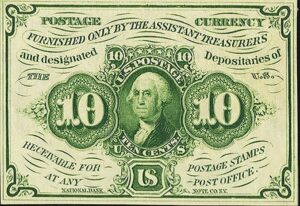
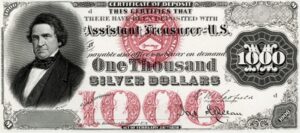
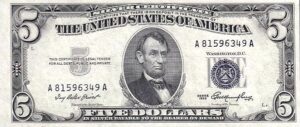
Pick up an 1875 $1 Legal Tender Note or an 1880 $20 Silver Certificate and hold it at a slight angle under good light. What you will find is not merely currency: it is a miniature steel-engraving of America in motion. Bureau of Engraving and Printing craftsmen spent hundreds of hours cutting locomotives mid-thunder, clipper ships under full sail, and allegorical scenes of harvest and industry into soft steel dies. These vignettes were not decorative afterthoughts. They were deliberate statements about national identity, economic confidence, and the relentless momentum of a country stitching itself together with iron rails and maritime trade routes.
The Art of the Vignette: How Transportation Imagery Got onto Federal Notes
Before the Civil War, American currency was a chaotic patchwork of private bank issues, each printed by firms competing to outdo one another in engraving quality. Companies like the American Bank Note Company (ABNC) and the National Bank Note Company (NBNC) had assembled libraries of hundreds of individual vignette dies, depicting everything from Native American scenes to mythological figures. When Congress passed the Legal Tender Act of February 25, 1862, authorizing the first federal “Greenbacks,” the Treasury contracted these same private firms to produce the new notes, inheriting their vignette libraries almost wholesale.
The Bureau of Engraving and Printing gradually took over production through the 1870s and 1880s, but the aesthetic vocabulary of those private bank engravers persisted well into the 1890s. Transportation vignettes were particularly popular because they communicated prosperity, connectivity, and national ambition without any partisan political overtones. A locomotive crossing a trestle bridge said the same positive things to a Vermont farmer in 1878 that it said to a Georgia merchant or a Kansas homesteader.
Locomotives: The Dominant Transportation Vignette
Railroad imagery appears on more 19th century federal notes than any other transportation theme. The most studied example among collectors is the train vignette on the Series 1869 $1 Legal Tender Note, Friedberg catalog number Fr. 18. The reverse of this note, part of the celebrated “Rainbow Note” series, features a vignette of a Columbus ship on the left and the landing of Columbus on the right, but the true transportation jewel of that era sits on the Series 1875 and 1878 $1 Legal Tender reverses (Fr. 29-36), where an engraving of a steam locomotive in three-quarter view dominates the left portion of the back design. The engraving is attributed to the BEP’s own die-cutters working from an earlier ABNC composition and shows a wood-burning American-type 4-4-0 locomotive of the kind that was the workhorse of US railroads from the 1850s through the 1880s.
When examining locomotive vignettes under magnification, look for the cab window details and the tender lettering. On high-grade examples (VF-30 and above), individual spoke details on the driving wheels are visible. If these are blurred or flat, the note has likely been cleaned or pressed, which dramatically affects value.
National Bank Notes offer an even richer hunting ground for locomotive imagery. The Original Series and Series 1875 National Bank Notes used a standardized set of back designs based on denomination. The $1 Original Series (Fr. 380-386) features the “Landing of the Pilgrims” vignette, but the $2 Original Series and Series 1875 notes (Fr. 387-393) carry the iconic “Sir Walter Raleigh in England” scene on one portion and a spectacular steam train vignette on the other half of the back. Because these notes were issued by thousands of individual national banks across the country, the same reverse vignette appears paired with hundreds of different bank names and charter numbers on the face, making the collecting matrix enormous.
The Series 1882 National Bank Notes introduced the “Brown Back” type (Fr. 469-531), where the charter number was printed in large numerals on the back flanked by intricate lathe-work. The train imagery moved to the face design on certain denominations. The $5 1882 Brown Back features an engraving on the left face panel showing a train emerging from a mountain tunnel, a composition that collectors and researchers have traced to an ABNC die originally cut around 1860 for use on state bank notes.
Sailing Ships and Steam Vessels: Maritime Vignettes
Maritime imagery on federal currency clusters heavily around two specific note types. The first is the Series 1878 and 1880 $1 Silver Certificates. The Series 1878 $1 Silver Certificate (Fr. 215-221) features on its face a bust of Martha Washington, making it the only US federal note to ever bear the portrait of a woman as a primary design element, but the reverse carries a ship-under-sail vignette that is often overlooked. The composition shows a full-rigged sailing vessel in a moderate sea, engraved with the kind of atmospheric cloudwork and wave detail that was a signature of BEP craftsmen of this period.
Far more dramatic is the ship imagery on the large-size $5 Silver Certificates of the 1886 and 1891 series. The Series 1886 $5 (Fr. 259-265) carries on its reverse a stunning central vignette of five Morgan silver dollars arranged in a cross pattern, but the border engraving incorporates nautical rope-and-anchor motifs that frame the composition. More directly relevant is the 1891 $5 Silver Certificate reverse (Fr. 266-270), which uses a vignette of a steam-powered vessel at sea, rendered in meticulous detail with paddle wheels visible and smoke trailing from twin stacks. This vignette has been identified by researchers as depicting a composite idealized side-wheel steamer of the type common on the Mississippi River system in the 1870s.
Silver Certificates from the 1880s and 1890s are dramatically undervalued relative to their visual appeal and historical significance. A circulated example of the Series 1886 $5 in Fine-12 can be acquired for $200 to $350 at most major auctions, making it an accessible entry point into large-size type collecting with genuine artistic merit.
The most famous ship vignette in all of 19th century US currency is arguably the one that never quite gets described that way: the Columbus ships on the Series 1875 $1 Legal Tender Note (Fr. 29). The right-side reverse vignette shows three sailing vessels under the legend “Columbus in Sight of Land,” adapted from a composition by the Historical Publishing Company. The level of rigging detail on high-grade examples is extraordinary, and notes grading Extremely Fine-40 or better, where the mast lines and crow’s nests are fully distinct, sell in the $1,200 to $2,500 range depending on signature combination.
Allegorical Industry: The Hybrid Transportation Scene
Some of the most compelling vignettes blur the line between pure transportation imagery and broader industrial allegory. The back of the Series 1863 and 1864 Interest-Bearing Notes, specifically the $100 One-Year Note and $100 Two-Year Note, features composite scenes that incorporate railroads, riverboats, and farm machinery in a single panoramic composition, essentially a visual argument that American industry was interconnected and unstoppable. These notes are extraordinarily rare today, with surviving populations in the dozens for most varieties, and high-grade examples when they do surface at major auction houses like Stack’s Bowers or Heritage typically realize $50,000 to well over $100,000.
The Series 1880 $50 Legal Tender (Fr. 163-167) carries on its face a left-side vignette often cataloged simply as “Mechanics” but which, under close examination, shows a foundry worker with a locomotive wheel in the background. The right panel carries an allegorical female figure representing “Commerce” with a steamship in the harbor behind her. This double-transportation-reference design is a favorite among thematic collectors who focus on industrial Americana.
When building a thematic transportation collection, request high-resolution images from dealers before purchase. Many auction catalog photographs, especially older printed catalogs from pre-2000 sales, do not resolve the vignette details that are critical to both attribution and grade verification. The PCGS and PMG holder photos available on their registry sites are generally superior for this purpose.
The $10 and $20 Denominations: Transportation as Status Symbol
Higher-denomination notes of the 1870s and 1880s used transportation vignettes to signal economic sophistication rather than popular accessibility. The Series 1878 $10 Silver Certificate (Fr. 282-290) features on its face a central portrait of Robert Morris flanked by allegorical figures, but it is the reverse that captivates: a horizontal panorama showing a steam locomotive crossing a stone viaduct over a river valley, with a steamboat visible on the water below the bridge. This dual-mode transportation scene, rail above and water below, is one of the most ambitious single vignette compositions in all of American currency engraving and measures nearly the full width of the note’s reverse panel.
The Series 1880 $20 Legal Tender (Fr. 127-131), with its face portrait of Alexander Hamilton and distinctive red serial numbers on certain signature varieties, carries a reverse vignette that shows a scene sometimes described in older literature simply as “Loyalty” but which clearly incorporates a harbor scene with both sailing and steam vessels. Notes from this series bearing the Scofield-Gilfillan signature combination (Fr. 127) are scarcer than the later Bruce-Gilfillan examples, with the Scofield-Gilfillan variety cataloging in VF at approximately $1,800 to $2,400 in recent market conditions.
State-Chartered National Banks and Rare Regional Variants
One underappreciated angle for transportation vignette collectors is the face vignette variation across different printing contractors during the early National Bank Note period. Notes printed by the Continental Bank Note Company between 1873 and 1875 before it merged with ABNC sometimes show slightly different engraving characteristics in the locomotive and ship details compared to ABNC or BEP-printed versions of nominally identical designs. These differences, documented in James Haxby’s multi-volume “Standard Catalog of United States Obsolete Bank Notes” and in Don Kelly’s research on National Bank Notes, are detectable under 10x magnification and matter to advanced specialists.
| Series / Fr. Number | Denomination and Type | Est. Known Population | Rarity |
|---|---|---|---|
| 1863 Interest-Bearing $100 | Two-Year Note, dual transport scene | Under 20 known | Key Date |
| Fr. 215 (1878) | $1 Silver Certificate, ship reverse | Approx. 400-600 VF or better | Rare |
| Fr. 18 (1869) | $1 Legal Tender, Rainbow Note | Several thousand all grades | Scarce |
| Fr. 29 (1875) | $1 Legal Tender, Columbus ships | Common in lower grades | Common |
| Fr. 127 (1880) | $20 Legal Tender, Scofield-Gilfillan | Under 500 known in any grade | Rare |
| Fr. 282 (1878) | $10 Silver Certificate, train viaduct | Estimated 150-250 surviving | Rare |
| Fr. 469-531 (1882) | $5 National Brown Back, tunnel train | Varies by issuing bank | Scarce |
| Fr. 266 (1891) | $5 Silver Certificate, steamship reverse | Several hundred known | Scarce |
| Fr. 163 (1880) | $50 Legal Tender, Mechanics vignette | Fewer than 300 in all grades | Rare |
Grading Considerations Specific to Vignettes
Transportation vignettes on 19th century notes are particularly sensitive to wear patterns that standard grading sometimes underweights. A note graded Fine-15 by a third-party service may have adequate paper body but completely lost smoke and cloud detail in a locomotive sky scene due to a single fold running directly through the vignette. Conversely, a note with bright original paper, strong color, and a sharp vignette might grade lower than expected due to a single edge tear that affects the border but leaves the vignette center pristine.
Experienced collectors of this material often seek what the market calls “problem-free” examples, meaning notes where the vignette area specifically shows no folds, no soiling, and no evidence of the chemical washing that was common in the early 20th century. The PCGS grading standard for large-size notes from this era explicitly notes that pressed or cleaned notes receive a “details” designation, but the threshold for detection has improved significantly since the early 2000s, meaning some older holders from PCGS or PMG pre-2005 may contain notes that would receive details grades if resubmitted today.
For notes already in older PMG or PCGS holders, compare the stated grade against current market standards before paying at or above catalog. A “Very Fine 25” holder from 2003 on an 1878 Silver Certificate may contain a note that modern graders would call VF-20 or even Fine-15 Details due to improved detection of light pressing or cleaning. When in doubt, crack and resubmit before a major purchase.
Building a Focused Transportation Vignette Collection
A complete thematic collection of transportation-vignette US federal notes from the 1862 to 1900 period is achievable at different budget levels. An entry-level set focusing on the most common types, including circulated examples of the 1875 $1 Legal Tender train back and the 1880s Silver Certificates, could be assembled for under $2,000 total. A mid-tier collection targeting VF or better examples of all major design types, including the 1878 $10 train viaduct Silver Certificate, would require $15,000 to $30,000 and several years of patient acquisition. A museum-quality set with high-grade examples of the major rarities and the surviving Interest-Bearing Notes is a lifetime project with a budget likely exceeding $250,000.
The best resources for this collecting specialty remain the Standard Catalog of United States Paper Money by Schwartz and Lindquist, the Friedberg catalog in its most recent edition, and the digital archives of Heritage Auctions and Stack’s Bowers, which between them have several decades of realized price data searchable by Friedberg number. The Society of Paper Money Collectors (SPMC) publishes research on specific vignette attributions in its journal “Paper Money,” and the back issues available through the SPMC website contain some of the most precise identification work done on these design elements.
Conclusion: Currency as Industrial-Age Monument
Every locomotive engraved onto a Legal Tender Note in 1875 or steamship pressed into a Silver Certificate in 1886 was a conscious act of national storytelling. The BEP engravers who cut those dies, men like Charles Burt who worked at the Bureau from its formative years into the 1890s, were as much historians as craftsmen. They understood that the notes passing through millions of American hands each day were the most widely distributed printed objects in the country, more common than newspapers, more universal than books. Putting a train on money was a way of saying: this is who we are, this is where we are going.
For collectors today, these vignettes are both an aesthetic pleasure and an intellectual challenge. Learning to read them, to identify specific compositions, to understand why a particular locomotive or sailing ship appeared on a particular denomination at a particular moment in American economic policy, transforms the experience of holding these notes from simple admiration into genuine historical understanding. That is ultimately what separates currency collecting from mere accumulation, and what keeps serious numismatists returning to this material year after year.