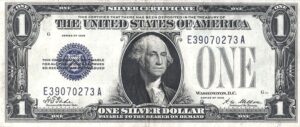
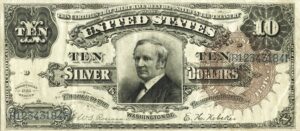
Pick up a Series 1928 $20 Federal Reserve Note and read the obligation text printed across the bottom of the face. You will find words that no longer appear on any note in your wallet: “Redeemable in Gold on Demand at the United States Treasury, or in Gold or Lawful Money at any Federal Reserve Bank.” That single sentence, a legal promise backed by the full faith of the United States government, was rendered obsolete almost overnight when President Franklin D. Roosevelt issued Executive Order 6102 on April 5, 1933, and later suspended gold convertibility entirely. The notes that carried that clause became frozen in time, a printed relic of the gold standard era. For collectors of small-size Federal Reserve Notes, the Series 1928 $20 gold clause notes represent a convergence of monetary history, political upheaval, and genuine numismatic scarcity that few other issues can match.
The Birth of Small-Size Currency and the Gold Promise
To appreciate what makes these notes special, you need to understand the landscape of American currency in the late 1920s. For decades, American paper money had been printed in a large format roughly 7.375 by 3.125 inches, a size familiar to anyone who has handled a Horseblanket note. In 1929, the Bureau of Engraving and Printing transitioned to the smaller 6.14 by 2.61-inch format still in use today, driven largely by cost savings and the need to standardize the country’s chaotic mix of currency types.
The Series 1928 designation applied to this first generation of small-size Federal Reserve Notes across all twelve Federal Reserve Districts. Importantly, the notes carried forward the gold redemption language that had appeared on large-size Federal Reserve Notes since the Federal Reserve Act of 1913. At the time of printing, this was not merely decorative language. The United States was on the gold standard, and a holder of a $20 note was legally entitled to walk up to any Federal Reserve Bank or the Treasury and exchange that paper for gold coin. The promise was real, and the note’s text reflected that reality.
When examining a Series 1928 $20 FRN, use a loupe to read the obligation text at the bottom of the face below the portrait of Andrew Jackson. The presence of the full gold clause, “Redeemable in Gold on Demand at the United States Treasury, or in Gold or Lawful Money at any Federal Reserve Bank,” confirms you have a pre-1934 issue. Series 1934 notes replaced this with the truncated phrase “This note is legal tender for all debts, public and private.”
The Signature Combinations: Mapping the Series
The Series 1928 $20 Federal Reserve Notes were printed in several distinct sub-series, each identified by the signature combination of the Register of the Treasury (or Treasurer) and the Secretary of the Treasury. Understanding these pairings is fundamental to building a type set or chasing specific rarities.
The base Series 1928 notes (Fr. 2050-A through Fr. 2050-L for each of the twelve districts) carried the signatures of Walter O. Woods as Treasurer and Andrew W. Mellon as Secretary of the Treasury. Wait, let me be precise: the very first series used H.T. Tate as Treasurer and Andrew W. Mellon as Secretary, making this the Tate-Mellon pairing on Series 1928. Woods replaced Tate in January 1929, producing Series 1928A with the Woods-Mellon signature combination. When Ogden Mills replaced Mellon in February 1932, Series 1928B appeared with the Woods-Mills pairing. After Roosevelt took office in March 1933, William Julian became Treasurer and William Woodin became Secretary, producing the short-lived Series 1928C (Julian-Woodin) notes. Henry Morgenthau Jr. then replaced Woodin in November 1933, creating Series 1928D with the Julian-Morgenthau combination, though by this point the gold clause was already politically doomed and printings were minimal.
In Friedberg’s Paper Money of the United States, these are cataloged as Fr. 2050 (Series 1928, Tate-Mellon) through the various district letter suffixes for each sub-series, running up through Fr. 2055 for Series 1928B. The rarest signature combination across most districts is the Series 1928C Julian-Woodin pairing, as Woodin served as Treasury Secretary for less than a year before illness forced his resignation.
April 1933: The Clause That Could Not Be Honored
The political and economic earthquake that ended the gold clause on U.S. currency came in rapid succession during the spring and summer of 1933. Roosevelt’s Executive Order 6102, signed April 5, 1933, required most Americans to turn in gold coins, gold bullion, and gold certificates to Federal Reserve Banks by May 1, 1933. The order exempted small amounts for personal use and jewelry, but it effectively ended private gold ownership for most citizens.
Congress followed with a Joint Resolution on June 5, 1933, abrogating gold clauses in all public and private contracts, including government obligations. While this resolution did not physically remove the text from notes already printed and in circulation, it meant the promise was now legally unenforceable. You could still carry a Series 1928 $20 note that read “Redeemable in Gold on Demand,” but attempting to redeem it would yield only other paper currency or silver coin, not gold.
When the Bureau of Engraving and Printing prepared the Series 1934 $20 Federal Reserve Notes, the obligation text was completely rewritten. Gone was any mention of gold. The new notes described themselves simply as legal tender. The transition was abrupt and total. This is why collectors treat the Series 1928 gold clause notes as a distinct type, the last gasp of the gold standard on American paper money.
If you are assembling a twelve-district type set of Series 1928 $20 gold clause notes, pay particular attention to District B (New York) and District G (Chicago) notes, which tend to have the largest print runs and are most affordable in circulated grades. For the true challenges, look toward District I (Minneapolis) and District J (Kansas City) in Series 1928C and 1928D, where surviving examples are genuinely rare.
Treasury Seal Colors and Design Features
All Series 1928 $20 Federal Reserve Notes carry a green Treasury seal and green serial numbers, which remain consistent through the entire 1928 family. The district seal appears in black on the left side, identifying the issuing Federal Reserve Bank. The portrait is Andrew Jackson, centered on the face, with the White House depicted on the reverse, a design carried forward to the present day in modified form.
The district letter and number appear within a black seal on the left, with the Federal Reserve district number in the four corners of the note face. This Federal Reserve district identification system was standard across all small-size FRNs of the era. For authentication purposes, the engraved texture of the portrait and fine-line background work should be crisp on uncirculated examples, with flat printing indicating either heavy circulation or a potentially problematic note.
Star notes (replacement notes) were issued for Series 1928 $20 FRNs and are significantly rarer than their regular-issue counterparts. A star note from a low-print district in Series 1928C or 1928D would rank among the great rarities of small-size currency. The PCGS Currency and PMG population reports consistently show single-digit examples of certain district and series combinations in grades of Very Fine or better.
Grading Considerations for Gold Clause Twenties
Because these notes circulated heavily during the early 1930s, genuine uncirculated examples are considerably scarcer than the print run numbers alone might suggest. The Depression era was not kind to paper money: notes were used until worn, and few people set aside currency as collectibles when cash was desperately needed.
In grades of Very Good (VG-10) to Fine (F-15), Series 1928 and 1928A $20 notes from major districts like New York, Chicago, and San Francisco are reasonably obtainable and present an affordable entry point. Collectors should look for notes with four clear margins, a fully readable gold clause obligation text, and no missing corners or tape repairs. Even in circulated grades, the ink color should remain deep green on the serial numbers and seal.
Extremely Fine (XF-40) and above examples command significant premiums. In Very Fine (VF-25 to VF-35), a common-district Series 1928 $20 might trade between $60 and $120 at major auction. Move to Extremely Fine or better, and prices escalate sharply, with choice examples from scarce districts crossing $500 to $2,000 depending on the specific series and district. Series 1928C and 1928D examples in any grade above Fine are considered condition rarities for most districts.
Third-party grading from PCGS Currency or PMG adds significant value and confidence when purchasing higher-grade Series 1928 $20 gold clause notes. Because the notes are now over 90 years old, issues like edge splits, counting creases disguised as light folds, and careful pressing are genuine concerns. A graded holder also documents originality of color, which matters enormously for these deep-green serial number notes.
The Star Note Question
Replacement star notes for Series 1928 $20 FRNs occupy their own universe of rarity. The Bureau of Engraving and Printing inserted star notes when a defective note was pulled from a sheet during production, substituting a replacement with a star suffix (or prefix, depending on era) in the serial number. For Series 1928 $20 notes, the star appears as a suffix star following the serial number.
Print run data for star notes in this series is fragmentary, but surviving population data tells the story. PMG’s census shows that certain district and series star combinations have fewer than five graded examples on record. A Series 1928C or 1928D star note from any district would be a genuinely landmark find, likely worthy of major auction placement with realized prices in the four-to-five-figure range. Even for common districts like New York in Series 1928 base, a star note in Very Fine or better is a meaningful discovery coin.
| Series / Signatures | District / Variety | Est. Print Run | Rarity |
|---|---|---|---|
| 1928 (Tate-Mellon) | B – New York (Regular) | 3,848,000+ | Common |
| 1928 (Tate-Mellon) | I – Minneapolis (Regular) | 636,000 | Scarce |
| 1928A (Woods-Mellon) | G – Chicago (Regular) | 2,400,000+ | Common |
| 1928A (Woods-Mellon) | J – Kansas City (Regular) | 420,000 | Scarce |
| 1928B (Woods-Mills) | Any District (Regular) | Varies, most under 1M | Scarce |
| 1928C (Julian-Woodin) | Any District (Regular) | Under 400,000 most districts | Rare |
| 1928D (Julian-Morgenthau) | Any District (Regular) | Under 200,000 most districts | Rare |
| 1928 (Tate-Mellon) | B – New York (Star Note) | Est. under 100,000 | Rare |
| 1928C (Julian-Woodin) | Any District (Star Note) | Est. under 10,000 | Key Date |
| 1928D (Julian-Morgenthau) | Any District (Star Note) | Possibly fewer than 5,000 | Key Date |
Building a Collection Around the Gold Clause
There are several compelling ways to approach collecting Series 1928 $20 gold clause notes. The most accessible is a straightforward type set approach: acquire one example each of Series 1928, 1928A, and 1928B from a common district in circulated grades. This gives you all three gold clause signature combinations at a reasonable cost and tells the full story of the notes’ lifespan during the gold standard era.
A more ambitious goal is a twelve-district set of a single sub-series. Most collectors choose Series 1928 (Tate-Mellon) for this challenge, as it has the widest availability across all districts. Completing all twelve districts in problem-free Very Fine or better condition is a genuine long-term pursuit, with Minneapolis, Atlanta in certain signature combinations, and Dallas presenting the toughest assignments.
The most specialized path is chasing star notes by district, a pursuit that can occupy years and requires deep connections to major auctions and established dealers. The PCGS Currency and PMG population reports are essential tools here, as they reveal which star note combinations have known surviving examples versus those that remain theoretically possible but unconfirmed.
Cross-reference any Series 1928 $20 FRN purchase with the Friedberg catalog number, the Federal Reserve district letter, and the specific sub-series before buying. Two notes that look nearly identical to the naked eye can differ dramatically in value based solely on the signature combination. A loupe to read the printed signatures and a current Friedberg guide are your best tools at any show or auction preview.
Conclusion: A Piece of America’s Monetary Crossroads
The Series 1928 $20 Federal Reserve Note with its gold redemption clause stands at one of the most consequential turning points in American monetary history. These notes were printed when the United States still honored its gold commitments to citizens, circulated through the worst economic crisis in the nation’s modern history, and were replaced by notes that quietly erased the promise of gold entirely. The phrase “Redeemable in Gold on Demand” is not just decorative text. It is a dated artifact of a monetary philosophy that the United States government chose, under extraordinary pressure, to abandon. For collectors, that context transforms a circulated $20 bill into a primary historical document. Whether you acquire a Fine example from a common district for under $100 or pursue the rarities of Series 1928C and 1928D star notes, you are holding a piece of the last era in which American paper money made a promise in gold, and meant it.