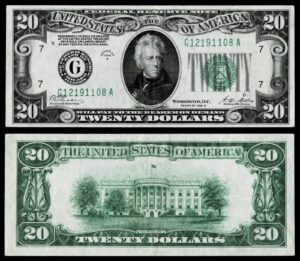
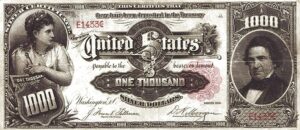
Picture a crisp Federal Reserve Note that looks almost perfect. The fine-line engraving is sharp, the portrait is clear, the back design is flawless. But something is deeply, unmistakably wrong: there are no serial numbers. No Treasury seal. The note passed through an entire printing press run and somehow slipped out of the Bureau of Engraving and Printing without receiving its most basic identifying marks. These are missing overprint errors, and they represent some of the most visually dramatic and numismatically significant mistakes in United States currency production.
How Currency Is Printed: Understanding the Three-Pass System
To appreciate why missing overprint errors happen, you need to understand the BEP’s multi-pass printing process. Modern Federal Reserve Notes are produced in three distinct printing stages, each handled separately.
The first printing applies the back of the note, typically in green ink for Federal Reserve Notes. The second printing applies the face of the note, including the portrait, fine-line engraving, and border work, in black ink. The third printing, often called the overprint or the letterpress stage, applies the elements that individualize each note: the Federal Reserve district seal (in black), the Treasury seal (in green or other colors depending on the note type), and the two serial numbers (also in green or the appropriate color). This third pass is the one that goes missing in a missing overprint error.
When a sheet of notes bypasses or partially bypasses the third printing stage, it emerges without some or all of those identifying elements. Depending on exactly what was skipped, collectors classify the error as a missing overprint, a missing serial numbers error, or a missing seals error. A complete missing overprint means no serials, no Treasury seal, and no Federal Reserve district seal, producing one of the most visually arresting pieces in all of currency collecting.
The Mechanics of the Mistake
How does a sheet of partly printed currency make it through quality control and into circulation? The honest answer is that the BEP’s inspection process, while generally rigorous, is not infallible. In the era before fully automated optical scanning, large sheets of 32 notes each moved through the facility at extraordinary speeds. A sheet that somehow bypassed the letterpress stage, perhaps due to a feeder jam that caused it to be re-fed after the overprint run had concluded, or one that was misfiled and reintroduced to the cutting and packaging line, could conceivably reach a Federal Reserve bank and enter circulation without ever being flagged.
The introduction of more sophisticated electronic scanning in the 1990s and 2000s significantly reduced the frequency of major overprint errors reaching the public. Pre-1990 notes with missing overprints are accordingly more common in collector hands than their post-2000 counterparts, and the latter command a significant premium as a result.
When examining a note claimed to have a missing overprint, always submit it to PCGS Currency or PMG for authentication before purchasing. Fraudsters have used diluted acid solutions to wash away serial numbers and seals from otherwise normal notes, creating convincing fakes. A genuine missing overprint error will show no chemical damage to the paper fibers under ultraviolet light and magnification, and the paper itself will not display the subtle fiber disruption caused by ink removal.
Varieties of Missing Overprint Errors
Not all missing overprint errors are created equal. Collectors and dealers generally recognize several distinct sub-types, and the completeness of the missing print dramatically affects value.
Completely Missing Overprint
This is the most dramatic variety: the note has received both its back and face printings, but absolutely nothing from the third pass. No serial numbers, no Treasury seal, no Federal Reserve district seal. On a Series 1985 $1 Federal Reserve Note, for example, the face would show the portrait of George Washington and the fine green back, but the spaces where the serial numbers and seals would appear are completely blank, showing only the underlying paper. A Gem Uncirculated example of a completely missing overprint $1 FRN has sold at major auction houses for $2,000 to $4,500 in recent years.
Missing Serial Numbers Only
In some cases, the sheet received partial overprinting. The seals were applied but the serial number printing cylinders failed or the sheet was misaligned such that only the seals printed. These are less visually striking than complete missing overprints but are still significant errors. A Series 1977 $10 FRN missing only its serial numbers realized $3,200 at a Heritage Auctions sale in 2019.
Missing One Serial Number
Occasionally, only one of the two serial numbers is absent while the other printed correctly. These occur when one printing cylinder malfunctions mid-run. They are relatively scarcer than complete missing serial number errors because the partial application is a narrower window of failure.
Missing Treasury Seal Only
Though unusual, notes exist with complete serial numbers but no Treasury seal. The seal and the serial numbers are applied in the same pass, but mechanical failures can affect individual printing elements. These are less immediately obvious to casual observers but well documented in the error note literature.
A useful reference for cataloging and valuing overprint errors is Bart Whitfield and Frederick Bart’s book “United States Paper Money Errors” (now in multiple editions), which provides photographic documentation of confirmed examples across denominations and series. Cross-reference any piece you are considering against documented examples in that volume, and check Heritage Auctions’ online archive for recent realized prices before negotiating.
Notable Examples in the Collector Record
Some specific missing overprint errors have become landmarks in the hobby. A Series 1969-C $100 Federal Reserve Note (Fr. 2072-B, New York district) missing its entire overprint sold for $14,950 at a Stack’s Bowers sale in 2021, reflecting both the high denomination and the relative scarcity of high-denomination missing overprint errors. Because $100 notes are subjected to more scrutiny during production and distribution, far fewer examples with major errors reach the public compared to $1 notes.
On the more accessible end of the spectrum, Series 1981 and 1985 $1 FRNs with missing overprints appear at major shows and auction houses with some regularity. These are the most common missing overprint denomination, partly because $1 notes are printed in the largest volumes and partly because their lower face value means they are handled more casually in circulation, giving more chances for the error to slip through. Circulated examples in Very Fine condition can sometimes be found in the $500 to $900 range, making them entry-level pieces for collectors new to error notes.
United States Notes (Legal Tender Notes) with missing overprints are particularly interesting because the red Treasury seal and serial numbers of those issues create an even more visually dramatic contrast when absent. A Series 1963 $2 United States Note missing its red seal and serial numbers is a genuinely striking piece. Confirmed examples have sold in the $1,800 to $3,500 range depending on grade.
Silver Certificates and Older Issues
Pre-Federal Reserve error notes are significantly scarcer. The BEP’s production runs were smaller, quality control in the early twentieth century was in some ways more meticulous at the individual inspection level (notes were hand-examined more frequently), and the passage of time means fewer survivors. A Silver Certificate with a missing overprint, such as a Series 1957 $1 Silver Certificate missing its blue seal and serial numbers, is considered a rare piece. Fewer than two dozen confirmed examples across all Silver Certificate series are documented in major registry sets and auction records. When these appear, they routinely exceed $5,000 even in circulated grades.
If you find what appears to be a missing overprint error in circulated currency, do not attempt to clean or press the note. Even well-intentioned cleaning can destroy the paper evidence that authenticators rely on to confirm the error’s genuineness. Place the note in a mylar sleeve immediately and submit it to PMG or PCGS Currency. Both services have specific error note designations and will accurately describe the variety on the certification label.
Grading Considerations Specific to Overprint Errors
Grading a missing overprint error follows standard currency grading criteria for folds, circulation wear, and paper quality, but there is an additional layer of evaluation. Third-party graders will carefully assess whether the blank areas where the overprint should appear show any trace of ink, ghost impressions, or offset. A note with a faint ghost image of serial numbers (caused by ink offset from an adjacent sheet) is a different and lesser error than a completely clean missing overprint. The certification label should specify the exact nature of the error, and collectors should read those labels carefully.
PMG designates completely missing overprint errors as “Missing Overprint” on the label holder, while partial errors will be described more specifically. PCGS Currency uses similar language. Notes that have been graded by neither service should be viewed with appropriate skepticism, particularly at the price points that genuine missing overprint errors command.
| Series / Issue | Denomination and Type | Known Examples (Est.) | Rarity |
|---|---|---|---|
| 1957 / 1957-B | $1 Silver Certificate, missing blue seal and serials | Fewer than 25 | Rare |
| 1963 | $2 United States Note, missing red seal and serials | Fewer than 40 | Rare |
| 1969-C | $100 FRN, complete missing overprint | Fewer than 15 | Key Date |
| 1977 | $10 FRN, missing serial numbers only | 30 to 60 | Rare |
| 1981 | $1 FRN, complete missing overprint | 100 to 200 | Scarce |
| 1985 | $1 FRN, complete missing overprint | 150 to 300 | Scarce |
| 1988-A | $5 FRN, missing Treasury seal only | 50 to 100 | Scarce |
| 1993 | $20 FRN, complete missing overprint | 20 to 40 | Rare |
| 2003 | $1 FRN, complete missing overprint (post-scanner era) | Fewer than 20 | Key Date |
| 2009 and later | Any denomination, complete missing overprint | Fewer than 10 total | Key Date |
Building a Missing Overprint Collection
For collectors looking to specialize in this area, a realistic entry point is a certified Series 1981 or 1985 $1 FRN with a complete missing overprint in Fine to Very Fine condition, which can be acquired for $600 to $1,200 from reputable error note dealers or at major auction houses including Heritage, Stack’s Bowers, or Lyn Knight. From there, building upward in denomination and downward in series date creates a coherent collection that tells the story of BEP quality control across decades.
Joining the Paper Money Collectors of America (PMCA) and the Society of Paper Money Collectors (SPMC) connects you with specialists who track auction appearances and can alert members to new discoveries. The SPMC’s journal “Paper Money” has published several landmark articles on overprint errors, including a comprehensive survey by leading error note scholar Morty Goldberg that remains a touchstone reference for the field.
Conclusion: Why These Errors Matter
Missing overprint errors occupy a unique space in the currency collecting hobby. They are not subtle varieties requiring a loupe and a catalog to appreciate. They announce themselves immediately and dramatically to anyone who picks them up. That visual power, combined with their genuine scarcity and the fascinating production story behind each piece, makes them perennially compelling to collectors across experience levels.
Whether you are drawn to the accessible $1 FRN examples that occasionally surface in the $600 to $900 range or the five-figure high-denomination pieces that appear at major auction events, the missing overprint error category rewards careful study, patient searching, and a commitment to authentication. These are notes that the Bureau of Engraving and Printing never intended the public to see, and that forbidden quality is precisely what makes them so captivating.