A Hidden Gem in Plain Sight
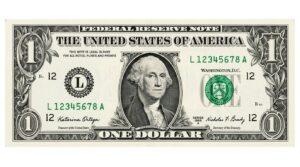
Walk into almost any currency show and you will find dealers with fat binders stuffed with Series 1963A $1 Federal Reserve Notes. They are among the most ubiquitous small-size notes in the hobby, printed in the billions across twelve Federal Reserve Districts during the mid-1960s. Most sell for a dollar or two in circulated grades, and even crisp uncirculated examples rarely command serious premiums. That familiarity, however, has lulled many collectors into overlooking a genuine scarcity hiding within the series: the Chicago District (G) star note, sometimes catalogued as the G* replacement note, issued under the Granahan-Fowler signature combination.
Understanding the 1963A Series in Context
The Series 1963A $1 Federal Reserve Note represents a pivotal moment in American currency history. It was the first $1 note to eliminate the motto “Will Pay to the Bearer on Demand” from the face, fully embracing the shift to pure fiat currency that had been underway since the Federal Reserve Act of 1913. Kathleen Kennedy Granahan served as Treasurer of the United States from April 1962 through April 1966, while Henry Hamill Fowler served as Secretary of the Treasury from April 1965 through December 1968. Their signature combination therefore defines a relatively narrow production window for the 1963A series, with most printing occurring between mid-1965 and 1967.
The notes carry the small green Treasury seal introduced with the Series 1963 notes, replacing the larger ornate seal that had graced Federal Reserve Notes since 1928. Serial numbers on regular-issue 1963A $1 notes run in the standard format: a prefix letter identifying the district, eight digits, and a suffix letter. Star notes substitute an asterisk for the suffix letter, and these replacement notes were printed to substitute for defective sheets destroyed during production.
What Makes Star Notes Special, and Why Chicago Is Different
Every Federal Reserve District received star note allocations for the 1963A series, but the quantities varied enormously. The Bureau of Engraving and Printing (BEP) printed star notes in response to spoilage during the print run, meaning that districts with longer or more complicated print runs tended to generate larger star note quantities. Districts like New York (B) and Chicago (G) typically led production figures, so one might assume their star notes are equally abundant. That assumption is wrong, at least for Chicago.
Official BEP records and subsequent research published in the Paper Money journal of the Society of Paper Money Collectors (SPMC) indicate that the total star note print run for the Chicago District under Series 1963A was substantially lower than for comparable high-volume districts. While New York G* star notes were printed in quantities approaching and exceeding several million notes across multiple print runs, Chicago star notes for the same series reflect a dramatically compressed print schedule. The discrepancy stems partly from press scheduling at the BEP’s Washington facility, and partly from the fact that some Chicago regular-issue production occurred closer to the transition point that would trigger a new series designation.
When sorting through dealer stock or bank rolls of 1963A $1 notes, always check the district letter prefix first. A “G” prefix followed by eight digits and an asterisk (*) suffix identifies a Chicago star note. Do not confuse the district prefix letter with the plate position letter that also appears on the face of the note near the serial number block.
The Numbers Problem: Why Published Figures Mislead Collectors
Published census and price guide data for the Series 1963A Chicago star note have historically leaned on BEP production records that group print runs in ways that obscure meaningful distinctions. The BEP’s own published data lists a total star note print figure for the Chicago district in the range of approximately 640,000 to 1,280,000 notes, depending on whether partial press runs at either end of the series are included in the accounting. That range sounds substantial until you compare it with the New York district, which saw G* star note equivalents in the tens of millions, or the San Francisco district, which also posted multi-million figures.
The deeper problem is survival rate. Series 1963A notes entered circulation at a moment of high economic activity in the United States. Dollar bills changed hands rapidly throughout the late 1960s, and many notes were worn to tatters within a few years. The relatively small Chicago star note production means that even assuming standard survival rates, the number of notes surviving in collectible grades (Very Fine or better) is genuinely small. Third-party grading service (TPGS) population reports from PMG (Paper Money Guaranty) and PCGS Currency suggest that certified examples in grades of 64 or higher number in the low hundreds at best, a population consistent with a note that should be catalogued as scarce to rare in gem condition.
Check the PMG and PCGS Currency online population reports before purchasing a Series 1963A Chicago star note at any significant price. As of recent reporting periods, gem uncirculated (MS-65 EPQ or better) examples of the G* note are dramatically underrepresented relative to other districts in the same series, which itself is a useful data point when negotiating or evaluating auction estimates.
Serial Number Ranges and Attribution
Attributing a Series 1963A Chicago star note correctly requires attention to the full serial number block. The Chicago District uses the prefix letter G, and star notes carry serials in the format G00000001* through the end of the print run. Research by Doug Murray and other SPMC contributors has established that the primary star note block for Chicago in the 1963A series runs from approximately G00000001* through G00640000*, though some researchers argue for a slightly higher upper bound near G00960000* based on BEP ledger cross-referencing. Notes bearing serials in the lower portion of this range, particularly below G00100000*, tend to attract additional collector interest as low-serial examples.
Collectors should also be aware that the Series 1963A issue was preceded by the Series 1963 (Granahan-Dillon signature combination) and followed by the Series 1969 (Elston-Kennedy), making the 1963A issue a relatively self-contained series with well-defined star note parameters. There is no overlap with adjacent series star note blocks for the Chicago district that would complicate attribution.
Grading Considerations Specific to This Issue
The Series 1963A $1 notes were printed on currency paper meeting the specifications of the era, which produced a note with reasonable durability but one prone to corner folds and edge wear with circulation. For star notes specifically, the census of high-grade survivors reflects the brutal attrition of 1960s pocket change. A note grading PMG Very Fine 30 or better is genuinely collectible; one grading Extremely Fine 40 or above is desirable; and anything in the Choice Uncirculated 63 to Gem Uncirculated 65 EPQ range represents a meaningful numismatic trophy for a type collection focused on postwar Federal Reserve Notes.
Graders at PMG and PCGS Currency both apply the EPQ (Exceptional Paper Quality) or PPQ (Premium Paper Quality) designations to notes that show no evidence of washing, pressing, or artificial enhancement. For the 1963A Chicago star, the EPQ designation carries particular weight because the survival pool is small enough that problem-free examples are genuinely exceptional. Be cautious of notes with counting machine marks across the serial number block, a common form of light damage that reduces a note from choice to fine grades and eliminates any EPQ qualifier.
When examining a raw (uncertified) Series 1963A Chicago star note under a light source, tilt the note at an oblique angle to check for hidden folds or press lines near the center crease. Notes that have been lightly pressed can appear VF or better flat on a table but reveal their true grade instantly under raking light. Always buy raw examples of scarce star notes from reputable dealers who accept returns, or submit them to a TPGS before committing serious money.
Market Values and Collector Demand
The price discrepancy between what Chicago 1963A star notes are worth and what many dealers actually charge for them is one of the more interesting inefficiencies in the small-size note market. In circulated grades, worn examples (Very Good to Fine) trade in the $5 to $15 range, which is a premium over face value but hardly reflects genuine scarcity. In Very Fine to Extremely Fine grades, expect to pay $20 to $50 depending on centering and paper quality. The real value proposition emerges in uncirculated grades: a PMG 64 EPQ example has realized $75 to $125 at auction, while a PMG 65 EPQ example can reach $150 to $250, with exceptional low-serial examples pushing higher.
These prices remain modest by the standards of truly rare currency, but they are significantly undervalued relative to other notes with comparable verified print runs and TPGS population figures. Part of the market’s indifference stems from the overwhelming familiarity of the 1963A series as a whole. Dealers and buyers see the design and the denomination and mentally file it as common, without drilling into the specific district and note type. That cognitive shortcut creates buying opportunities for informed collectors.
| District | District Letter | Est. Star Note Print Run | Rarity |
|---|---|---|---|
| Boston | A* | 1,280,000 | Scarce |
| New York | B* | 8,960,000 | Common |
| Philadelphia | C* | 1,920,000 | Scarce |
| Cleveland | D* | 1,280,000 | Scarce |
| Richmond | E* | 2,560,000 | Common |
| Atlanta | F* | 1,920,000 | Scarce |
| Chicago | G* | 640,000 | Key Date |
| St. Louis | H* | 1,280,000 | Scarce |
| Minneapolis | I* | 640,000 | Key Date |
| Kansas City | J* | 1,280,000 | Scarce |
| Dallas | K* | 960,000 | Rare |
| San Francisco | L* | 3,840,000 | Common |
Building a District Set and Why Chicago Is the Stopper
A popular collecting strategy for Series 1963A notes is assembling a complete twelve-district set of star notes, one example from each Federal Reserve Bank, ideally matched in grade. This is an achievable goal for a dedicated collector working at the Very Fine level, where all twelve districts can be represented for a total outlay of a few hundred dollars. Upgrading the set to Extremely Fine or uncirculated grades is where the project becomes genuinely challenging, and the Chicago G* is almost always the last note a collector needs to complete the set at the gem level.
This “stopper” status has been documented informally by collectors on the SPMC’s currency forums and in correspondence published in Paper Money magazine over the past two decades. Dealers who specialize in small-size Federal Reserve Notes will often note that requests for Chicago 1963A star notes in gem grades are frequent while their stock of such notes remains perpetually thin. This supply-demand imbalance is the clearest real-world confirmation of the note’s genuine scarcity beyond what the raw production numbers alone suggest.
Conclusion: Doing the Research Pays Off
The Series 1963A $1 Federal Reserve Note from the Chicago District is a textbook example of a note whose scarcity is obscured by the popularity and ubiquity of its regular-issue counterparts. With a star note print run of approximately 640,000 notes, a challenging survival rate in high grades, and a TPGS population in gem condition that numbers only in the hundreds, the G* note deserves a prominent place in any serious collection of postwar small-size currency.
For new collectors, the takeaway is straightforward: never assume that a common series means all its varieties are common. For experienced numismatists, the Chicago 1963A star note represents a legitimate opportunity to acquire a genuinely scarce note at prices that still lag behind what comparable rarity in other series would command. The research is out there for those willing to dig into BEP production records, SPMC journal archives, and TPGS population reports. In currency collecting, as in most things, the collectors who do their homework are rewarded.