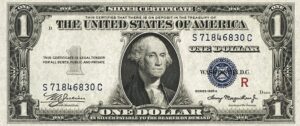
Pick up a stack of raw Series 1929 National Bank Notes at any currency show and do a quick fan-through. Odds are good that at least one or two will show a brown seal that sits noticeably off-center, a charter number that rides too high or drifts toward a corner, or a bank title line that creeps into the engraved border. These are not freaks of imagination. Skewed overprints on 1929 Nationals are a documented, systematic phenomenon rooted in the production workflow of the Bureau of Engraving and Printing during the late 1920s and early 1930s, and they appear at measurably higher rates than comparable misalignments on Federal Reserve Notes of the same era. This article digs into why that is, what it means for condition grading, and how collectors can use this knowledge to their advantage.
The 1929 National Bank Note: A Quick Primer
The Series 1929 National Bank Notes represent the final chapter of National Currency in the United States. Authorized under the National Bank Act and its subsequent amendments, these small-size notes were issued beginning in 1929 and continued until the Federal Deposit Insurance Act of 1933 effectively ended new issuances, with some stragglers appearing into 1935. They came in two distinct types: Type 1 notes, which carry the charter number printed twice in brown on the face (once at left and once at right of center), and Type 2 notes, on which the charter number appears a third time within the serial number prefix. Type 2 notes are generally scarcer, as they were introduced in 1933 when the program was already winding down.
What makes these notes structurally different from Federal Reserve Notes of the same period, and what makes them particularly vulnerable to overprint misalignment, is the multi-pass overprinting process required to personalize each sheet for a specific issuing bank.
The Multi-Pass Problem: How 1929 Nationals Were Overprinted
Federal Reserve Notes issued in 1929 required relatively few overprinted elements. The face of a $10 Federal Reserve Note, for example, needed a green Treasury seal, green serial numbers, and the district letter and number. These were applied in a small number of press passes on sheets that were uniform across an entire Federal Reserve district run. The register settings could be locked in and held for a production run numbering in the millions of notes.
National Bank Notes demanded something fundamentally different. Because each of approximately 6,000 chartered banks required its own dedicated printing, the BEP had to overprint the following elements in brown ink on the face of each sheet: the Treasury seal, two serial numbers (four on a 12-subject sheet before cutting), the charter number or numbers depending on Type, the full bank title (for example, “The First National Bank of Springfield, Illinois”), the city and state, and the facsimile signatures of the bank’s president and cashier. Some of these signature blocks were rubber-stamped rather than engraved, adding another mechanical variable.
Here is the critical operational reality: because individual bank print runs were small, often only a few hundred to a few thousand sheets, the BEP could not afford the setup time of a full production run calibration for every single bank. Press operators worked quickly, repositioning type and plates between jobs. Sheet registration pins wore with use. Ink viscosity changed with temperature in the pressrooms. A bank ordering only 500 sheets of $5 notes was not worth the same careful setup as a million-sheet Federal Reserve run.
When examining a 1929 National for overprint alignment, use a loupe and check all four overprinted elements independently. A note can have a perfectly centered seal but a visibly skewed bank title, because each element was sometimes applied in a separate impression pass. Partial misalignments involving only one element are especially interesting from an error-study standpoint and can command a modest premium in grades of Fine or better.
Brown Ink Versus Green Ink: A Registration Footnote
The brown ink used for National Bank Note overprints was a different formulation from the green used on Federal Reserve Notes of the era. Brown inks of the period had a slightly faster tack time, meaning the sheet had to be removed from the impression surface more quickly. This created a subtle but real mechanical incentive to work fast, and speed is the enemy of precise sheet registration. Green ink Federal Reserve overprints could sit fractionally longer in the impression, giving the sheet time to settle against register guides. This is a minor factor, but minor factors compound when you are printing hundreds of different bank jobs in a single week.
Type 1 vs. Type 2 Misalignment Rates
Collectors who have assembled large reference collections of both types consistently report that Type 2 notes show a higher incidence of significant overprint misalignment than Type 1 notes. This aligns with what we know about production chronology. Type 2 notes were introduced in early 1933, precisely when the national banking system was under enormous strain. Bank holidays, emergency legislation, and a collapsing number of active national banks meant that BEP production schedules for Nationals were chaotic. Smaller, more rushed print jobs equals more registration inconsistency. Some Type 2 issues from small-town banks in agricultural states such as Kansas, Nebraska, and Iowa were printed in quantities of fewer than 100 sheets, and those notes frequently show the most dramatic overprint shifts.
A misaligned overprint on a 1929 National Bank Note is not automatically a grading negative if it is clearly a production characteristic rather than post-issue damage. PCGS Currency and PMG both note significant overprint shifts in their holder comments. A note graded PMG 30 “Misaligned Overprint” for example, often carries the same market value as a straight grade in that tier, and sometimes more among error collectors. Always read the holder comment carefully before comparing prices.
Identifying Genuine Production Misalignments vs. Post-Issue Alterations
Not every skewed overprint is a factory error. Currency conservators and clever fraudsters have occasionally attempted to alter notes by washing, pressing, or chemically treating them, which can cause printed elements to shift in appearance. Here is how to distinguish a genuine production misalignment from something more suspicious.
First, examine ink penetration under ultraviolet light. A genuine overprint, even a misaligned one, will show consistent ink penetration into the paper fiber throughout the misaligned element. A chemically altered or reprocessed note will often show uneven fluorescence, tide marks, or areas where surface sizing has been disturbed. Second, check the paper edges. Legitimate BEP-produced misalignments occur on notes that were properly cut from their sheets. If the margins seem inconsistent with the note’s design centering, you may be looking at a trimmed note disguised to look like a misalignment error. Third, use a 10x loupe to examine the engraved portrait and lathe work. These elements were intaglio printed in an earlier pass and should show the characteristic plate-lift texture of real engraving. No amount of overprint manipulation changes the intaglio base print.
Notable Examples and Catalog Values
Among the most dramatic documented misalignments in the 1929 National series are notes where the entire brown overprint block is rotated three to five degrees from horizontal, causing the bank title to run visibly uphill or downhill across the face. These are cataloged informally by error specialists as “rotational misalignments” and are distinct from simple vertical or horizontal shifts. A $10 Type 1 note from a Missouri or Illinois bank with a rotational shift of four or more degrees in Fine condition has traded at currency auction houses including Heritage and Stack’s Bowers in the $350 to $600 range, compared to $80 to $150 for a straight example from the same bank in the same grade. Dramatic vertical shifts, where the seal drops so low it partially overlaps the bottom ornamental border, are slightly more common but still bring premiums of 50 to 100 percent over catalog for mid-grade examples.
Friedberg numbers relevant to this discussion span a wide range. Small-size National Bank Notes are listed as Friedberg 1800 through 1935 in the standard Friedberg reference (Paper Money of the United States, 21st edition). The specific catalog value for any given note depends on the issuing bank’s state, the bank’s charter number, the denomination, the type designation, and the surviving population. A $5 Type 2 note (Friedberg 1800a through equivalents) from a single-issue bank in a small Western town will always command multiples of its face catalog value in any condition, and a misalignment error on such a note is simply additional conversation.
The Comptroller of the Currency’s annual reports, many of which are digitized through the Federal Reserve’s FRASER database, contain circulation data for individual national banks. Cross-referencing a bank’s total note issuance with the known surviving population reported in Don Kelly’s National Bank Notes reference gives you a realistic sense of how rare a particular bank’s notes are, regardless of whether they show overprint errors. Kelly’s book is an essential companion to any Friedberg reference for 1929 National collectors.
Geographic Patterns in Misalignment Frequency
Researchers including contributors to the Society of Paper Money Collectors journal have noted that certain Federal Reserve districts show higher rates of misaligned overprints on their member banks’ 1929 notes. This is likely a function of print queue clustering. When the BEP processed orders from banks in a given region, they batched similar jobs together. A cluster of small Midwestern banks might share a press day, meaning the same slightly-worn registration pins affected all of them. Notes from banks in the Tenth Federal Reserve District (Kansas City) and the Eleventh District (Dallas) show particularly high rates of minor to moderate overprint shifts, consistent with the large number of small agricultural-community banks in those territories that ordered small sheet quantities on tight schedules.
| Type / Denomination | Misalignment Category | Approx. Frequency in Surviving Pop. | Rarity |
|---|---|---|---|
| Type 1, $5 | Minor horizontal shift (1-2mm) | 1 in 8 to 10 notes | Common |
| Type 1, $10 | Minor horizontal shift (1-2mm) | 1 in 8 to 10 notes | Common |
| Type 1, $20 | Moderate vertical shift (3-5mm) | 1 in 25 to 30 notes | Scarce |
| Type 2, $5 | Moderate vertical shift (3-5mm) | 1 in 20 notes | Scarce |
| Type 2, $10 | Rotational misalignment (3+ degrees) | 1 in 60 to 80 notes | Rare |
| Type 1, $50 | Any significant misalignment | 1 in 40 notes | Scarce |
| Type 1, $100 | Any significant misalignment | 1 in 50 notes | Rare |
| Type 2, any denom., single-issue bank | Any misalignment | Fewer than 5 known in most cases | Key Date |
| Type 1 or 2, $5 or $10 | Seal overlapping engraved border | 1 in 150 to 200 notes | Rare |
Grading Considerations for Misaligned 1929 Nationals
Both PCGS Currency and PMG have evolved their approach to production misalignments on 1929 Nationals over the past two decades. Early third-party grading sometimes penalized these notes with a net grade or a “misprint” qualifier that implied damage. Current practice at both services is more nuanced. A clearly mechanical, symmetrical shift of the overprint block, particularly one that affects all overprinted elements equally (suggesting a sheet-level registration issue rather than a partial re-inking), is now generally treated as a collectible variety rather than a defect, and the note is graded on its physical paper quality alone, with the overprint characteristic noted in the holder comment. Collectors should be aware that raw notes with misalignments often sell below their true market value at general auction because inexperienced bidders confuse the production characteristic with damage. This represents a legitimate buying opportunity for informed collectors.
Conclusion: The Misalignment as a Window into Production History
Every skewed brown seal on a 1929 National Bank Note is a small piece of industrial history. It tells a story about a pressroom operator who was moving fast, about a national banking system that was issuing notes to thousands of independent banks simultaneously, and about the logistical gap between small-town bank orders and the massive federal printing machinery trying to fill them. Federal Reserve Notes of the same period simply did not face the same operational pressures, and their lower misalignment rates reflect that difference in production environment.
For collectors, this means that understanding the why behind a brown seal misalignment transforms what might look like a flaw into a feature. Build a reference set of documented misalignment types across denominations and types. Consult Don Kelly’s National Bank Notes reference and the Friedberg guide together. Submit unusual examples to a major grading service and read the holder comment carefully. And next time you fan through a stack of raw 1929 Nationals and spot that tilted seal, do not set the note aside. Pick it up and look closer.