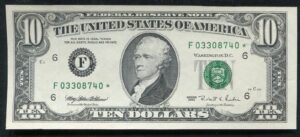
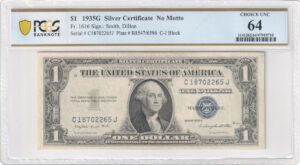
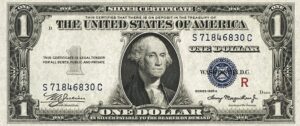
Picture the scene at the Bureau of Engraving and Printing: a pressman feeds a partially printed sheet back through the press for a second pass, but instead of the sheet receiving its intended denomination on the reverse side, it picks up printing from a different denomination entirely. The result is a note that is simultaneously, legally, and impossibly two different things at once. These are double denomination errors, and they stand as perhaps the single most dramatic category of United States currency misprints ever documented.
How the BEP Printing Process Creates the Opportunity for This Error
To understand how a double denomination note comes to exist, you first need a working knowledge of the Bureau of Engraving and Printing’s multi-pass intaglio process. Modern small-size Federal Reserve Notes are printed in at least three major stages. The back design is printed first on large sheets of 32 subjects. Those sheets are then allowed to dry, inspected, and fed back through a different press for the face printing. A third pass applies the Federal Reserve District seal, Treasury seal, serial numbers, and face plate numbers via letterpress or offset.
During the second-pass face printing, sheets are organized by denomination in the press queue. An error occurs when a pre-printed back from one denomination, say a $1 back, accidentally gets fed into the press queue designated for a different denomination, such as $5 face printing plates. The sheet then receives a legitimate $5 face design over its $1 reverse. After cutting, each of the 32 notes on that sheet displays a $1 back and a $5 face. The final serial numbers and seals applied in the third pass will correspond to the $5 denomination, making the discrepancy all the more jarring when you flip the finished note over.
The Anatomy of a Double Denomination Note
Collectors and third-party grading services distinguish two primary configurations. The first, and by far more frequently encountered, is a face denomination mismatch where the face printing is of a higher or lower value than the back. The second, considerably rarer, involves a mismatched back where the reverse printing belongs to a different denomination than the face. Both configurations are genuine errors produced by the BEP, and both are fully legal tender, though the Treasury has never formally addressed their technical legal-tender status given that two denomination figures contradict each other on the same note.
The physical note itself appears completely normal in terms of paper quality, paper size, and green Treasury seal coloration for modern Federal Reserve Notes. Nothing about the paper stock or the feel betrays the error. Only turning the note over reveals the impossible combination. Serial numbers will be consistent with the denomination printed on the face, since that pass occurs last for most modern production runs.
When examining a suspected double denomination note, check that the serial number prefix letters correspond to the face denomination, not the back. A $5/$1 double denomination with serial number prefix letters designated for Series 1988A $5 Federal Reserve Notes confirms the error sequence: the $1 back was printed first, then a $5 face and $5 serial numbers were applied on subsequent passes.
Documented Examples: A Survey of Known Double Denomination Notes
The numismatic literature, particularly Bart Limburg’s reference work on major error notes and the PCGS Currency and PMG population reports, documents a relatively small but fascinating group of confirmed double denomination examples. The most commonly encountered pairing across all known census data is the $1 back with $5 face on Federal Reserve Notes of the Series 1969 through Series 1995 era. These notes almost certainly originated from BEP production runs at both the Washington, D.C. facility and, after 1991, the Fort Worth, Texas facility.
One of the most celebrated individual examples is a Series 1969 Federal Reserve Note bearing a $1 Lincoln Memorial back and a $5 Federal Reserve face for the Richmond, Virginia district (E prefix). This note, graded PMG Choice Uncirculated 64 by Paper Money Guaranty, realized $69,000 at a Heritage Auctions sale in 2016. The note’s serial number falls squarely within authenticated Series 1969 $5 FRN production records, confirming its legitimacy beyond any doubt.
A second category of documented doubles involves the $5 back with $10 face combination, which is rarer still because of the greater difficulty in mixing denomination queues for notes whose backs are more visually distinctive at the press floor level. The Alexander Hamilton $10 face against a Lincoln Memorial $5 back represents a combination that was almost certainly caught and destroyed at a higher rate than $1/$5 combinations, because the $5 back’s green ink differs in shade from typical $10 production batches. Nevertheless, at least four examples are confirmed in major collections as of 2024.
Perhaps the rarest documented double denomination involves a $10 back combined with a $20 face, with a single confirmed example graded PCGS Currency 35 (Very Fine) having sold at Stack’s Bowers in 2022 for $97,750. That note originated from a Series 1988A production run and carries a Federal Reserve Bank of Chicago (G) serial prefix on its $20 face, while its reverse depicts the Lincoln Memorial in the $10 back configuration.
Third-party certification is absolutely non-negotiable for double denomination notes. Both PCGS Currency and PMG have examined enough genuine examples to authenticate these errors with confidence. An uncertified double denomination note, no matter how convincing, will trade at a steep discount and raises legitimate questions about alteration. Submit to a grading service before buying or selling.
The Role of Cutting in Amplifying the Error
The title of this article mentions cutting errors specifically, and that framing deserves careful explanation. The cutting stage itself does not create the denomination mismatch, but it does play a critical role in how many notes from a misfed sheet survive to reach circulation or collector hands. A standard BEP sheet of 32 subjects yields 32 individual notes once cut. If an entire sheet received the wrong-denomination back printing, then theoretically all 32 notes are errors. In practice, however, BEP quality control inspectors examining printed sheets before the cutting stage catch a significant number of these anomalies.
Notes that do survive cutting from mismatch sheets sometimes display additional cutting-related characteristics. Off-center cuts, for instance, are common companions to double denomination notes simply because a misfed sheet may have been slightly misaligned relative to the cutting guides. A double denomination note that also exhibits significant off-centering toward one border, exposing portions of an adjacent note’s design at the opposite edge, is a compound error of considerable desirability. Compound errors carry premium values that can exceed even the already-impressive values of pure double denomination notes.
Distinguishing Genuine Double Denominations from Alterations
The high values commanded by genuine double denomination notes have inevitably attracted counterfeiters and alterers. The most common fraud involves carefully soaking a note to separate its layers, substituting a different denomination’s back, and relamininating. Modern paper currency is not laminated in a traditional sense, but its fiber composition and the intaglio ink penetration provide authenticators with definitive tells.
Genuine BEP intaglio printing creates a characteristic three-dimensional ink profile that can be felt with a fingertip and examined under a stereo microscope. Ink that has been applied after the fact, or that shows delamination at the paper seams, immediately reveals an alteration. Additionally, the paper fiber pattern of genuine BEP stock is uniform from edge to edge on an authentic error note. Any interruption in that fiber continuity indicates manipulation. Both PCGS Currency and PMG use ultraviolet lighting, fiber analysis, and ink spectroscopy to render definitive opinions on submission.
A quick field test for suspected double denomination alterations involves examining the note under a raking light at a low angle. Genuine BEP intaglio ink on the face and back of an authentic double denomination note will both show the same characteristic raised ink texture and will lie perfectly flush with one another on the paper surface. Any rippling, bubbling, or inconsistency in paper thickness at the edges is a red flag for alteration.
Series-Specific Notes and Collector Priorities
For collectors building a type set of major error categories, the most attainable double denomination combination remains the Series 1974 through Series 1995 $1/$5 Federal Reserve Note pairing. Notes from the Boston (A), New York (B), and Chicago (G) districts appear slightly more frequently in this configuration than others, possibly reflecting higher production volumes from these districts during the relevant eras rather than any systemic difference in quality control. Prices for circulated examples in VF to EF grades have ranged from $12,000 to $28,000 at major auction houses over the past decade, while uncirculated examples command $40,000 and above.
Small-size United States Notes (red seal) and Silver Certificates also occasionally surface with denomination mismatches, though these are considerably rarer simply because the eras of their production predate some of the mechanization changes at the BEP that made denomination queue errors more likely. A $1 Silver Certificate Series 1957B with a $5 back would represent an extraordinary rarity, and no confirmed example of this specific combination is currently documented in major census data, making it a genuine numismatic holy grail.
| Series / Era | Denomination Pairing (Face / Back) | Approx. Known Examples | Rarity |
|---|---|---|---|
| Series 1969 FRN | $5 Face / $1 Back | 8-12 confirmed | Key Date |
| Series 1974 FRN | $5 Face / $1 Back | 15-20 confirmed | Rare |
| Series 1977 FRN | $5 Face / $1 Back | 10-15 confirmed | Rare |
| Series 1988A FRN | $10 Face / $20 Back | 1 confirmed | Key Date |
| Series 1988A FRN | $5 Face / $10 Back | 4 confirmed | Key Date |
| Series 1993 FRN | $5 Face / $1 Back | 20-25 confirmed | Rare |
| Series 1995 FRN | $5 Face / $1 Back | 12-18 confirmed | Rare |
| Series 1995 FRN | $10 Face / $5 Back | 5-7 confirmed | Key Date |
| Series 1957B Silver Cert. | Any double denom. | 0 confirmed | Key Date |
| Post-2000 FRN (any) | Any double denom. | 2-3 suspected | Rare |
Market Trends and Investment Considerations
The market for major BEP error notes, and double denomination notes in particular, has shown remarkable resilience across numismatic market cycles. Heritage Auctions’ currency archives from 2005 through 2024 show consistent appreciation in realized prices for double denomination notes graded VF 30 and above, with average annual appreciation in the range of 6 to 9 percent for the most desirable pairings. This performance has attracted interest from non-traditional collectors, including investors who view major error notes as tangible assets with documented scarcity and clear historical provenance.
The practical scarcity argument is compelling. Unlike die varieties in coinage, where new discoveries occasionally expand the known population significantly, double denomination note populations are essentially fixed. The BEP’s modernized quality control systems, implemented comprehensively after 2000 with electronic optical scanning at multiple production stages, have made new double denomination errors extraordinarily unlikely to escape the facility. The existing known population is, for all practical purposes, the total population that will ever exist.
When budgeting for a double denomination note purchase, factor in the cost of third-party grading if the note arrives raw, as well as auction buyer’s premiums which typically run 17.5 to 20 percent at major houses. A note hammering at $35,000 will cost the buyer closer to $42,000 all-in. For notes of this value, consider using a currency specialist broker who can source certified examples through private treaty sales, potentially avoiding the premium entirely.
Building a Research Foundation Before You Buy
New collectors drawn to this category should invest time in several foundational resources before committing capital. Morland Fischer’s work on BEP error notes, the Standard Guide to Small-Size U.S. Paper Money by John Schwartz and Scott Lindquist, and the comprehensive error note sections of the PCGS Currency Price Guide all provide essential baseline knowledge. The Society of Paper Money Collectors (SPMC) maintains a library of published research and its journal, Paper Money, has featured detailed census updates on major error categories including double denominations.
Networking within the SPMC community and attending major shows like the Memphis International Paper Money Show provides opportunities to examine certified examples in hand, compare notes with specialist dealers, and occasionally access private collection sales before notes reach public auction. The collector community for major error notes is small enough to be genuinely collegial, and experienced collectors are generally generous with guidance for newcomers approaching the category with seriousness and appropriate preparation.
Conclusion: The Perfect Intersection of Rarity and Story
Double denomination cutting errors occupy a singular position in the hierarchy of United States currency collectibles. They are simultaneously accidents of industrial production and objects of genuine historical significance, documenting a moment when the machinery of the world’s most sophisticated currency printing operation created something that should never have existed. Each certified example carries with it a traceable provenance linking it to a specific production run, a specific BEP facility, and a specific failure of the quality control systems that guard against exactly this kind of anomaly.
For the collector with the resources and patience to acquire even one genuine example, the double denomination note delivers what the finest type coins and key-date banknotes also deliver: a tangible piece of manufacturing history that no subsequent edition of the series can replicate or render obsolete. The sheet that produced these notes was cut once, the notes were numbered once, and those numbers tell a story that any future visitor to your collection will immediately want to hear.