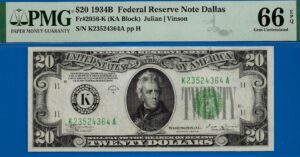
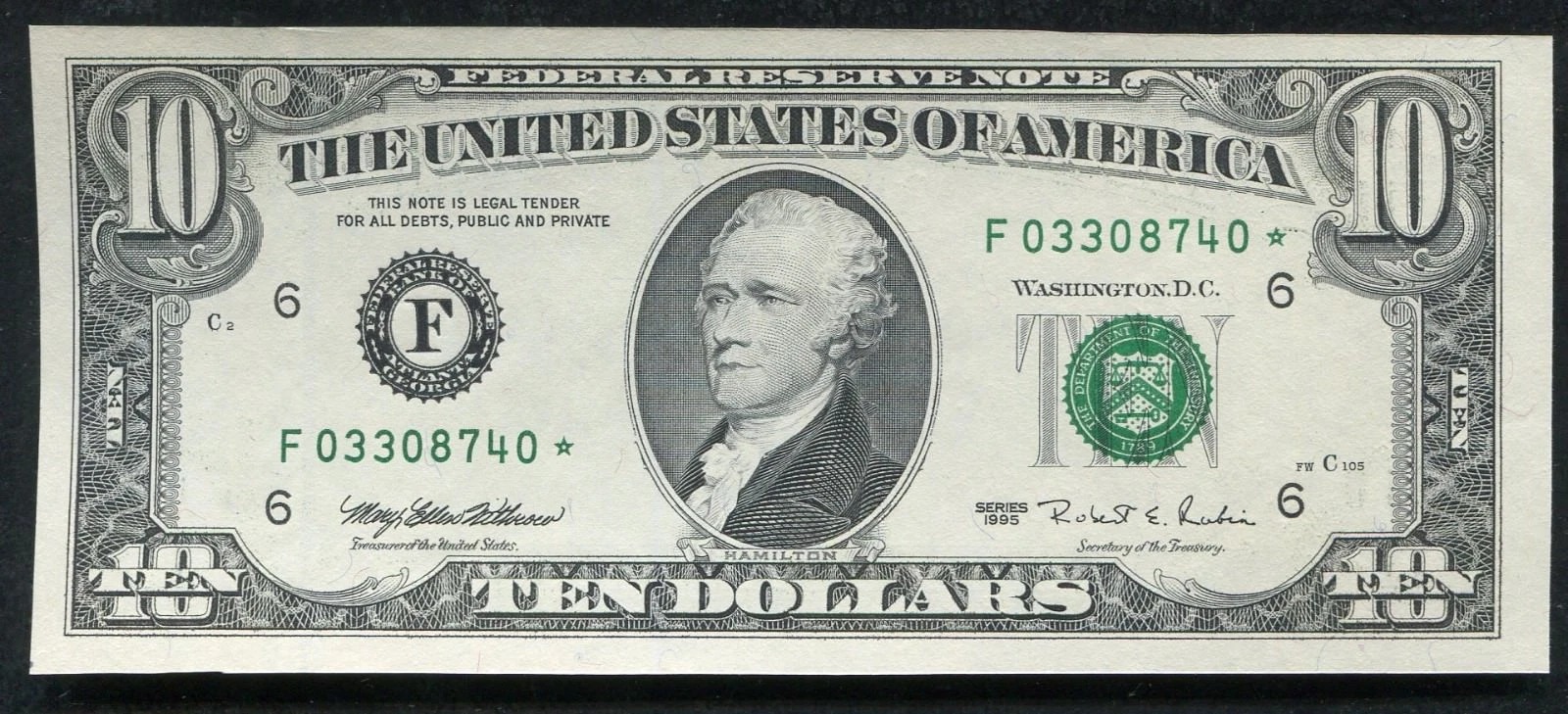
📷 Image source: Wikimedia Commons. Images are selected by AI to represent the article topic and may not depict the exact note(s) described.
Pull a stack of circulated bills from your wallet and hold them up to the light. Odds are, every single face printing lines up almost perfectly with the back. The Bureau of Engraving and Printing runs extraordinarily tight tolerances on modern notes, which is precisely why a dramatically shifted face printing stops collectors cold the moment they see one. When the intaglio face plate comes down even a few millimeters off-register, you get a note that looks almost right but unmistakably wrong, and that wrongness carries real market value.
How the BEP Printing Process Creates the Opportunity for Shifts
To understand a shifted face printing, you need a basic grasp of how modern small-size notes are produced. Since 1929, the Bureau of Engraving and Printing has used a multi-pass printing process on large sheets, typically 32 notes per sheet for Federal Reserve Notes. The back of the note is printed first using offset lithography in green ink. A second offset printing adds the Federal Reserve seal background tinting and any security features. The critical third pass is the intaglio face printing, which lays down the portrait, denomination numerals, Treasury seal, Federal Reserve seal, and serial numbers in raised ink under enormous pressure.
Each sheet must be precisely registered as it feeds through the intaglio press. When sheet feeding is inconsistent, when humidity causes paper to expand or contract, or when mechanical tolerances slip even momentarily, the face printing lands in the wrong position relative to the already-printed back. The result is a shifted face printing: the portrait, numerals, and seals are all shifted as a unit in one direction, while the back imagery stays right where it belongs.
This is an important distinction. A shifted face error moves everything from the face printing together. If you see only the serial numbers shifted independently of the portrait, that is a different category of error. For this discussion, we are focusing specifically on the complete face impression landing off-register from its intended position.
Measuring the Shift: From Normal Variance to Dramatic Error
The BEP does not aim for millimeter-perfect alignment on every note. The published tolerance for Federal Reserve Notes allows for a small degree of variation, and notes within that range are fully intentional currency. The numismatic community has developed informal but fairly consistent benchmarks for categorizing shifted face printings by degree.
Normal Variance (Under 3 mm)
A shift of less than approximately 3 millimeters in any direction is considered within normal production variance by most graders and dealers. These notes are not errors in any meaningful collecting sense. You will find them in circulation constantly. They carry no premium whatsoever, and submitting one to PMG or PCGS Currency hoping for an error designation will only cost you the certification fee.
Minor to Moderate Shifts (3 mm to 8 mm)
Here is where the conversation gets interesting, and honestly, where many new collectors make expensive mistakes. A shift of 3 to 8 millimeters is visually noticeable, especially to a trained eye, but it does not typically command significant premiums in today’s market. On circulated examples in Fine to Very Fine grades, these notes might retail for $25 to $75 depending on denomination and series. In uncirculated grades, modest shifts can bring $100 to $300, but the competition from more dramatic examples keeps prices restrained. Dealers at major shows will usually grade these as “minor error” and price accordingly.
Always measure the shift in millimeters from the border of the portrait or the outer edge of a seal to the nearest note margin before assigning value. A shift that looks dramatic in a photograph can turn out to be only 4 or 5 mm in person, which puts it squarely in the modest-premium category rather than the spectacular-error tier.
Significant Shifts (8 mm to 15 mm)
Once you cross 8 millimeters, the market reacts meaningfully. A note shifted 10 mm upward will show the portrait and numerals noticeably crowded toward the top margin, with an unusually wide white border at the bottom. At 12 to 15 mm of shift, portions of the face design may begin to appear on the adjacent note on the original 32-subject sheet, though most such notes are cut before collectors see them. Uncirculated examples with 10 to 15 mm shifts in popular series like 1963 Federal Reserve Notes or 1976 $2 notes routinely bring $200 to $600 at auction. PMG and PCGS Currency typically note the shift in the error description on the holder label at this range.
Dramatic and Extreme Shifts (Over 15 mm)
The truly spectacular examples, those shifted 15 mm or more, are the notes that appear in major auction catalogs and generate bidding wars among advanced error collectors. At 20 mm of shift, the face design is so misplaced that the note looks structurally wrong at a glance. The portrait may be partially off the printed paper area, or the serial numbers may crowd into a corner in a way that is almost surreal. These are the notes that end up on display at the Florida United Numismatists convention or in Heritage Auctions lots with detailed write-ups. Values start at $400 to $700 for circulated examples and can reach $1,500 to $3,000 or beyond for gem uncirculated star notes with extreme shifts.
When evaluating a dramatic shift error for purchase, insist on an authentic certified example in a PMG or PCGS Currency holder. The counterfeit error market is real, and chemically altered or physically trimmed notes can mimic off-center appearances. A certification fee is cheap insurance on any purchase over $150.
Direction of the Shift Matters More Than You Think
Collectors and dealers frequently overlook the direction of a shift when assigning value, but it matters for a few reasons. Vertical shifts, upward or downward, are the most common and also the most visually dramatic because they displace the portrait in a direction the eye naturally tracks. Horizontal shifts to the left or right are somewhat less common and can be harder to detect on certain denominations where the portrait is centered horizontally with substantial margin on both sides.
Diagonal shifts, where the note shifts both vertically and horizontally simultaneously, are relatively rare because they require the sheet to feed both out of vertical and lateral alignment at once. When you find a genuine diagonal shift of meaningful magnitude, say 8 mm vertical and 6 mm horizontal simultaneously, you have a legitimately scarce error that the market treats with a premium beyond what either component alone would command.
Denomination Matters: Which Notes Attract the Most Collector Interest
Shifted face errors exist across all Federal Reserve Note denominations, but the market for them is not uniform. The $1 note dominates the error market simply because so many of them are produced. Series 1963, 1969, 1974, 1981, 1988A, 1993, 1995, 1999, and 2003 are all reasonably common sources for shifted face errors in circulated grades. The sheer print volume means errors occasionally escape the BEP’s inspection process.
The $5 note is the second most active denomination in the shifted face error market. The $10 and $20 see strong collector interest when dramatic shifts appear, particularly because the more complex face designs on those denominations make a significant misalignment visually stunning. A $20 Federal Reserve Note from the 1990 or 1993 series with a 15 mm upward face shift is a genuinely eye-catching collectible. Shifted face errors on $50 and $100 notes are rarer simply because fewer notes escape quality control at higher denominations, and when they do surface, prices can be extraordinary.
The $2 Federal Reserve Note deserves special mention. Series 1976 $2 notes with shifted face printings are perennial favorites because the denomination already has collector cachet, and a dramatic shift on a 1976 bicentennial note creates a doubly appealing item. Expect to pay a meaningful premium compared to a similar shift on a $1 from the same era.
The $2 note error market is particularly vulnerable to overpriced, lightly shifted examples being marketed as major rarities. Before paying a significant premium for any shifted $2 note, compare it side by side with a normal example and measure the actual displacement. Many dealers overprice modest $2 errors on the assumption that buyers are unfamiliar with the denomination’s normal margins.
Star Notes with Shifted Faces: The Premium Within a Premium
When a shifted face printing occurs on a star note replacement, the collector interest multiplies. Star notes already carry premiums based on their lower print runs compared to standard serials. When you combine a star note with a dramatic shifted face, you have two independent scarcity factors working together. A $1 Federal Reserve Note star from the 1995 series Atlanta district, which already has a print run of only 128,000 notes, with an additional dramatic face shift would be a genuinely significant find. The market has rewarded such combinations with prices well above what either feature would command individually, sometimes two to three times the sum of their individual premiums.
What Grading Services Say and How Labels Read
Both PMG (Paper Money Guaranty) and PCGS Currency have established consistent language for certifying shifted face errors. On a PMG holder, you will typically see a notation such as “Shifted Face Printing” with the numeric grade. PCGS Currency uses similar language. Neither service currently quantifies the shift in millimeters on the label itself, which means the visual evidence inside the holder is your primary reference. Some advanced collectors photograph certified errors and measure the shift from those images before bidding at auction.
One subtlety worth knowing: PMG and PCGS Currency sometimes describe a shifted face as an “Off-Center Printing” instead of specifically calling it a shifted face. These are functionally the same thing in the context of small-size notes, but the label language can affect how notes appear in auction catalog searches. Always examine the actual note image rather than relying solely on the label description when researching comparables.
| Series / Denomination | Shift Magnitude | Approx. Market Value (CU) | Rarity |
|---|---|---|---|
| $1 FRN, any series (post-1963) | Minor, under 5 mm | $25 – $75 | Common |
| $1 FRN, any series (post-1963) | Significant, 10-15 mm | $150 – $400 | Scarce |
| $1 FRN Star Note, 1995 Atlanta (F*) | Any dramatic shift | $500 – $1,200+ | Key Date |
| $2 FRN, Series 1976 | Significant, 10+ mm | $300 – $700 | Scarce |
| $5 FRN, Series 1988A or 1993 | Significant, 10-15 mm | $200 – $500 | Scarce |
| $10 FRN, Series 1990 or 1993 | Dramatic, 15+ mm | $400 – $900 | Rare |
| $20 FRN, Series 1990 or 1993 | Dramatic, 15+ mm | $500 – $1,200 | Rare |
| $50 FRN, any series | Any measurable shift | $800 – $2,500+ | Rare |
| $100 FRN, pre-1996 design | Dramatic, 15+ mm | $1,500 – $4,000+ | Key Date |
Buying and Selling: Where the Market Actually Clears
The primary venues for shifted face error notes are Heritage Auctions, Stack’s Bowers, and Lyn Knight Currency Auctions for higher-value examples. For mid-range errors in the $50 to $300 range, eBay remains a major marketplace, though buyer vigilance is essential. The Paper Money Show circuit, particularly the Memphis International Paper Money Show held each June, is one of the best places to examine error notes in person and negotiate directly with specialist dealers like Littleton Coin Company’s error division, or independent error dealers such as Fred Bart or the late Alan Mincho’s successors.
When selling a shifted face error, certification is almost always worth the investment above a threshold of about $150. Uncertified errors of significant magnitude routinely sell for 30 to 50 percent less than their certified equivalents because buyers discount for authenticity uncertainty. The PMG or PCGS Currency fee of $20 to $40 per note is recovered many times over on any genuinely dramatic example.
At paper money shows, bring a small ruler or calipers when browsing error dealers. Measuring shifts on the spot lets you compare notes objectively and prevents you from paying dramatic-shift prices for moderate-shift notes. Dealers who object to this kind of due diligence are not dealers you want to do business with.
Conclusion: Defining Your Threshold Before You Collect
The shifted face printing market rewards collectors who understand the spectrum. There is genuine value in dramatic examples, and there is a real danger of overpaying for modest misalignments dressed up as spectacular errors. Before you commit to building a shifted face collection, decide what your minimum threshold will be. Many experienced error collectors will not add a shifted face note unless the displacement exceeds 12 millimeters. Others focus exclusively on certified gem uncirculated examples with shifts above 15 mm, accepting that those notes are genuinely hard to find and priced accordingly.
Whatever your threshold, the most important tools you can bring to this corner of error numismatics are a ruler, a reference set of normal examples for comparison, and the patience to walk away from anything that does not meet your standard. The market for impressive shifted face errors is active and growing, driven by a new generation of collectors who find error notes more accessible and visually compelling than classic type notes. The notes that will hold and grow in value are the ones that make even a non-collector stop and ask, “Wait, is that supposed to look like that?” If your shifted face note does not prompt that question, keep looking.