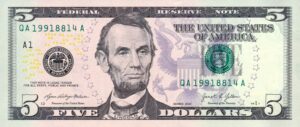
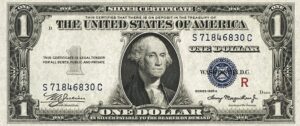
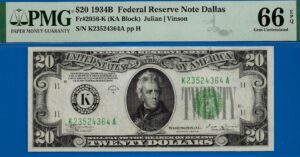
Pick up a loupe and examine enough Federal Reserve Notes, and eventually you will find one with a thin white streak cutting across the face of the note, a jagged line of missing ink bisecting a portrait or running through a serial number block. Maybe the line is hairline-thin, barely visible at 5x magnification. Or maybe it is a dramatic board break, a bold void running clear across the width of a $100 note with a secondary crack branching off like a river delta. Either way, you have stumbled into one of the most technically fascinating categories in U.S. paper money error collecting: plate defects that leave permanent, visible artifacts on printed currency.
What Exactly Is a Board Break?
The term “board break” is widely used in error currency circles, but it is sometimes applied imprecisely. Technically, a board break refers to a fracture in the hardboard or fiber-composite backing material used during the intaglio printing process at the Bureau of Engraving and Printing (BEP). During intaglio printing, enormous pressure, sometimes exceeding 10,000 pounds per square inch, is applied to force paper fibers into the engraved recesses of a steel plate. The backing board distributes this pressure evenly. When that board develops a crack or split, a ridge or void is introduced into the pressure field directly beneath the printing plate. The result on the printed note is a thin, unprinted white channel running in the direction of the crack, or occasionally a raised ridge of ink where the board fracture caused excess pressure.
Plate cracks are a closely related but mechanically distinct phenomenon. Here, the steel intaglio printing plate itself develops a hairline fracture, usually from metal fatigue caused by the repeated stress of thousands of printing impressions. A cracked plate can manifest in two ways on the finished note. Most commonly, the crack interrupts ink transfer, leaving a thin void or pale streak in the design. Less often, if the crack is oriented so that it traps ink, it can print as a fine dark line added to the design, known as a “plate crack addition.” Both types are collectible, though void-type cracks are far more frequently encountered.
The Mechanics of Intaglio Printing and Why Defects Occur
To truly appreciate these errors, you need to understand the BEP’s intaglio process. Currency is printed in multiple passes. The back is printed first, then the face, both using recessed steel plates inked by rollers and wiped clean so that ink remains only in the engraved lines. The paper, a specialized 75 percent cotton and 25 percent linen blend supplied by Crane and Company, is then pressed against the plate under tremendous force. This transfers ink with the characteristic tactile relief that you can feel on any genuine Federal Reserve Note.
Steel plates in active production are subjected to extraordinary cumulative stress. A single 32-subject plate, the standard format used for most modern Federal Reserve Notes, may print hundreds of thousands of sheets before retirement. Stress fractures typically initiate at points of geometric weakness in the plate, sharp corners in design elements, the edges of the plate itself, or areas of particularly dense engraving such as the fine-line background patterns of currency portraiture. Once a crack propagates across an area that transfers ink, the defect appears on every subsequent note printed from that position on that plate until the plate is inspected and pulled from service.
Because a cracked plate continues printing until it is caught and pulled, multiple notes with the same defect can exist from a single print run. Look for matching crack patterns across notes with sequential or near-sequential serial numbers, which confirms they came from the same plate position. A matched pair significantly increases desirability and value compared to a single example.
Void Lines vs. Plate Cracks: How to Tell Them Apart
Both defects produce white or under-inked lines, so distinguishing them requires careful examination. Board breaks tend to run perfectly straight and perpendicular or parallel to the note’s long axis, reflecting the geometry of the backing board’s fracture. They often extend the full width of the note, or nearly so, and may appear on both the face and back of the same note if the board defect was severe enough to affect both printing passes. The edges of a board break void are typically clean and sharply defined.
Plate cracks, by contrast, frequently follow the internal geometry of the plate design. A crack may track along the edge of a portrait oval, follow the curve of a numeral, or travel at an angle corresponding to stress lines in the steel. Under magnification, the edges of a plate crack void sometimes show irregular, jagged micro-contours rather than the clean edge of a board break. Dark-line plate crack additions are exclusive to actual plate fractures, since a board defect cannot add ink to the impression.
A third related artifact, the void line, is sometimes caused by debris or dried ink blocking engraved recesses on the plate. These tend to be shorter, more irregular, and less consistent across multiple notes from the same print run. Experienced collectors learn to distinguish true structural plate defects from one-off debris voids through pattern recognition across multiple examples.
When examining a suspected plate crack under magnification, look specifically at how the void interacts with fine background line work. A true plate crack will interrupt individual engraved lines precisely and consistently. A debris void often shows blurring or smearing at its edges. A 10x loupe is the minimum; a 20x loupe reveals the micro-structure that makes identification definitive.
Historical Examples: Notable Board Breaks and Plate Cracks in U.S. Currency
Some of the most dramatic documented examples of these defects appear on Series 1935 and 1957 Silver Certificates. The high-volume production runs of these one-dollar notes, combined with the era’s plate maintenance standards, produced numerous examples of board breaks that have since entered specialized collections. A Series 1935-E Silver Certificate with a bold board break running from portrait to right margin, showing approximately 3mm void width, traded at a 2019 Heritage auction for $312 in VF condition, a note that in unaffected condition would be worth under $10.
Federal Reserve Notes from the 1970s and 1980s provide some of the most visually spectacular board break examples. Series 1977 $10 Federal Reserve Notes, particularly those from the Dallas (K) and San Francisco (L) districts, show documented plate crack patterns consistent with aging plate stock that saw extended use during that era’s high-volume production. A 1977-A $10 with a diagonal crack running through the Treasury seal and into the serial number block realized $480 at a 2021 Stack’s Bowers sale.
Large-size currency examples are rarer but more valuable. Pre-1929 notes were printed on different equipment with different backing materials, so true board breaks are less common, though plate cracks do appear on high-relief designs. A 1902 Plain Back $10 National Bank Note with a documented plate crack through the eagle vignette is referenced in a 2004 PCGS currency population report as one of only three certified examples with this specific defect.
More recently, collectors have actively sought board breaks on Series 1996 through 2013 Federal Reserve Notes, particularly $50 and $100 denominations, where the complex security printing of the redesigned notes provides a vivid contrast against any void lines. The redesigned $100 of Series 2009-A, with its dense intaglio background patterns and the new blue security ribbon, shows board breaks with particular drama since the void cuts through the fine portrait stippling of Benjamin Franklin’s face in a highly visible manner.
Star replacement notes with plate cracks or board breaks represent a double-error opportunity that commands significant premiums. A star note is itself a replacement for a defective note, so a star note that also exhibits a plate defect is a note that escaped two separate quality control checkpoints. When evaluating these, confirm the star designation is genuine and look for the board break to be centered or in the portrait area for maximum visual impact and collector appeal.
How the BEP Quality Control Process Affects Rarity
Understanding how these errors escape the BEP helps calibrate expectations for rarity. The BEP uses both human inspection and automated optical scanning at multiple production stages. Automated systems can detect notes with missing print areas above a certain threshold, but very fine hairline cracks below that detection threshold, or board breaks that are geometrically narrow even if visually dramatic, can pass through undetected. This is why extremely bold, wide board breaks are paradoxically sometimes easier to find than one might expect: a defect severe enough to be visually obvious to a human inspector is pulled from production, but a defect right at the threshold of automated detection may survive in greater numbers because it repeatedly passes the scanner before anyone notices the pattern.
Plate rotation and inspection schedules at the BEP also play a role. Plates are nominally inspected after set print intervals, but production pressures historically meant that damaged plates sometimes remained in service longer than ideal. The proliferation of certain documented crack patterns across multiple print runs of the same series suggests that specific plates occasionally exceeded their maintenance intervals during high-demand periods.
Grading Considerations for Plate Defect Notes
Third-party grading services, primarily PMG (Paper Money Guaranty) and PCGS Currency, handle board breaks and plate cracks under their error note protocols. A note with a significant plate defect is typically holdered with a notation such as “Plate Crack” or “Board Break” appended to the standard grade. PMG has used the designation “Printed Defect” as an umbrella term for these artifacts in some cases, which some collectors find imprecise. Grading the underlying note follows standard criteria: eye appeal, centering, fold count, and surface quality all contribute to the numerical grade independent of the error itself.
One nuance specific to plate defect notes is that the location of the crack or board break within the note’s design field materially affects value even at the same grade. A board break bisecting the central portrait is more desirable than one running through the margin. A crack that passes through the serial number block commands a premium over an identical crack in the back design. Collectors and dealers have developed informal hierarchies for crack placement that experienced buyers apply instinctively.
| Series / Date | Denomination and Variety | Estimated Surviving Examples | Rarity |
|---|---|---|---|
| 1935-E | $1 Silver Certificate, bold board break (face) | 200-400 estimated | Scarce |
| 1957-B | $1 Silver Certificate, hairline plate crack through portrait | 500+ estimated | Common |
| 1977 | $10 FRN Dallas (K), diagonal plate crack through seal | 50-100 estimated | Rare |
| 1977-A | $10 FRN San Francisco (L), board break full width | 75-150 estimated | Scarce |
| 1985 | $20 FRN, star note with plate crack, portrait area | Under 25 confirmed | Key Date |
| 1993 | $100 FRN, board break bisecting Franklin portrait | 30-60 estimated | Rare |
| 2009-A | $100 FRN, plate crack through security ribbon area | 100-200 estimated | Scarce |
| 1902 Plain Back | $10 National Bank Note, plate crack through eagle vignette | Under 10 confirmed | Key Date |
Building a Focused Collection Around Plate Defects
One of the appealing aspects of this collecting category is the range of entry points. A beginner can start with Series 1957 Silver Certificates showing minor hairline plate cracks for under $30, building familiarity with how these defects look and developing the eye to spot more significant examples. Intermediate collectors often focus on a single denomination or Federal Reserve district, assembling documented examples of plate cracks from specific production years to illustrate how plate wear progressed over a series. Advanced collectors pursue the dramatic examples: wide board breaks on high-denomination notes, star note plate errors, or matching pairs from sequential serial numbers that prove common plate origin.
Auction records at Heritage, Stack’s Bowers, and Lyn Knight provide the best pricing benchmarks. Because this category lacks a dedicated standard catalog (unlike, say, mule notes which are cataloged in Friedberg), prices are largely market-driven and can swing significantly based on presentation and the sophistication of the bidding pool at any given sale. This inefficiency is actually an advantage for knowledgeable collectors who can recognize an undervalued example before the broader market does.
Documentation matters enormously in this category. When you acquire a significant plate defect note, photograph it under raking light, which reveals the three-dimensional texture of board breaks particularly well, and under transmitted light if possible. Note the serial number, Federal Reserve district letter, plate position letter, and series. Cross-reference against any published error note population data. If the defect is significant, consider third-party certification both for authentication and to establish a permanent record in the population reports that future buyers can consult.
Raking light photography is the single most effective technique for documenting board breaks. Hold a direct light source at a very shallow angle, approximately 10 to 15 degrees, to the surface of the note. The void lines and ridges created by board breaks cast distinct shadows under raking light that are nearly invisible under standard overhead illumination. This technique also helps you distinguish genuine structural defects from artificial damage such as chemical erasure or mechanical scraping, which leave different micro-surface textures.
Conclusion: Why Plate Defect Notes Deserve a Permanent Place in Any Serious Collection
Board breaks and plate cracks occupy a unique position in U.S. error currency collecting. Unlike fold-over errors or miscut notes, which result from mechanical mishaps in handling, plate defects are artifacts of the printing plates themselves, physical evidence of the enormous mechanical forces involved in producing currency and of the finite lifespan of the tools used to make it. Each board break is a document of a specific moment in a specific press run, a record of a steel plate or a hardboard backing reaching the limits of its endurance.
For collectors, that combination of historical specificity, visual drama, and relative accessibility makes plate defect notes genuinely rewarding to pursue. The learning curve is real: it takes time to develop the eye that distinguishes a significant plate crack from a printing smear or a fold artifact. But that expertise, once built, opens up a collecting category where knowledge genuinely creates advantage, where the collector who understands the mechanics sees value that the casual observer overlooks entirely.