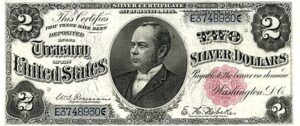
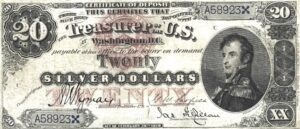
Pick up any Federal Reserve Note and drag your fingernail lightly across the surface. Feel those tiny ridges on George Washington’s collar, the fine lines in the numeral, the subtle topography of the Treasury seal? That tactile signature is the calling card of intaglio printing, and it is one of the most sophisticated anti-counterfeiting technologies hiding in plain sight. The Bureau of Engraving and Printing (BEP) has used this process continuously since it began printing currency in 1862, and grasping its mechanics is essential for anyone who wants to authenticate, grade, or simply appreciate United States paper money at a serious level.
A Brief History of Intaglio at the BEP
Intaglio printing predates American currency by centuries. Renaissance engravers used the technique to produce fine-art prints, and European banknote producers adopted it in the 18th century precisely because counterfeiting the hand-engraved lines was so difficult. When the United States government centralized currency production at the BEP in Washington, D.C., in 1862, it inherited a tradition already established by private bank note companies such as the American Bank Note Company and the National Bank Note Company, both of which had supplied engraved notes to the government since the Demand Notes of 1861.
The early BEP used flatbed presses operated almost entirely by hand. By the 1870s, rotary intaglio presses dramatically increased throughput, and the BEP’s move to its current Maryland Avenue facility in 1914 brought industrial-scale production. The most significant modern milestone came in 1991 when the BEP introduced the Simultan press at its Fort Worth, Texas facility (opened 1991, full operation 1992), which prints both the face and back of a note in a single pass, a technological leap that also slightly altered the tactile character of notes printed there versus Washington-printed sheets of the same series.
Fort Worth-printed notes carry a small “FW” plate position indicator on the face. On Federal Reserve Notes from Series 1988A onward, you can distinguish the facility of origin by this mark, found just above the “FW” in the lower right corner of the note face. Washington-printed notes lack this indicator. Some collectors specialize in matched pairs, acquiring the same serial-number block from both facilities to compare the subtle tactile differences side by side.
How Intaglio Printing Actually Works: Step by Step
The process begins not with ink or paper, but with a master die, a small piece of soft steel into which a highly skilled engraver cuts the design by hand using burins, a process that can take hundreds of hours for a single denomination portrait. The raised image on the die is then transferred under enormous pressure to a hardened steel transfer roll, which in turn impresses the design into a printing plate. A single 32-subject plate for a modern $100 note contains 32 individual design cells arranged in four rows of eight.
When printing begins, the plate is flooded with a thick, oil-based magnetic ink (the magnetic properties assist machine-reading in commerce). A wiper blade removes excess ink from the surface, leaving ink only in the recessed engraved lines. The special currency paper, produced exclusively by Crane and Company of Dalton, Massachusetts, under contract since 1879, is then forced into those recesses under approximately 20 tons of pressure per square inch. The paper fibers literally embed into the grooves, picking up the ink. When the sheet separates from the plate, microscopic ridges of dried ink stand up from the paper surface: the tactile texture collectors and cashiers rely on.
This is categorically different from the offset lithography used to print magazines or the inkjet process of desktop printers. Both of those processes deposit ink on top of the paper surface. Intaglio puts the ink inside the paper, anchored by fiber penetration, which is why a genuine note feels subtly embossed even when examined without magnification.
The Three Printing Stages: Back, Face, and Letterpress
A modern Federal Reserve Note actually goes through three distinct printing operations before it is currency. The back (green side of pre-redesign notes, or the complex architectural reverse of redesigned notes) is printed first in a single color via intaglio. Sheets are then allowed to dry and cure for 24 to 72 hours to prevent set-off, the transfer of wet ink to an adjacent sheet.
The face of the note is then printed via intaglio, applying the portrait, numerals, and Federal Reserve district seal in black ink, with the Treasury seal and serial numbers added in a separate color. Until the introduction of the Simultan press, the face required multiple separate press runs for different ink colors. The third and final stage is the letterpress (or offset) printing of serial numbers and Treasury seals in green, which is why those elements feel slightly different to the touch than the portrait: they lack the full intaglio depth, though they retain some tactile presence due to the letterpress impression.
The color of the Treasury seal has changed across currency types and is a primary identifier for collectors. United States Notes (Legal Tender Notes) carry red seals. Silver Certificates carry blue seals. Federal Reserve Bank Notes from 1918 carry blue seals, while the 1929 series shifts to brown. Federal Reserve Notes carry green seals. Gold Certificates carry gold or yellow seals. National Bank Notes carry brown seals on their 1929 issues. Learning seal colors is the single fastest way to identify note type at a glance.
Why This Matters for Authentication and Grading
For collectors, the intaglio process is not merely historical trivia. It is a grading and authentication tool. A note printed by genuine intaglio will show ink relief under oblique light, a phenomenon called “ink squish” by some graders, where ink at the edges of engraved lines slightly spreads in a characteristic way not replicable by modern color copiers or inkjet printers. The PCGS and PMG grading services both use digital microscopy and raking-light examination as part of their authentication protocols, and intaglio relief is among the first characteristics examined.
For uncirculated notes in particular, the preservation of ink relief is a grading consideration. A note that has been pressed, washed, or chemically treated to remove fold lines will often show disturbed or flattened ink relief under magnification, and both major grading services routinely flag such notes with details qualifiers. If you are considering a raw high-grade note for purchase, examining it under a strong raking light source before submitting it to a grading service can save you a disappointing result.
Print quality errors also originate at the intaglio stage. Doubled plate entries, where a plate is shifted slightly between ink loading and impression, create the characteristic doubled-die appearance on some variety notes. The 1995 Series $1 Federal Reserve Notes from the Kansas City district showed a notable plate smear variety on certain print runs, and these have attracted specialty collector interest with premiums of 200 to 400 percent over face value in gem uncirculated grades. Ink voids, caused by debris in plate recesses, produce the blank-streak varieties catalogued in the Standard Guide to Small-Size U.S. Paper Money by Schwartz and Lindquist.
The Special Role of Currency Paper
Intaglio printing only achieves its full effect on the specific paper substrate designed for it. Crane and Company’s currency paper is composed of 75 percent cotton and 25 percent linen, giving it both the tensile strength to survive press pressure and the absorbency to accept intaglio ink. Since 1990, red and blue synthetic security fibers have been embedded randomly throughout the paper at the manufacturing stage, and since the Series 1990 $100 note, a polyester security thread has been incorporated as well.
The paper is produced in Dalton, Massachusetts, and shipped to the BEP in uncut rolls. The BEP receives the paper with a moisture content controlled to within narrow tolerances, because excess moisture causes the paper to stretch during printing and produces out-of-register impressions. Collectors who find notes with misaligned backs relative to faces, a condition known as a face-to-back offset error, are seeing the result of moisture or mechanical registration failure at one of these press stages. Major offset errors on Federal Reserve Notes, particularly those where the back design is strongly visible on the face side, carry significant premiums in the error note market, with dramatic examples of Series 1995 and Series 1999 $1 offset errors selling at Heritage Auctions for $800 to over $3,000 depending on shift magnitude and grade.
When storing intaglio-printed notes in your collection, avoid PVC-containing plastic holders. PVC off-gasses plasticizers that can migrate into the ink layer and cause chemical reactions that dull or discolor the raised ink. Use Mylar-D (polyester) or polypropylene currency sleeves and holders. For notes graded 65 EPQ (Exceptional Paper Quality) or higher, the ink surface is pristine, and maintaining that standard requires acid-free archival storage and stable temperature and humidity conditions, ideally between 65 and 70 degrees Fahrenheit and 40 to 50 percent relative humidity.
Modern Enhancements: Color-Shifting Ink and Microprinting
Beginning with the Series 1996 $100 Federal Reserve Note, the BEP introduced optically variable ink (OVI) to the intaglio numeral in the lower right corner of the face. This ink, applied via intaglio press, shifts from green to black when the note is tilted, a feature impossible to replicate with any flat printing process. The same note introduced microprinting, tiny letterforms reading “USA 100” within the security thread and “THE UNITED STATES OF AMERICA” along Franklin’s lapel, printed at the intaglio stage.
The ongoing redesign series, culminating most recently in the new $100 note released on October 8, 2013, incorporates the blue 3-D Security Ribbon, which is actually woven into the paper rather than printed, and the Bell in the Inkwell feature, printed with color-shifting ink applied during the intaglio face printing pass. These features show clearly how the BEP’s core intaglio process has been the platform onto which successive generations of anti-counterfeiting innovation have been built, rather than replacing it.
| Series / Date | Variety or Error Type | Approx. Known / Print Context | Rarity |
|---|---|---|---|
| 1995 $1 (Kansas City) | Plate smear variety, face intaglio | Fewer than 500 confirmed in gem | Scarce |
| 1999 $1 (Various FRBs) | Major back-to-face offset error | Estimated 50-150 documented examples | Rare |
| 1996 $100 (First Year OVI) | First use of optically variable intaglio ink | Full production run, first release Oct. 1996 | Common |
| 1988A $1 (First FW Notes) | First Fort Worth Simultan intaglio production | Identified by FW plate indicator | Scarce |
| 1935A $1 Silver Certificate | Experimental intaglio plate variety (R and S) | 1,184,000 R notes; 1,184,000 S notes | Scarce |
| 1869 $1 United States Note | “Rainbow Note” early intaglio two-color face | Early BEP flatbed intaglio production | Rare |
| 2003A $20 (Atlanta) | Ink void streak, intaglio plate debris | Handful of examples in collector hands | Rare |
| 1976 $2 FRN (First Series) | Full intaglio face, new denomination restart | 590 million printed, Series 1976 | Common |
| 1929 National Bank Notes | Brown seal, Type 1 and Type 2 intaglio plates | Varies widely by issuing bank | Key Date |
What Collectors Should Take Away
Understanding intaglio printing reframes how you look at every note in your collection. The engraved portrait of Lincoln on a Series 1963 $5 Legal Tender Note represents hundreds of hours of hand craftsmanship by a master engraver at the BEP. The tactile presence of that portrait, still crisp in a gem uncirculated example sixty years later, is not a product of modern printing technology. It is the same fundamental process used to engrave the vignettes on Demand Notes in 1861. The paper fibers, the ink relief, the specific gravity of the magnetic ink: all of these details connect a contemporary $1 FRN to one of the oldest and most secure printing technologies ever devised.
For practical collecting purposes, train your fingertips as well as your eyes. A note with genuine intaglio relief that has not been pressed or restored will communicate its authenticity through touch before you ever reach for a loupe. Learn to recognize the difference in texture between the intaglio portrait and the letterpress serial numbers on the same note. Study the raking-light relief on known genuine examples before examining notes of questionable authenticity. And if you are building a type set or a specialist collection in error notes, understanding exactly which stage of the intaglio process produced each variety will help you identify, describe, and value your material with the precision that separates serious numismatists from casual accumulators.