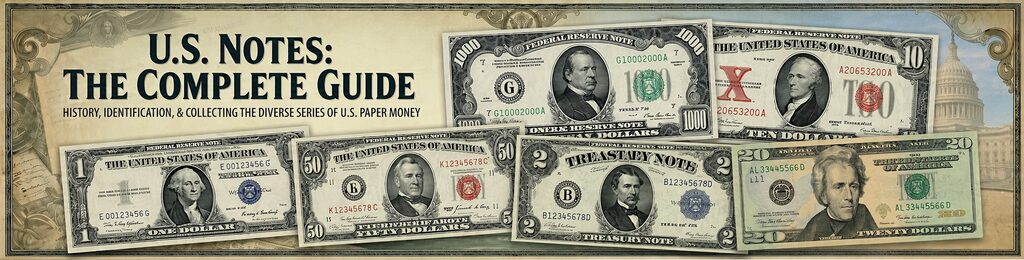
Walk into any major coin show bourse floor and you will hear the same refrain from seasoned paper money collectors: “I just need a presentable example, not a gem.” That philosophy, repeated across thousands of collection strategies, points directly to a single grade designation that deserves far more attention than it typically receives. The Very Fine 25 is not glamorous. It will never headline a Heritage auction at five figures. But for collectors chasing scarce types, rare series dates, and low-print-run Federal Reserve notes on a realistic budget, VF-25 is where the real game is played.
Understanding the VF-25 Standard
To appreciate the VF-25 grade, you need a precise mental image of what it looks like in hand. The Professional Currency Dealers Association and both major third-party grading services, PMG (Paper Money Guaranty) and PCGS Currency, define the Very Fine range broadly as notes that show significant but not excessive circulation. Within that range, the numeric suffix becomes critical.
A note grading VF-25 will display sharp, well-defined printing with no areas of complete wear. The portrait and vignette retain clear, readable detail. Corner tips will show rounding but not fraying. The paper will have taken on a slight limpness from handling, but it will not feel limp or rag-like. Most critically, a VF-25 note typically shows three to five light folds that cross the design, or possibly two firmer vertical folds from ATM or teller handling. Those folds will be visible when the note is held flat but they will not obscure the imagery. There should be no tears, no holes, no significant staining, and no writing.
Compare this to a Fine-15, where the folds become heavier, the high points of the portrait begin to flatten noticeably, and some corner wear transitions toward softness. Now look upward at VF-30, where folds are lighter and fewer, paper retention is stronger, and the note approaches the crispness of Extremely Fine territory. The VF-25 sits squarely between these points, which is precisely why it represents such compelling value.
The Price Cliff Between VF and EF: Where Budget Collectors Win
Currency pricing does not follow a linear curve. It follows something closer to a hockey stick, with values rising modestly through the circulated grades and then accelerating sharply once a note crosses into Extremely Fine territory. This pricing structure exists because the collector base chasing high-grade examples is large, wealthy, and competitive, while the market for honest circulated notes is more patient and less heated.
Consider the 1899 $1 Silver Certificate, Friedberg number Fr. 226, the iconic “Black Eagle” issue bearing the portrait of Lincoln and Grant flanking a majestic eagle vignette. This note was signed by various treasurer and register combinations, and the most commonly encountered pairing is Lyons-Roberts. In VF-25, a problem-free PMG-graded example trades in the $175 to $250 range depending on centering and eye appeal. The same note in EF-40 commands $400 to $575. Move to AU-58 and you are looking at $900 to $1,400. The VF-25 buyer gets the same design, the same historical significance, the same 125-year-old paper, and a note that displays beautifully in a collection album for less than half the EF price.
When evaluating VF-25 notes, always examine the folds under raking light at a 45-degree angle. A note with two clean vertical folds from a single folding event will often look better in a holder than a note with five light folds scattered across the face. Both may grade VF-25, but the visual result differs significantly. Ask for high-resolution scans of both sides before purchasing online.
The same value gap appears with National Bank Notes. A 1902 Plain Back $10 from a smaller state charter, say a note from First National Bank of Creede, Colorado (Charter 3897), might appear in VF-25 for $300 to $450, while an EF-45 example from the same bank could easily run $800 or more when one surfaces at auction. For collectors building a state or territorial collection, VF-25 is often the only economically realistic grade at which certain banks are collectible at all.
Which Types Benefit Most from the VF-25 Strategy
Not every note benefits equally from the budget grade approach. For common series like 1963 Federal Reserve Notes or 1935 $1 Silver Certificates with large print runs, the price difference between VF-25 and CU-65 is small enough that there is little reason to settle. The VF-25 strategy pays off most dramatically in three collecting categories.
Legal Tender Notes (United States Notes)
The large-size Legal Tender series from 1862 through 1923 presents some of the most visually stunning American currency ever issued, and most of those issues are genuinely scarce regardless of grade. The 1880 $100 Legal Tender, Fr. 168, with its brilliant red floral seal and the intricate engraved portrait of Abraham Lincoln, is a prime example. PMG-graded VF-25 examples appear periodically in the $1,800 to $2,500 range. Comparable EF-40 examples rarely appear under $5,000. For a collector wanting to represent this remarkable type in a thematic large-size collection, VF-25 is not a compromise, it is a gateway.
Small-Size Specialties and Star Notes
Within the small-size era beginning in 1929, certain star note replacement issues from Federal Reserve Banks carry tiny print runs that make any surviving example a legitimate rarity. The 1928B $2 Legal Tender star notes are a well-known example, with some districts printing fewer than 24,000 replacements. A VF-25 example from the Chicago district (G*) catalogued in Friedberg as Fr. 1505* might trade at $500 to $750 in VF-25, while a CU-63 example would exceed $2,500. The rarity is the same at both grades. The story you are buying does not change because of a fold.
For small-size star notes, always verify print run data using the most current edition of the Friedberg catalog alongside the online SPMC (Society of Paper Money Collectors) resources and auction archives. Print run figures for pre-1950 star notes have been revised multiple times as Federal Reserve records have been reanalyzed, and some previously “common” stars have been reclassified as genuinely scarce.
Federal Reserve Bank Notes of 1929
The 1929 Federal Reserve Bank Notes (FRBNs), distinct from standard Federal Reserve Notes, were issued in $5, $10, $20, $50, and $100 denominations as part of the transition to small-size currency. Some district and denomination combinations are quite scarce. The 1929 $50 FRBN from the Atlanta district (Fr. 1880-F) had a relatively limited issuance, and finding a problem-free example at any grade can take years. Collectors who insist on EF or better may wait a decade for an auction opportunity. Those willing to accept VF-25 find acquisition timelines and prices far more manageable.
Grading Variables That Matter Most at VF-25
Within the VF-25 designation, not all notes are equal in actual eye appeal. Several characteristics can either enhance or diminish a note’s desirability without necessarily affecting its assigned grade.
Centering is the first variable. A note with a VF-25 grade but well-centered margins will look sharper and more attractive in a holder than an off-center example of the same grade. TPG (third-party grading) services grade centering separately as an annotation on some premium submissions, but for standard holders, centering is simply a visual variable the collector must assess personally.
Color retention is equally important. Some notes, particularly Silver Certificates from the 1890s and early 1900s, can fade to a gray-brown tone even in relatively high grades if they experienced poor storage conditions. A VF-25 with original bright paper and vivid ink contrast will always be preferable to a VF-30 with faded imagery and tired-looking paper. The numeric grade captures fold count and wear level; it does not fully capture color vibrancy.
Original paper versus pressed paper is a critical distinction. Pressing, the practice of ironing moisture into a note to temporarily remove folds, can elevate an apparent grade but leaves telltale signs under magnification, including fiber disruption along former fold lines and a slightly glossy surface. Both PMG and PCGS explicitly flag pressed notes, often with a “Pressed” or “Cleaned” designation that eliminates numeric grading. Be cautious of raw (ungraded) VF notes offered at higher-VF prices, as they may have been manipulated.
When examining raw notes for potential pressing, run a fingertip very lightly along a fold line. Naturally circulated folds have a slight ridge of compressed fiber that you can feel. Pressed notes tend to feel smooth and uniform across the surface because the mechanical pressing process flattens those ridges. Combined with loupe examination at 5x to 10x magnification, this tactile test catches most pressed notes before you submit them for grading.
Building a Type Set at VF-25: A Practical Framework
One of the most rewarding approaches for budget-conscious collectors is the large-size type set: one example of each major design type from 1861 through 1928. Completing this set in EF condition would cost tens of thousands of dollars and require years of hunting. In VF-25, the same set becomes achievable in three to five years for a dedicated collector spending $2,000 to $3,000 annually.
The 1890 Treasury Note series, sometimes called Coin Notes, is a perfect illustration. The $1 Treasury Note (Fr. 347) in VF-25 trades around $325 to $425. The $2 (Fr. 353) comes in around $600 to $800 VF-25. Moving up the denomination ladder, the $5 (Fr. 359) runs $500 to $700 in the same grade. Each of these notes features extraordinary engraving and historical significance. In EF-40, the same trio would represent an investment two to three times larger. The VF-25 type collector gets the visual story at an accessible price point.
| Series / Friedberg No. | Type / Denomination | Est. VF-25 Value | Rarity at VF-25 |
|---|---|---|---|
| 1899 Fr. 226 | $1 Black Eagle Silver Certificate | $175-$250 | Common |
| 1880 Fr. 168 | $100 Legal Tender (Red Floral Seal) | $1,800-$2,500 | Scarce |
| 1890 Fr. 347 | $1 Treasury Note (Coin Note) | $325-$425 | Common |
| 1890 Fr. 353 | $2 Treasury Note | $600-$800 | Scarce |
| 1928B Fr. 1505* | $2 Legal Tender Star (Chicago G*) | $500-$750 | Rare |
| 1902 Plain Back | $10 National (Small-Charter Banks) | $300-$450 | Scarce |
| 1929 Fr. 1880-F | $50 FRBN, Atlanta District | $500-$800 | Rare |
| 1896 Fr. 224 | $1 Educational Series Silver Certificate | $350-$500 | Common |
| 1891 Fr. 352 | $1 Martha Washington Silver Certificate | $450-$650 | Scarce |
| 1907 Fr. 1000 | $1,000 Gold Certificate (Large Size) | $8,000-$14,000 | Key Date |
Buying and Selling VF-25 Notes: Practical Marketplace Advice
The market for certified VF-25 notes is deep and liquid compared to high-grade rarities. Both Heritage Auctions and Stack’s Bowers run currency-specific sales multiple times per year, and their online archives provide years of comparable sale data. For a note you are considering, searching the Heritage auction archives for the Friedberg number plus “VF 25” or “Very Fine 25” will typically surface five to fifteen past sales, giving you a solid pricing baseline.
Direct dealer purchases remain valuable for VF-25 notes because dealers who specialize in circulated currency often have better eye-appeal inventory than auction aggregators. The PCDA (Professional Currency Dealers Association) member directory is a reliable starting point for finding specialists. At major shows like the Florida United Numismatists convention in January or the summer ANA World’s Fair of Money, circulated type specialists often bring extensive VF-range inventory specifically because show attendees tend to be serious collectors rather than casual browsers.
When budgeting for VF-25 acquisitions, factor in TPG submission costs if you plan to purchase raw notes and certify them yourself. PMG standard submissions currently run approximately $30 to $50 per note depending on tier and value declared. For a raw note priced at $200 with strong eye appeal, that certification cost is absolutely worthwhile both for authenticity confirmation and for the significant resale premium a PMG or PCGS holder commands over raw examples of the same grade.
The Long-Term Case for VF-25 Collecting
There is a philosophical dimension to collecting at VF-25 that goes beyond budget management. These notes were used. They passed through hands in commerce, were folded into pockets, handed across bank counters, and carried across the country. A 1901 $10 Legal Tender in VF-25, the famous Bison Note (Fr. 114) with its stunning vignette of an American bison, has a history written into its fibers. The three crisp vertical folds on that note represent real transactions in the American economy of the early twentieth century. That history does not diminish at VF-25. In many ways, it is more present than in a Gem Uncirculated example that spent a century in a bank vault.
The value trajectory for certified VF-25 notes of genuine scarcity has been quietly positive over the past two decades. As high-grade registry competition drives premium prices for top-pop examples ever higher, the population of collectors seeking honest circulated alternatives has grown. A certified VF-25 of a legitimately scarce note bought thoughtfully today at a fair price is unlikely to depreciate significantly over a ten-year holding period, and for true rarities in that grade, appreciation has historically tracked the broader currency market well.
Understanding what VF-25 actually means, how to evaluate eye appeal within that grade, and which types reward the budget approach most generously gives collectors a real competitive advantage. The best examples at this grade level reward patient, educated buying with notes that look wonderful in a Mylar page, tell compelling historical stories, and leave enough room in the collecting budget to keep building. That, ultimately, is the sweet spot that the VF-25 grade occupies: serious numismatics at a human scale.