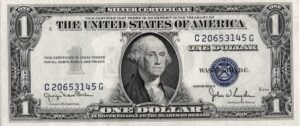
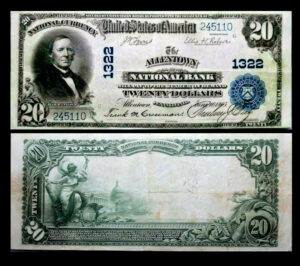
Flip through any stack of raw currency at a coin show and you will quickly realize that folds are the single most consequential factor in determining a paper money grade. Ink quality, paper originality, and centering all matter, but nothing communicates a note’s history of handling quite like a fold. A 1928 $100 Federal Reserve Note graded PMG Very Fine 25 might retail for $180, while the identical note in Extremely Fine 40 commands $350 or more. The difference between those two grades is often nothing more than the number, depth, and placement of folds. Understanding how professional graders evaluate every crease type, from a hairline corner bend to a deep, paper-splitting counting fold, gives collectors a decisive edge at the auction table.
The Grading Foundation: Why Folds Matter More Than Almost Anything Else
Paper currency grades in the circulated range, from Fine-12 through About Uncirculated-58, are defined almost entirely by fold count, fold depth, and fold placement. The Professional Currency Dealers Association (PCDA) grading standards and the official PMG grading guide both anchor their circulated grade descriptions to specific fold criteria before mentioning any other defect. That tells you everything about how central folds are to the evaluation process.
When paper money fibers are folded, two things happen simultaneously. The surface ink layer cracks or separates along the crease line, and the paper fibers themselves compress and sometimes break. A fold that has not broken fibers may be nearly invisible under normal lighting but will show clearly under a low-angle raking light. A fold that has broken fibers creates a white line or a visible channel in the paper, and in severe cases the note will eventually separate at that point. Graders at PMG and PCGS Currency evaluate both conditions when assigning a grade.
Always examine a raw note under a strong raking light held at a 10-to-15-degree angle to the note’s surface. Light folds that are invisible under overhead illumination become immediately apparent with raking light. This is exactly the technique professional graders use at PMG and PCGS Currency.
Single Folds: The Most Common Grade Killer
A single fold is precisely what it sounds like: one deliberate crease traveling across some portion of the note. But the impact on grade depends heavily on three variables: length, depth, and location.
Light Single Folds (About Uncirculated Range: AU-50 to AU-58)
A note grading AU-58 is one of the most exciting finds in currency collecting because it represents a note that has barely touched circulation. PMG defines AU-58 as a note with only the faintest evidence of handling, which in practice usually means a single light fold, sometimes called a “counting crease,” that does not travel more than a quarter of the way across the note. The paper fibers are intact, the fold does not interrupt a major design element, and the note retains essentially full original paper quality on both sides. An AU-55 might show that same fold traveling halfway across, or two very light folds in the margins.
A real-world example: the 1934-A $500 Federal Reserve Note, Fr. 2202, in AU-55 condition trades in the $2,800 to $3,200 range. The identical note in MS-63 Uncirculated reaches $6,500 or more. That gap exists almost entirely because of one or two light folds in the AU example.
Definite Single Folds (Extremely Fine Range: EF-40 to EF-45)
At the EF grade level, a single fold that travels completely across the note, from one edge to the other, becomes the defining characteristic. The crease is visible and definite but the paper is not broken. When you flatten an EF-40 note on a table, it lies flat except for a slight ridge along the fold line. The ink along the fold shows some separation but no white fiber breaks. An EF-45 note might show that same complete fold plus one or two very short additional creases in the margins.
Consider a 1923 $1 Silver Certificate, Fr. 237, featuring the famous “Porthole” portrait of George Washington. In EF-40, this popular large-size note typically trades between $475 and $600. Step it up to AU-55 and values jump to $900 or more. A single vertical center fold is usually the sole reason a dealer grades this note EF rather than AU.
On large-size notes (issued before July 10, 1929), a vertical center fold is far more damaging than a horizontal one because it runs directly through the portrait vignette. On small-size notes, a horizontal center fold is the more common deduction because it crosses the serial numbers and Treasury seal. Keep this asymmetry in mind when comparing two notes at the same stated grade.
Corner Folds: Small in Size, Big in Consequence
Corner folds are creases confined to one or more corners of the note, typically created when a note is inserted into a wallet, slipped under a rubber band, or handled briefly before being set aside. They are the most forgiving fold type in terms of grade impact, but they are also the most misunderstood by newer collectors who sometimes assume a corner fold is irrelevant if the body of the note is clean.
Single Corner Fold Impact
A single bent corner on an otherwise pristine note will drop the grade from MS-65 Gem Uncirculated to AU-58 or AU-55, depending on the severity of the bend and whether the paper fibers broke. This is one of the most painful drops in currency grading because the note may look nearly perfect to the naked eye. Graders will catch even a very slight corner bend because they flex each note gently during examination and look for any resistance or crackling sound that indicates fiber stress.
Multiple Corner Folds
When two or three corners show folds, the grade typically drops into the EF range even if the body of the note is completely clean. Four folded corners on an otherwise unfolded note generally land in the VF-20 to VF-30 range. This scenario is actually somewhat rare in practice because notes that have been handled enough to fold all four corners have usually accumulated body folds as well. When you do find a note with four corner folds and a clean center, it often means the note spent time stored under weight, such as inside a book, which protected the center while the corners curled.
A 1950-B $20 Federal Reserve Note from the New York district (Fr. 2071-B) is a good teaching example. These notes are common in high grade, and small differences in fold condition create meaningful price differences. A VF-30 example with clean paper but three corner folds might sell for $45, while an EF-45 with a single light body fold and crisp corners reaches $75. Same series, same district, dramatically different result from corner condition alone.
Counting Folds: The Signature of Bank Handling
Counting folds are a specific and fascinating category that often confuses newer collectors. These are the repetitive, evenly spaced vertical folds that appear on notes that were counted by hand in bank teller operations, particularly common on notes from the 1920s through the 1960s before automated counting equipment became universal. A note with counting folds will show three, four, or sometimes five parallel vertical creases, equally spaced across the width of the note, as if it were accordion-folded before being counted in a bundle.
Why Counting Folds Are Uniquely Damaging
Multiple counting folds are more grade-damaging than a single complete fold because they create several crease lines rather than one. A note with four counting folds that do not break fibers typically grades VF-20 to VF-25. If those same folds show any fiber breaks or whitening along the crease lines, the grade drops further, into Fine-12 to Fine-15 territory. The cumulative ink loss along four or five parallel creases also dulls the overall visual appeal of the note, which graders factor in when assigning net grades or qualifier designations.
Counting Folds on Star Notes and Key Dates
Finding a key-date star note with counting folds presents one of the classic collector dilemmas. The 1969-C $1 Federal Reserve Note star from the San Francisco district (Fr. 1908-L*) had a print run of only 640,000 notes. A VF-25 example with counting folds might trade for $85 to $110. The same note in EF-45 reaches $200 or more. The rarity is genuine regardless of grade, but the counting folds prevent the note from reaching its full potential value. For key dates, even heavily folded examples often represent good value because the underlying rarity is unaffected by condition.
When buying raw notes at auction, specifically look for counting folds on $1 and $5 Federal Reserve Notes from the 1950s and 1960s. Sellers and buyers often underestimate how many counting folds are present on notes described simply as “circulated,” and this creates opportunities to accurately grade and either pocket the value gap or avoid an overpay.
Fiber Breaks vs. Intact Folds: The Critical Distinction
Every experienced grader makes this evaluation on every fold: did the crease break paper fibers or not? This single question can move a note a full grade point in either direction. An intact fold, one where the paper fibers bent but did not separate, will typically show no whitening along the crease line when examined under raking light. The fold may be definite and complete, but the paper retains its integrity. A fiber-break fold shows a white or pale line along the crease, and in severe cases, the fold has actually partially separated the paper into two layers.
Fiber breaks matter most on older notes printed on rag-content paper from the pre-1929 large-size era. The cotton-linen blend used in U.S. currency paper today is engineered to resist fiber breaks during folding, which is why a modern Federal Reserve Note can be folded dozens of times before showing serious fiber damage. Notes from 1862 through 1928, however, were printed on paper with different fiber characteristics, and even a single forceful fold can produce a visible white crease. This is why a large-size note in VF-25 with a single intact fold often looks more appealing than a VF-25 with fewer folds that involved fiber breaks.
How Folds Interact With Other Defects
Folds rarely occur in isolation on circulated notes, and graders evaluate how folds interact with other issues. A fold that passes directly through a tear, even a tiny edge split, transforms what might have been a VF note into a Fine or Very Good example because the combination of defects compounds the damage. Similarly, a fold that has been pressed or ironed at some point in the note’s history creates a special challenge: the note may appear flat but the fiber history of the fold is still visible to an experienced grader, and pressing is considered a form of alteration that PMG and PCGS Currency will note in their grading designation.
Soiling along a fold line is another compounding factor. Notes that were folded while wet, or that accumulated grime along a fold crease over decades in circulation, often show dark lines at the fold location. This soiling may look like a fold at first glance but is actually a separate defect that graders evaluate independently. A note with a clean fold grades higher than an identical note with a soiled fold, even if the underlying crease geometry is the same.
| Note / Fr. Number | Grade Example and Fold Type | Approx. Retail Value | Rarity |
|---|---|---|---|
| 1928 $100 FRN, Fr. 2150 | VF-25, two counting folds | $180 | Common |
| 1928 $100 FRN, Fr. 2150 | EF-40, single intact fold | $350 | Common |
| 1923 $1 Silver Certificate, Fr. 237 | EF-40, vertical center fold | $550 | Scarce |
| 1923 $1 Silver Certificate, Fr. 237 | AU-55, single light corner fold | $950 | Scarce |
| 1934-A $500 FRN, Fr. 2202 | AU-55, one light fold | $3,000 | Rare |
| 1934-A $500 FRN, Fr. 2202 | MS-63, no folds | $6,500 | Rare |
| 1969-C $1 FRN Star, Fr. 1908-L* | VF-25, counting folds | $95 | Key Date |
| 1969-C $1 FRN Star, Fr. 1908-L* | EF-45, single light fold | $210 | Key Date |
| 1950-B $20 FRN, Fr. 2071-B | VF-30, three corner folds | $45 | Common |
| 1950-B $20 FRN, Fr. 2071-B | EF-45, single corner fold | $75 | Common |
Practical Grading Shortcuts for Raw Note Buyers
Developing a reliable eye for folds takes time, but a few practical habits will accelerate the process significantly. First, always count folds before looking at anything else on a raw note. Lay the note flat under overhead light, then count every crease you can see. Then switch to raking light and count again. The difference between your two counts tells you how many light folds the overhead light was concealing. That number gap is your “hidden fold” score, and it is often the difference between a note you think grades EF-45 and one that actually grades VF-30.
Second, learn the specific fold patterns associated with different decades of circulation. Notes from the 1930s and 1940s frequently show a single horizontal center fold from wallet storage, reflecting the era when folding bills lengthwise in a billfold was standard practice. Notes from the 1950s and 1960s, as discussed above, often show counting folds from bank handling. Notes from the 1970s onward more commonly show corner folds from ATM handling and plastic wallet slots. Recognizing the era-appropriate fold pattern helps you distinguish authentic circulation history from notes that have been improperly stored or damaged recently.
Before submitting a raw note for grading, compare your own assessment to the PMG or PCGS Currency population report for that specific note. If the population is heavily concentrated in the VF-to-EF range and you believe you have an AU example, double-check your fold count carefully. Population data often reveals grade patterns that reflect the typical circulation life of a given series, and it can help you calibrate your own grading eye against thousands of professional evaluations.
Conclusion: Folds as a Collecting Opportunity
Understanding folds at a granular level transforms you from a passive buyer into an active, informed participant in the currency market. When you can look at a 1934 $10 Legal Tender Note, Fr. 1504, and immediately identify that it has two counting folds with intact fibers rather than the four counting folds with fiber breaks that justify the seller’s Fine-15 label, you have real, actionable knowledge. You might correctly identify an EF-40 note priced as VF-25, creating an immediate value gain on the purchase.
Folds also create a natural entry point for building type sets on a budget. A 1918 $500 Federal Reserve Bank Note, one of the most visually spectacular large-size notes ever produced, becomes financially accessible in VF grades where counting folds or a single fiber-break crease hold the price down. The note’s rarity, historical significance, and visual grandeur are entirely unaffected by the folds. For collectors who prioritize holding historically significant pieces over achieving maximum grades across the board, a clear understanding of fold grading reveals value that other collectors routinely overlook.
Master the fold, and you have mastered the most fundamental skill in paper money collecting.