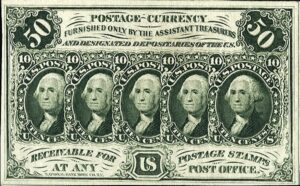
There is a moment every serious currency collector knows. You are holding a crisp, bright, undeniably beautiful banknote. Under a loupe, the paper looks virtually pristine. The colors are vivid, the signatures sharp, the margins even. You send it to PCGS Currency or PMG with genuine confidence, and the slab comes back with a grade of 63 instead of 64. The price guide tells you that single point just cost you somewhere between $200 and $600 depending on the note. What exactly did the grader see that you did not?
The Sheldon Scale and Paper Money: A Brief but Important History
Dr. William Sheldon developed his 1-70 numerical grading scale for coins in 1949, originally pegged to the relative market value of a cent. Paper money graders adopted the same framework decades later, though the application required significant adaptation. Coins suffer from wear on high points; paper money suffers from folds, tears, staple holes, rust stains, counting marks, and chemical treatments. The PMG grading standards, formalized in the early 2000s, and the PCGS Currency standards that followed assign precise descriptive criteria to each grade band, but the real art lives in the spaces between the numbers.
Both 63 and 64 fall within the “Choice Uncirculated” band. Neither note has seen circulation. Neither note has a crease that runs from edge to edge. From across a room, or even across a dealer’s table, a 63 and a 64 of the same series can look identical to a non-specialist. The grader’s job is to find the subtle manufacturing and handling imperfections that distinguish a merely excellent uncirculated note from one that genuinely approaches gem quality.
What the Grading Companies Actually Say
PMG defines a 63 as a note that is “crisp and bright” with “three or fewer light folds or one strong fold, but still basically uncirculated.” That language can be misleading, because many collectors read “fold” and imagine a visible crease. At the 63 level, these folds are often micro-folds: extremely minor bends at the corners or along one edge that required magnification or a raking light source to detect in the first place. The note has clearly never passed through a cash drawer, but it was not handled with archival care either.
A 64 by contrast shows “very light handling” and just one or two trivial imperfections. The critical distinction PMG draws is that a 64 note would grade higher but for a small number of minor blemishes. These blemishes are real but genuinely inconsequential: a faint counting mark on the obverse, a barely detectable fingerprint oil near one margin, or a single corner tip that has the slightest give rather than a perfectly sharp 90-degree point. The 64 note passed through one or two careful hands. The 63 passed through a few more.
When examining a note under raking light (holding it at a very low angle to a single light source), rotate it through all four orientations before settling on a grade estimate. Corner micro-folds are nearly invisible under direct overhead light but show immediately when the light grazes the surface parallel to the edge. Graders at PMG and PCGS Currency use this technique as a standard part of their evaluation process.
The Four Defects That Most Often Drop a Note from 64 to 63
1. Corner Tip Folds
The corners of a banknote are its most vulnerable points. A single corner that has been lightly touched, bent at a bank teller’s counter, or allowed to rest against another note at an angle can develop a microscopic fold. Under magnification this appears as a barely visible whitening of the paper fibers at the very tip of the corner triangle. On a note like a 1934-A $100 Silver Certificate (Fr. 2306), which catalogs at roughly $275 in 63 but can approach $500 in 64, this single corner tip is the single most common reason for a 64 failing to reach its potential grade.
2. Counting Marks and Teller Abrasions
Before notes reach collectors, they pass through Federal Reserve banks and commercial bank branches. Counting machines and human tellers both leave evidence. Machine counting leaves a faint horizontal abrasion across the face of the note, usually appearing as a slight dulling of the surface sheen in a band about a half-inch wide. Hand counting leaves small ink transfers or light pressure marks near the edges where bundles were thumbed. Notes with even one visible counting mark almost never achieve 64, no matter how perfect the rest of the surface looks.
3. Surface Abrasions from Improper Storage
Original-pack notes stored in bank-wrapped bundles can develop tiny abrasions where the outer paper of the band pressed repeatedly against the face of the outermost notes. This is especially common on pre-1963 currency stored in the original ABA-style paper bands. The abrasion appears as a barely perceptible loss of the original surface sheen in a narrow rectangle. Under a 5x loupe you may see individual paper fibers that have been lightly disturbed. This defect, even when extremely minor, typically pushes a note into 63 territory rather than 64.
4. Ink Smears and Print Defects
Some defects are not the result of handling at all: they originate at the Bureau of Engraving and Printing. A light ink smear from the intaglio printing process, a minor misregistration that leaves a ghost outline on the serial number, or a slightly uneven seal impression all count against the note’s grade. It is worth noting that PMG and PCGS Currency distinguish between “printing imperfections” (which are noted and may affect grade) and “exceptional printing characteristics” (which they may view more generously as part of the note’s character). A collector finding an original BEP production smear on a 1963 $1 Federal Reserve Note (Fr. 1900-series) will typically see it graded at 63 with a notation rather than at 64 without one.
The 1928 series Legal Tender Notes and Silver Certificates are particularly grade-sensitive at the 63/64 boundary because original-pack examples are scarce and collector demand is high. Before submitting a 1928 $1 Silver Certificate (Fr. 1600) or a 1928-B $2 Legal Tender (Fr. 1501-B), examine both short edges under magnification for the faint horizontal counting abrasion that plagued many original Treasury-pack notes from this era. This one defect is responsible for a large proportion of 63 grades on otherwise gem-quality 1928-series notes.
Real-World Price Differences: Where the Stakes Are Highest
The dollar value of the gap between 63 and 64 is not uniform across all series. On a 1969-C $1 Federal Reserve Note (Fr. 1908-series), the difference between 63 and 64 might be $8. On a 1928 $5 Legal Tender Red Seal (Fr. 1525), it is closer to $150. On a 1934 $500 Federal Reserve Note, that single Sheldon point can represent a $3,000 difference in realized auction price. The pattern is predictable: the older the series, the lower the surviving population of high-grade examples, and the more dramatically the market rewards each incremental grade improvement.
Star notes amplify this dynamic further. Consider the 1995 $1 Federal Reserve Note star replacements from the Atlanta district (suffix F*). With a print run of only 128,000 notes, even a CU-63 star from this series commands a significant premium. Moving from 63 to 64 on this particular note shifts the collector value from roughly $85-$100 into the $175-$225 range at major currency auctions, according to recent Heritage Auctions and Stack’s Bowers results. The scarcity of the print run combines with the premium for grade to create an outsized reward for each additional point.
How Professional Graders Make the Call
Experienced PMG and PCGS Currency graders work with consistent lighting setups, typically a combination of overhead fluorescent light at 3,000-4,000 lux and a moveable raking incandescent or LED source. They hold the note at varying angles, examining each quadrant of the face and the reverse separately. The process for a typical small-size note takes between 30 seconds and two minutes. For rare or high-value notes, a second grader reviews the assignment before the note is encapsulated.
The graders are looking specifically for what the industry calls the “grade-limiting factor”: the single worst defect on the note. A note can have perfectly sharp corners, a fully bright surface, vivid colors, and a beautiful strike, but if there is one faint counting abrasion crossing the upper third of the face, that counting abrasion is the grade-limiting factor and the note goes into the 63 slab, not the 64. This is why two notes from the same original Federal Reserve pack can receive different grades: the outermost notes in a bundle absorb more handling stress than the notes in the center, and that differential handling creates measurable grade differences even within the same original bank delivery.
If you are buying raw (ungraded) notes at shows or from dealers with the intention of submitting them for grading, ask specifically about the note’s storage history. Notes that have been in original bank-wrapped packs almost always grade higher than notes that spent time in cardboard albums or plastic pages, even if both look equally bright to the naked eye. A note described as “from an original Federal Reserve brick” is worth paying a small premium for precisely because its handling history is clean.
The Controversy: Subjectivity at the Boundary
Anyone who has submitted notes consistently to both PMG and PCGS Currency has encountered the maddening reality that the two services do not always agree on the 63/64 call. A note that PMG slabs at 63 may come back from PCGS Currency at 64, and vice versa. This cross-grading reality is not a flaw in either system exactly; it reflects genuine ambiguity at the boundary. The numismatic community has discussed this for decades, and the practical consensus among experienced collectors is to factor a 5-10% “grading variance” into any purchase decision near the grade boundaries, particularly between 63 and 64 and between 64 and 65.
The existence of “64 EPQ” (Exceptional Paper Quality) designations at PMG adds another layer of complexity. A 64 EPQ note is not simply a 64: it is a 64 that also carries the grader’s judgment that the paper surface, originality, and eye appeal are above the standard for that grade. In practice, a 64 EPQ note often sells for close to a 65 price because the market has come to treat the EPQ qualifier as meaningful evidence of note quality rather than a marketing embellishment.
| Series / Friedberg Number | Denomination and Type | CU-63 Approx. Value | Grade Sensitivity |
|---|---|---|---|
| 1928 Fr. 1500 (Legal Tender) | $1 Red Seal LT | $110 | High Impact |
| 1928-B Fr. 1501-B (Legal Tender) | $2 Red Seal LT | $165 | High Impact |
| 1934 Fr. 1654 (Silver Certificate) | $5 Blue Seal SC | $95 | Moderate Impact |
| 1934 Fr. 2306 (Silver Certificate) | $100 Blue Seal SC | $275 | High Impact |
| 1950-A Fr. 2107-F (FRN) | $20 Atlanta FRN | $55 | Low Impact |
| 1995 Fr. 1921-F* (Star FRN) | $1 Atlanta Star, 128,000 print run | $90 | Key Date |
| 1963-A Fr. 1902-G (FRN) | $1 Chicago FRN | $9 | Low Impact |
| 1928 Fr. 1525 (Legal Tender) | $5 Red Seal LT | $195 | High Impact |
| 1934-A Fr. 2200-L (FRN) | $500 San Francisco FRN | $1,800 | Key Date |
| 1953 Fr. 1509 (Legal Tender) | $2 Red Seal LT Star | $135 | Moderate Impact |
Practical Strategies for Collectors Working at This Grade Level
If you are actively building a set of high-grade notes and the 63/64 distinction matters to your collection goals, several practical approaches can help. First, buy certified notes whenever the value justifies the encapsulation cost. Raw notes near the 63/64 boundary are genuinely difficult to evaluate without the controlled lighting setups professional graders use, and the risk of overpaying for a 63 when you expected a 64 is real. Second, when you do examine raw notes, use a UV light source in addition to standard and raking incandescent light. UV reveals chemical washes, hidden stains, and paper repairs that are completely invisible under normal light and that will guarantee a grade below 64 regardless of the note’s surface appearance.
Third, pay attention to population reports. Both PMG and PCGS Currency publish their census data, which shows how many examples of a given series and grade have been certified. If the census shows 47 examples graded 63 and only 3 graded 64 for a particular Friedberg number, that disparity tells you two things: 64-grade examples are genuinely scarce for this issue (supporting a price premium), and the note in your hand that appears grade-worthy is statistically likely to come back at 63 rather than 64. Adjust your bid or purchase price accordingly.
Conclusion: One Point, Real Money, Earned Knowledge
The 63/64 boundary is not arbitrary, even when individual grading calls feel that way. It marks the transition between a note that has survived its journey from the Bureau of Engraving and Printing with modest imperfections and one that has survived that same journey with nearly none. The human eye, trained and practiced, genuinely can see this distinction. The market, reflecting the judgment of thousands of collectors and dealers over decades, has concluded that the distinction deserves a meaningful premium. Learning to see what professional graders see at this boundary is one of the highest-value skills a paper money collector can develop, not just because it informs buying and selling decisions, but because it deepens the appreciation for what it means when a piece of printed paper survives eighty or ninety years in essentially original condition.