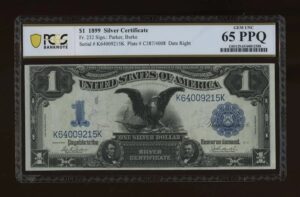
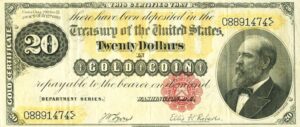
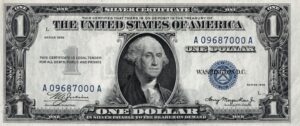
Most currency collectors spend considerable energy deciding which notes to submit for third-party grading. Far fewer think carefully about when to submit them. That timing decision, however, can be the difference between a note that tops a registry set and commands a strong auction premium, and one that arrives certified just as the population swells with newly graded competition. After years of watching population reports shift overnight and auction results swing dramatically based on census data, I can say with confidence: submission timing is one of the most underutilized strategic tools in the serious collector’s arsenal.
Understanding the Currency Grading Calendar
The rare currency market runs on a fairly predictable annual rhythm. The Florida United Numismatists (FUN) Show in early January typically kicks off the year with a major auction from Heritage or Stack’s Bowers. The Central States Numismatic Society (CSNS) show in late April or early May marks a mid-year inflection point. The American Numismatic Association (ANA) World’s Fair of Money in August is often the single largest auction event of the year for paper money, and the fall Heritage Signature sale, usually timed around October, closes out the major auction season before the holiday slowdown.
Each of these events creates upstream pressure on collector behavior. Notes destined for a major auction need to be submitted for grading roughly 90 to 120 days in advance to safely clear standard turnaround queues and allow time for consignment processing. A collector who decides in mid-August that she wants a key note in the October Heritage sale has almost certainly missed the practical window for economy-tier submissions. Understanding these deadlines transforms submission timing from a passive afterthought into an active planning exercise.
Mark the consignment deadlines for Heritage, Stack’s Bowers, and Lyn Knight auctions on your calendar at the start of each year. Work backward 90 days from each deadline to identify your personal submission windows. For express or walk-through submissions at major shows, the window compresses to days, so know your options before the show floor opens.
Registry Season: The Competitive Window That Drives Premium Grades
Both PMG and PCGS Currency operate collector registry programs that rank sets by composite score, number of finest-known notes, and completion percentage. PMG announces its annual registry award winners based on set rankings captured at a specific cutoff date, historically in the November to December timeframe. This creates a distinct competitive window each fall when serious registry collectors race to upgrade notes, add missing pieces, and lock in their standings before the census snapshot is taken.
The practical implication is significant: a collector holding a PMG 65 Exceptional Paper Quality (EPQ) example of a 1928 $500 Federal Reserve Note (Fr. 2200) who believes an upgrade to 66 EPQ is plausible should ideally submit that note no later than September to ensure results are back and the set updated before the registry cutoff. Missing that window by even a few weeks can cost a full year of competitive standing.
Registry competition also inflates premiums for top-pop notes at year-end auctions. When a collector needs a single note to clinch a top-three registry position, she may pay 20 to 40 percent above recent realized prices to secure it before the cutoff. Sellers who recognize this dynamic and time consignments to the October-November auction cycle can capture that urgency premium. Conversely, selling an identical note in February, after registry season has passed and competitive pressure has evaporated, often produces softer results.
How Population Reports Change the Math
Population reports, or census data, are the backbone of rarity assessment in certified currency. When PMG shows a single example of a note graded 67 EPQ and none higher, that note carries enormous registry and collector appeal. When a fresh submission from a dealer’s bulk purchase suddenly populates five new 67 EPQ examples overnight, the value proposition changes materially.
This happened dramatically in the small-size legal tender note market around 2018 and 2019, when several estate collections containing high-grade 1963 $2 Legal Tender notes (Fr. 1513) and 1966 $100 Legal Tender notes (Fr. 1550) were submitted in bulk. The $100 Legal Tender of 1966, with a combined Federal Reserve and United States Note print run that kept circulated examples common but gem uncirculated notes genuinely scarce, saw its PMG 65 EPQ population shift from single digits to over 30 examples across a span of about 18 months. Prices at auction for mid-grade gems softened noticeably as a result, though true 66 EPQ and above examples remained firmly bid.
Before submitting any note that derives significant value from its census position, check both PMG and PCGS population reports on the same day you plan to submit. Then check again when your grades come back. If a note was a single finest-known when you submitted and is now tied with three others, adjust your auction timing and reserve price accordingly. Population data is live and can shift in hours after a major show submission batch is processed.
Strategic Submission by Note Type and Collecting Category
Large-Size Notes and National Bank Notes
The large-size note market, covering issues from 1861 through 1929, moves most aggressively around the ANA summer convention and the major fall Signature sales. Collectors of large-size Gold Certificates, Silver Certificates, and Legal Tender notes often use the ANA show in August to acquire raw notes from dealers and submit them on-site at express tiers, receiving grades within days. Notes that return with strong grades can then be consigned immediately to the fall auction cycle, compressing the turnaround cycle to its minimum.
National Bank Notes require particular census awareness. A 1902 Plain Back $10 note from a small-town bank in Wyoming with a known population of three certified examples in any grade is a fundamentally different value proposition than the same series from a Chicago bank with 40 certified examples. Submitting a raw National Bank Note without first consulting the Hickman-Oakes census data (the standard reference for NB note populations by charter number) is a mistake even experienced collectors make. The Kelly Fractional Currency Handbook and the Friedberg catalog are equally important references before any large-size submission decision.
Small-Size Federal Reserve Notes and Star Notes
The small-size market, encompassing series from 1928 through current issues, is where population dynamics move fastest. Star note populations are especially volatile. A 1969C $100 Federal Reserve Note star from the Chicago district (Fr. 2025-G*) carries significantly different census characteristics than the same series from the Boston district. Heritage realized $2,640 for a PMG 66 EPQ Chicago star of this series in January 2022, partly because the PMG population showed only four examples at that grade with none finer at the time.
Collectors pursuing high-grade star notes should submit during slower census periods, typically January through March and June through July, when bulk dealer submissions are less likely to flood the population reports. Avoiding the post-show submission spikes that follow FUN (January) and ANA (August) can preserve a top-pop position long enough to maximize its auction value.
For star notes, always cross-reference the Board of Governors of the Federal Reserve System print run data with the BEP (Bureau of Engraving and Printing) delivery records published by collectors like Doug Murray and Lee Lofthus. A star with a documented print run under 640,000 from a district with few surviving high-grade examples is worth the express submission fee to minimize the time your raw note is sitting in queue while competitors discover the same opportunity.
Bulk Versus Single Submission Economics
Grading service fee schedules reward volume but punish patience. PMG’s economy tier, which as of 2024 runs approximately $22 to $30 per note depending on membership level and declared value, can take 30 to 60 business days. Express tiers at $65 to $85 per note return in five to ten business days. Walk-through at major shows costs $150 or more per note but delivers same-day or next-day results.
The decision between tiers is fundamentally a time-value calculation. If a 1934 $1,000 Federal Reserve Note (Fr. 2211) has a realistic PMG 64 EPQ grade and comparable Heritage realized prices of $18,000 to $22,000 at that grade, paying an extra $60 in express fees to have results back before a specific auction consignment deadline is economically trivial. For a common 1963 $1 Federal Reserve Note worth $15 in gem grade, economy submission or no submission at all is the rational choice.
The Crossover Submission Timing Question
Many collectors hold notes in PCGS Currency holders and contemplate crossover submissions to PMG, or vice versa, when they believe a higher grade is achievable under the other service’s standards. Timing a crossover submission requires the same auction and registry awareness as any other submission, with an added layer of risk: crossover attempts can result in the same grade, a lower grade, or even a no-grade if the receiving service has concerns about the note’s authenticity or originality.
The optimal window for crossover submissions is typically four to six months before a targeted auction, giving enough buffer to assess the result and decide whether to proceed with consignment or hold the note for re-evaluation. Attempting a crossover within 60 days of a major auction deadline is a gamble that experienced collectors generally avoid.
| Series / Friedberg No. | Type or Variety | Known Pop (PMG 65 EPQ or Above) | Rarity |
|---|---|---|---|
| 1966 $100 Legal Tender (Fr. 1550) | Red Seal, Granahan-Fowler | 28-35 (PMG census, approx.) | Scarce |
| 1969C $100 FRN Star (Fr. 2025-G*) | Chicago District Star | 4-6 at 66 EPQ | Rare |
| 1928 $500 FRN (Fr. 2200) | All Districts, Gold Seal | Under 20 across all grades | Key Date |
| 1902 Plain Back $10 NBN | Small-Town Wyoming Charters | 1-5 per charter (varies) | Key Date |
| 1963 $2 Legal Tender (Fr. 1513) | Red Seal, Granahan-Dillon | 60+ (population expanded post-2018) | Common |
| 1934A $1,000 FRN (Fr. 2212) | All Districts | Under 30 across all grades | Rare |
| 1995 $1 FRN Star (Fr. 1922-F*) | Atlanta District, 128,000 printed | Under 10 at 67 EPQ or above | Key Date |
| 1929 Type 1 $5 NBN | Major City Charters (Chicago, NY) | 50+ per major charter | Common |
| 1928B $2 Legal Tender (Fr. 1502) | Red Seal, Woods-Mellon | 15-25 at 65 EPQ or above | Scarce |
Building a Submission Calendar: A Practical Framework
The most effective approach to submission timing is to build a personal grading calendar at the start of each year. Begin by listing every major auction event and its approximate consignment deadline, then layer in the registry cutoff window for your specific registry categories. Identify which notes in your collection or on your want list are candidates for submission within that year, and assign each a submission window based on its target auction or registry goal.
Notes without a specific auction target can be assigned to economy-tier submission during the slow January-to-March window, when turnaround times are typically shorter and dealer bulk-submission spikes are less frequent. Notes with auction targets should be submitted at the tier that guarantees return before the consignment deadline with at least two weeks of buffer. High-value notes where census position matters significantly warrant express or even walk-through submission to minimize the window during which competitors might discover and submit competing examples.
Finally, revisit your plan quarterly. Population reports shift, auction schedules change, and new finds sometimes alter the rarity landscape of an entire collecting category. The collector who checks population reports four times per year and adjusts submission plans accordingly will consistently outperform the one who treats census data as a one-time lookup.
Conclusion
Submission timing is not a secondary concern for serious currency collectors. It is a core element of collection strategy, as important as authentication due diligence or acquisition pricing. The interplay between auction house calendars, registry competition windows, grading service turnaround tiers, and real-time population dynamics creates both risks and opportunities that reward careful planning. Whether you are a new collector submitting your first gem note or a seasoned registry competitor managing a dozen active categories, the habit of thinking about when to submit, not just what to submit, will pay dividends in stronger auction results, better registry standings, and a collection that retains maximum value over time.