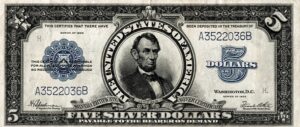
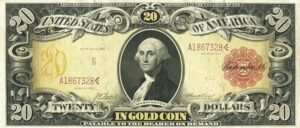
Pick up a $100 Federal Reserve Note from 1993 and compare it side by side with one dated Series 1996. The difference is immediately striking. Franklin’s portrait, once a modest oval cameo centered on the face of the bill, suddenly dominates the redesigned note. His face is larger, more detailed, moved to the left of center, and rendered with a lifelike depth that the old engraving simply could not match. For decades, American currency had looked essentially the same. Then, in a single redesign cycle, the Bureau of Engraving and Printing (BEP) broke nearly every visual convention that had governed United States paper money since the 1920s. This is the story of why that happened, what it meant for security and production, and why the resulting notes are far more interesting to collect than most people realize.
The Counterfeiting Crisis That Forced Change
The redesign did not happen because someone at the Treasury Department woke up one morning and decided Franklin needed a makeover. It happened because the Secret Service was alarmed. Through the late 1980s and into the early 1990s, advances in color photocopying and desktop publishing technology had made high-quality counterfeiting accessible to people without sophisticated printing equipment. The Colombian drug cartels had demonstrated, with their so-called Superdollar operations, that even intaglio-quality forgeries were achievable with sufficient resources. By 1993, the Secret Service estimated that somewhere between $10 billion and $20 billion in counterfeit U.S. currency was circulating internationally.
The $100 bill was the primary target. It was the highest denomination in regular circulation, it was used extensively in global trade and as a store of value in countries with unstable currencies, and, crucially, it was the least likely to be scrutinized carefully in everyday transactions. Something had to change, and it had to change at the level of the physical note itself.
Why the Portrait Grew: The Science of Fine-Line Engraving
The enlarged portrait was not simply a cosmetic choice. It was a deliberate anti-counterfeiting strategy built on the limitations of photographic reproduction technology. The BEP’s master engravers understood something that photocopiers and early digital scanners could not replicate: the human eye is extraordinarily good at detecting subtle errors in familiar faces. A slightly wrong shadow under Franklin’s jaw, an imprecise line around his eye, a collar that does not quite curve correctly, these flaws become immediately apparent when the portrait is large enough to examine.
By enlarging the portrait significantly, moving it to the left of center, and removing the oval border frame that had surrounded earlier portraits since the 1920s redesigns, the BEP created a field of fine intaglio engraving that was many times more difficult to fake convincingly. The new portrait contained an extraordinary density of hand-engraved lines, each contributing to the tonal depth and three-dimensional quality of Franklin’s likeness. The off-center placement also created an asymmetric design that was harder to reproduce without distortion on copying equipment calibrated for symmetric images.
When examining a Series 1996 $100 note under magnification, look closely at the engraved lines in Franklin’s coat and hair. Genuine notes show crisp, slightly raised ink lines with clean edges. Counterfeit notes from the era often show blurred line edges or a slightly grainy texture where the engraving meets the paper surface.
The Full Package: Every Security Feature of the 1996 Redesign
The enlarged portrait was the headline feature, but it was part of a comprehensive security overhaul that represented the most sophisticated American banknote design to that point. The Series 1996 $100 note introduced color-shifting ink on the numeral “100” in the lower right corner of the face, an ink that shifts from green to black when the note is tilted. This was a world-class anti-counterfeiting feature at the time, utterly impossible to replicate with photocopying or offset printing.
The security thread, which had first appeared in Series 1990 notes, was retained but upgraded. In the Series 1996 design, the thread is embedded with the text “USA 100” in microprint, visible only under magnification, and it glows pink under ultraviolet light. Microprinting also appears within the portrait itself and along the lapel of Franklin’s coat, reading “THE UNITED STATES OF AMERICA.” A watermark portrait of Franklin, embedded in the paper itself during manufacture, was visible when the note was held to light. This was produced by the Crane and Company papermill using a process that could not be replicated on commercially available paper stock.
The Federal Reserve seal was also redesigned, switching from a round seal with district letter to a uniform seal design used across all twelve Federal Reserve Banks, marked with the district letter inside the seal rather than as a separate letter prefix.
Series 1996 notes with the Rubin / Withrow signature combination represent the first production run and are generally considered more desirable by collectors than later signature varieties. Watch for star notes from this combination, particularly from the San Francisco and Minneapolis districts, which had comparatively smaller print runs in the initial release phase.
The Signature Combinations: A Roadmap for Collectors
The Series 1996 $100 note was produced across three signature combinations, each reflecting a change in Treasury Secretary or Treasurer of the United States. The first, and typically most sought-after for type collectors, is Robert Rubin as Treasury Secretary paired with Mary Ellen Withrow as Treasurer, covering the earliest production. The second combination pairs Lawrence Summers as Treasury Secretary with Withrow, issued after Rubin’s departure in July 1999. The third combines Summers with Treasurer Mary Ellen Withrow continuing into the early George W. Bush administration before the Series 2001 transition.
Serial number prefixes for the Series 1996 notes follow the standard Federal Reserve district letter format. Atlanta notes carry the prefix F, Boston notes A, New York notes B, and so on through the twelve districts. Within each district, star notes (replacement notes) are significantly scarcer and carry a premium in the collector market, particularly in higher uncirculated grades.
Paper, Printing, and Production Details
The Series 1996 $100 notes were printed at both the Washington, D.C. facility and the Fort Worth, Texas facility of the BEP. Notes printed in Fort Worth carry a small “FW” imprint on the face plate designation, distinguishable under magnification. This distinction matters to specialists: for certain series years and signature combinations, one printing facility produced considerably fewer notes than the other, creating scarcity disparities that are not always reflected in standard price guides.
The paper stock continued to use the traditional 75 percent cotton and 25 percent linen blend supplied exclusively by Crane and Company of Dalton, Massachusetts, the same firm that has supplied currency paper to the United States government since 1879. The red and blue security fibers randomly distributed throughout the paper, a feature dating to World War II-era redesigns, were retained in the Series 1996 notes.
Fort Worth printed Series 1996 notes are identified by the plate position designation on the face of the note. Look for “FW” preceding the face plate number in very small print near the lower right serial number. These notes sometimes trade at a slight premium in gem uncirculated condition because specialty collectors actively seek matched pairs of D.C. and Fort Worth examples from the same signature combination.
How the 1996 Design Changed the Visual Language of American Money
Before 1996, United States currency design had been essentially frozen since 1929, when the government standardized the small-size note format. Portrait subjects were consistent, layouts were rigidly symmetric, and the overall aesthetic was one of Victorian formality translated into twentieth-century printing. The 1996 redesign acknowledged, for the first time in the modern era, that the visual design of currency had to actively work against counterfeiting rather than simply look authoritative.
The off-center portrait, the enlarged image, the color-shifting ink, the watermark, and the UV-reactive thread all represented a philosophy that would carry forward into every subsequent major redesign: make the note a document of such visual complexity and physical specificity that replication becomes economically impractical. This philosophy would be extended with the Series 2003 $20 note’s addition of background color printing, and then dramatically expanded again with the Series 2009 $100 note, which added the three-dimensional security ribbon woven into the paper.
But the 1996 design was the hinge point. It was the moment when American paper money stopped looking like it had always looked, and started looking like what it actually is: one of the most technically sophisticated documents produced by any government in the world.
| Signature Combination | District / Variety | Approx. Print Run | Rarity |
|---|---|---|---|
| Rubin / Withrow | Minneapolis (I) Regular | 6,400,000 | Scarce |
| Rubin / Withrow | Minneapolis (I) Star | 640,000 | Rare |
| Rubin / Withrow | New York (B) Regular | 1,248,000,000 | Common |
| Rubin / Withrow | San Francisco (L) Star | 1,280,000 | Scarce |
| Summers / Withrow | Chicago (G) Regular | 89,600,000 | Common |
| Summers / Withrow | Atlanta (F) Star | 640,000 | Rare |
| Summers / Withrow | Richmond (E) Regular | 64,000,000 | Common |
| Rubin / Withrow | Boston (A) Star | 640,000 | Rare |
| Rubin / Withrow | Kansas City (J) Regular | 12,800,000 | Scarce |
| Any Combination | Fort Worth Printed, Gem CU | Varies | Key Date |
Collecting Strategy: What to Look For Today
For collectors approaching the Series 1996 $100 note today, the most productive strategy is to specialize rather than attempt to build a complete district set across all signature combinations. The sheer volume of notes produced, particularly from the New York and San Francisco districts, means that common examples in circulated grades have little collector premium. The real opportunity lies in three areas.
First, star notes in gem uncirculated condition from low-mintage districts and signature combinations represent genuinely scarce material that is still reasonably priced relative to its actual rarity. Second, the Fort Worth plate designation varieties offer a collecting sub-specialty that requires no premium price to enter but rewards careful searching. Third, and perhaps most interesting, are consecutively numbered pairs and small-pack original bundles in gem condition, which periodically surface from old bank hoards and represent the Series 1996 note in exactly the state it left the BEP in the late 1990s.
Third-party grading from PCGS Currency or PMG is strongly recommended for any Series 1996 $100 note being purchased at a significant premium. The color-shifting ink, while robust, can show wear patterns that affect grade and value. Notes that have been cleaned or pressed can be difficult to detect without expert examination.
When grading Series 1996 notes yourself before submission, pay close attention to the color-shifting ink numeral in the lower right corner. Any abrasion or rubbing in this area can signal that a note has been folded or handled more than its overall appearance suggests, and grading services will dock a note’s grade for this type of wear even when the paper itself appears fresh.
A Lasting Legacy in Paper and Ink
The Series 1996 $100 note occupied an unusual position in the history of American currency. It was a genuine security breakthrough, incorporating technology that the counterfeit trade took years to meaningfully challenge. It was also a design revolution that permanently altered the aesthetic conventions of United States paper money. And it was, for a decade, the face that the United States presented to the global economy, given that the $100 bill remains the most widely held denomination outside American borders.
For the collector, these notes represent a watershed moment that is still within living memory, still readily available in high grades, and still underappreciated relative to their historical significance. The enlarged face of Benjamin Franklin on the Series 1996 note is not just a design choice. It is a window into a specific moment when technology, security policy, and the art of engraving converged to produce something genuinely new. That is exactly the kind of story that makes paper money worth collecting.