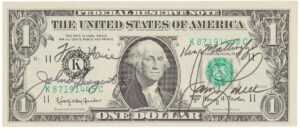
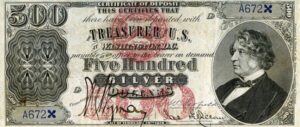
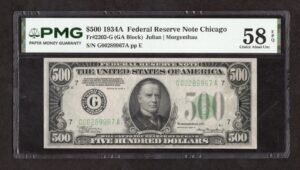
Walk into any serious paper money show today and you will find at least one dealer with a binder full of brown-seal National Bank Notes, each one a tiny tombstone for a financial institution that no longer exists. The years surrounding 1929 represent the single most catastrophic period in the history of American banking, and the currency those banks issued tells a story that no textbook captures quite as vividly. Between 1929 and 1935, more than 9,000 banks suspended operations. Thousands of them had issued their own National Bank Notes under federal charter, and when those banks closed, their unredeemed paper became simultaneously worthless to the depositor and priceless to the future collector.
The National Banking System in Its Final Decade
To understand why so many notes went unredeemed, you need to appreciate how the National Banking system actually worked in 1929. Established by the National Currency Act of 1863 and refined by the National Bank Act of 1864, the system allowed federally chartered banks to issue currency backed by U.S. government bonds deposited with the Comptroller of the Currency. By the 1920s, the system had been in place for more than sixty years and had produced an extraordinary variety of currency tied directly to individual communities.
The final standardized series issued under this framework was the Series of 1929, introduced in July 1929, just three months before the stock market crash of October. The Bureau of Engraving and Printing produced these notes in two distinct types. Type 1 notes carried the bank charter number printed twice in the upper corners of the face, while Type 2 notes, introduced in 1933, added a second printing of the charter number in brown ink in two additional locations on the face. Both types bear brown Treasury seals and brown serial numbers, a deliberate design choice to unify the appearance of notes that had previously varied dramatically in vignette and size across large-format series.
Small Banks, Big Exposure: Why Rural Institutions Were Hardest Hit
The agricultural depressions of the early 1920s had already weakened thousands of rural banks well before 1929. In states like Iowa, Nebraska, and the Dakotas, farming communities that had borrowed heavily during World War One to expand production found themselves crushed by falling commodity prices after 1921. Between 1921 and 1929, more than 5,000 banks failed nationally, the majority of them small rural institutions. Many of these were National Banks, and their note issues from the large-format series of 1902 Date Back, 1902 Plain Back, and 1922 were already trickling out of circulation and into collector hands by the mid-1920s.
When the Great Depression accelerated bank failures after 1929, it hit a different class of institution. The Series of 1929 had been designed partly to reduce issuance costs for smaller banks by standardizing production. Ironically, this meant that hundreds of banks that failed between 1930 and 1935 had managed to print and distribute Series of 1929 notes for only a matter of months before their doors closed permanently. Those short print runs created some of the rarest notes in the entire National Bank Note series.
When evaluating a Series of 1929 National Bank Note from a failed bank, always cross-reference the bank’s failure date against the charter number in the Standard Catalog of United States Paper Money or Don Kelly’s “National Bank Notes” reference. Banks that failed before 1932 often have extremely low surviving populations because their notes were redeemed in the panic before the full print run circulated widely.
What the Treasury Did: The Redemption Mechanism
Federal law required every National Bank to maintain a redemption fund with the U.S. Treasury equal to five percent of its outstanding note circulation. When a bank failed, the Comptroller of the Currency appointed a receiver who was legally obligated to use the bank’s bond collateral to redeem outstanding notes. Noteholders who presented their bills to the Treasury or to any Federal Reserve Bank received face value, regardless of whether the issuing institution had any remaining assets.
This guarantee is critical for collectors to understand. Unlike state-chartered bank notes from the free banking era, National Bank Notes issued after 1863 were never technically worthless upon bank failure. Holders simply needed to present them for redemption. The problem in practice was that many small-town depositors and merchants either did not know about this mechanism, died before redeeming their notes, stored cash in mattresses and attics, or simply lost the notes in the chaos of a failing community. Notes that survived unredeemed became legal obligations of the U.S. government in perpetuity, a status they technically retain today, though the Treasury has not actively redeemed National Bank Notes since 1971.
The March 1933 Bank Holiday: A Watershed Moment for Unredeemed Notes
President Franklin Roosevelt’s proclamation of a national bank holiday on March 6, 1933, under the Emergency Banking Act effectively froze the entire banking system for four days, with many institutions remaining shuttered for weeks or permanently. Of the roughly 17,800 commercial banks operating in February 1933, approximately 11,000 reopened after examination. The remaining 6,800 either were placed into receivership, merged with stronger institutions, or simply never reopened.
For National Bank Note collectors, the bank holiday marks a hard dividing line. Banks that reopened continued issuing Series of 1929 notes through the system’s formal end on July 1, 1935, when the Banking Act of 1935 eliminated the National Bank Note system entirely. Banks that closed during or after the holiday represent the most historically charged issuers in the Series of 1929 catalog. Their notes often carry extremely low serial numbers relative to their authorized maximums, because the banks simply did not survive long enough to issue the full allocation.
Serial number ranges on Series of 1929 notes run separately for each issuing bank and denomination. A note with a serial number below A000500 from a bank that failed in 1933 strongly suggests the bank closed before it could distribute most of its allocation, making low-serial examples from failed institutions proportionally rarer than their Type 2 counterparts from surviving banks. Look for this detail when assessing value.
Identifying Notes from Failed Banks: A Practical Guide
Every Series of 1929 National Bank Note displays the issuing bank’s name, city, state, and charter number prominently on the face. The charter number is your research anchor. The Comptroller of the Currency’s historical records, now largely digitized and cross-referenced in collector resources like the National Bank Note Census maintained by the Society of Paper Money Collectors, allow you to look up any charter number and determine the bank’s opening date, closing date, and reason for closure.
For Series of 1929 Type 1 notes, Friedberg numbers run from F-1800 through F-1890 covering denominations of $5 through $100. Type 2 notes carry Friedberg numbers F-1800A through F-1890A in parallel. Within each Friedberg number, value is almost entirely a function of the specific bank issuer rather than the series classification itself. A $10 Type 1 note from a bank in a major city that issued hundreds of thousands of notes catalogs for modest premiums in Fine condition. The same denomination from a small Nebraska bank that failed in 1931 after issuing only a few hundred notes can command four figures even in circulated grades.
Pay particular attention to the following state-level patterns. Oklahoma, Arkansas, and Mississippi had disproportionately high rates of National Bank failure during the 1929 to 1935 period relative to their total number of chartered banks. Notes from these states in the Series of 1929 are systematically underrepresented in surviving populations. Conversely, notes from large New York, Illinois, and California city banks are common enough that they serve as affordable entry points for new collectors who want to hold a genuine piece of Depression-era history without spending heavily.
What Happened to the Bonds: The Collateral Story
When the National Bank Note system ended on July 1, 1935, approximately $663 million in National Bank Notes remained in circulation. The U.S. Treasury assumed responsibility for redeeming all outstanding notes as they were presented. Banks were required to deposit lawful money with the Treasury to cover their outstanding circulation before they could have their collateral bonds returned. For failed banks, the Comptroller’s receivers carried out this process from the liquidation estate.
Notes that were never presented for redemption represent a direct obligation the Treasury technically still carries. Estimates of the unredeemed amount vary, but numismatic historians including Don Kelly have suggested that somewhere between $50 million and $100 million in face value of National Bank Notes from all series combined was never redeemed. Much of that figure represents large-format notes from the 1902 series destroyed in fires, floods, or simply never found after their owners died. The Series of 1929 unredeemed total is smaller in dollar terms but larger in terms of surviving collectible pieces, precisely because the smaller format and later production date meant these notes were handled more carefully and stored more frequently as keepsakes.
Notes from the Series of 1929 with a bank name printed in red rather than the standard black occasionally appear in the market. These are not errors but rather notes prepared for banks that were in the process of changing their names at the time of printing. Such transitional pieces are extremely rare and often overlooked by collectors unfamiliar with the production history. Always examine the printing color carefully on any 1929-series note with an unusual bank name.
Condition Rarity Versus Issuer Rarity: The Collector’s Dilemma
One of the most intellectually engaging aspects of collecting Series of 1929 National Bank Notes from failed institutions is the tension between issuer rarity and condition rarity. A note from a bank that failed in 1931 after issuing only 500 examples might survive today in a population of three or four known pieces, all in well-circulated condition. Because the bank failed quickly, there was no one to pull uncirculated remainders from the vault and preserve them. The notes that survive did so because they were in pockets and cash registers, used until they were redeemed or until someone tucked one away as a curiosity.
This means that an XF or AU example of an otherwise common Series of 1929 note from a major bank can sometimes be worth more than a Fine example from a dramatically rare small-town issuer, purely because condition collectors compete fiercely for the finest-known examples. The Professional Currency Dealers Association and PCGS Currency have both graded Series of 1929 examples across this spectrum, and their population reports are invaluable tools for understanding exactly how rare a specific grade truly is for a given charter number.
For the beginning collector, the practical advice is to focus first on acquiring notes from interesting failed banks in honest, problem-free circulated grades. A VF-20 or EF-40 note from a bank that closed during the 1933 bank holiday tells a more compelling story per dollar spent than an uncirculated example from a bank that survived until 1935. As your knowledge deepens, you can begin chasing condition rarities from issuers you already understand fundamentally.
| Bank and Charter | State / Denomination | Approx. Notes Issued | Rarity |
|---|---|---|---|
| First NB of Cromwell, Ch. 9465 | Iowa / $10 Type 1 | Fewer than 200 | Key Date |
| First NB of Garvin, Ch. 10425 | Oklahoma / $5 Type 1 | Approx. 300 | Key Date |
| Citizens NB of Calvert, Ch. 7748 | Texas / $20 Type 1 | Approx. 500 | Rare |
| First NB of Haigler, Ch. 9683 | Nebraska / $10 Type 2 | Approx. 600 | Rare |
| First NB of Gurdon, Ch. 10536 | Arkansas / $5 Type 1 | Approx. 800 | Rare |
| Merchants NB of Allendale, Ch. 11341 | South Carolina / $20 Type 2 | Under 1,200 | Scarce |
| First NB of Alcester, Ch. 8539 | South Dakota / $10 Type 1 | Approx. 1,500 | Scarce |
| Commercial NB of Laurel, Ch. 6188 | Mississippi / $50 Type 1 | Approx. 2,000 | Scarce |
| First NB of Springfield, Ch. 3831 | Illinois / $20 Type 1 | Over 40,000 | Common |
| Chase NB of New York, Ch. 2370 | New York / $10 Type 2 | Over 120,000 | Common |
Conclusion: Collecting the Casualties of a Financial Catastrophe
The 1929 banking crisis and the consolidation that followed it permanently reshaped American finance, but it left behind an extraordinary documentary record in the form of brown-seal National Bank Notes from thousands of institutions that no longer exist. Each note from a failed bank represents a specific community in distress, a specific federal charter number issued with optimism and surrendered in failure, and a specific piece of paper that somehow traveled from a teller’s window through decades of history into a collector’s hands.
The research tools available to today’s collector are genuinely exceptional. The National Bank Note Census, the Comptroller of the Currency’s historical charter records, and comprehensive catalog works by Friedberg, Kelly, and Hickman and Oakes give you the ability to reconstruct the exact history of any note you hold. Use them. The difference between a $50 note and a $500 note in this series is almost always a matter of knowing which bank’s story you are actually holding. In National Bank Notes, history and value are inseparable, and that is what makes them endlessly rewarding to collect.