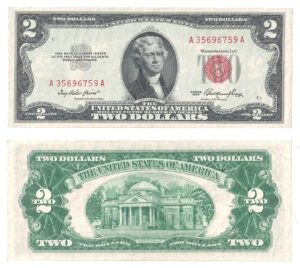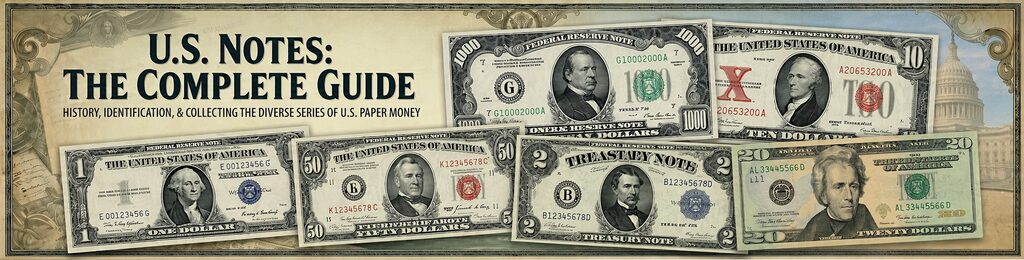
Imagine folding a bond into your wallet. That is essentially what the United States Treasury did in 1863 and 1864, when it issued a series of notes that circulated as currency but accrued compound interest at six percent annually over three years. Holders who kept these notes to maturity collected not only the face value but a meaningful bonus on top. They were, in every practical sense, notes that rewarded patience. Today, surviving examples are among the most coveted Civil War-era pieces in American numismatics, prized for their ornate engravings, their historical urgency, and their remarkable scarcity in high grades.
The Financial Emergency Behind the Notes
By 1863, the Union was burning through money at a rate that would have seemed incomprehensible a decade earlier. The War Department needed hundreds of millions of dollars annually to pay soldiers, purchase supplies, and maintain an expanding military apparatus. The Legal Tender Acts of 1862 had already authorized the first United States Notes, the famous Greenbacks, but the Treasury needed additional mechanisms to keep the war funded without sparking runaway inflation or exhausting the gold reserve entirely.
Secretary of the Treasury Salmon P. Chase, in consultation with Congress, devised the Compound Interest Treasury Note as a hybrid instrument. Authorized by the Act of March 3, 1863, and later by the Act of June 30, 1864, these notes were legal tender for their face value at any time. But if a holder waited three years from the date on the note, they received the face value plus compound interest at six percent per year. A $100 note held to maturity, for example, was redeemable for approximately $119.10. The interest itself was printed directly on the back of the note in a table format, showing the accrued value at each six-month interval. This was transparency by design: the government wanted citizens to understand exactly what they were holding and why waiting was worth it.
Design and Printing: The American Bank Note and National Bank Note Companies
The notes were produced by the National Bank Note Company and the American Bank Note Company, the two dominant security printers of the era, both operating out of New York. The engraving quality is exceptional even by modern standards. Portrait vignettes on the 1863 and 1864 issues feature figures such as Salmon P. Chase on the $1,000 note, Abraham Lincoln on the $10 note (one of his earliest appearances on federal currency), and a compelling allegorical figure of “Standard Bearer” on the $50 denomination.
The obverse designs are dense and elaborate, with lathe-work geometric patterns, counters, and intricate borders that were standard anti-counterfeiting measures of the period. The reverse sides carry the interest table printed in green or bronze ink, which gave the notes an immediately distinctive appearance when compared to contemporary Greenbacks or Demand Notes. Treasury seal colors varied: the 1863 issues typically carry a red seal, while the 1864 issues display a red seal as well, though condition-related toning can make these seals appear orange or rust-colored on well-circulated examples.
When examining a Compound Interest Treasury Note, always inspect the interest table on the reverse under magnification. The printed ink should show consistent color saturation with no evidence of re-inking or restoration. Altered or retouched reverses significantly reduce value and are more common than many buyers realize.
Signature Combinations and How They Affect Value
Like most 19th-century federal issues, Compound Interest Treasury Notes were signed by the Register of the Treasury and the Treasurer of the United States. The signature combinations encountered on these notes are relatively limited, but they matter for attribution and value:
- Chittenden-Spinner: Lucius E. Chittenden as Register, Francis E. Spinner as Treasurer. This combination appears on 1863-dated notes and is the most commonly encountered pairing, though “common” is relative on instruments this scarce.
- Colby-Spinner: S.B. Colby as Register, Francis E. Spinner as Treasurer. Found on 1864-dated notes.
- Jeffries-Spinner: John Jeffries as Register, Francis E. Spinner as Treasurer. A brief tenure in 1863 makes this combination the rarest encountered on these notes and a genuinely significant find for any collector.
Francis Spinner served as Treasurer from 1861 to 1875, which is why his signature appears on every Compound Interest Treasury Note regardless of date. His unusually ornate, almost calligraphic signature is itself a distinguishing feature that authentication experts study closely.
Denominations in Detail
Six denominations were issued, though not every denomination was produced in equal quantities, and survivorship rates differ dramatically across the series.
The $10 note (Fr. 190, Fr. 190a) is the most frequently encountered and the most accessible entry point for new collectors. With Lincoln’s portrait prominently displayed, these notes carry strong crossover appeal to Lincolniana collectors, which sustains robust auction competition and relatively higher prices per grade than the denomination alone might suggest.
The $20 note (Fr. 191, Fr. 191a) features a vignette of a mortar firing, a vivid reference to the artillery-heavy warfare defining the era. These survive in modest numbers and represent excellent collector value in the Fine to Very Fine grade range.
The $50 note (Fr. 192) is considerably scarcer. Population reports from PCGS Currency and PMG show only a handful of graded examples at the VF level or above, making auction appearances events worth tracking.
The $100 note (Fr. 193) and $500 note (Fr. 194) escalate sharply in rarity. The $500 is a genuine condition rarity: most known examples are in the Good to Very Good range, having clearly seen extensive circulation. The interest table on worn examples is often faded or partially illegible, which does not help their eye appeal but adds historical poignancy.
The $1,000 note (Fr. 194a, with the Chittenden-Spinner signature on 1863 issues) is among the rarest of all Civil War-era currency. Fewer than fifteen examples are believed to exist across all grade levels, and a Gem example would be essentially priceless in the current market. Major auction houses report prices realized north of $200,000 for high-grade specimens when they appear.
If you are building a type set of large-denomination 19th-century federal issues and the $1,000 Compound Interest Note is out of reach financially, consider acquiring a high-quality photograph or archival reproduction for reference alongside your collection documentation. Several auction archives, including Heritage Auctions and Stack’s Bowers, maintain freely searchable image databases of major rarities.
Why So Few Survived in High Grade
The inherent paradox of these notes is that the better they worked as a financial instrument, the worse it is for today’s collectors. Notes that were held to maturity and then redeemed were, by definition, turned in to the government and destroyed. Notes that circulated heavily and were used as everyday currency suffered the inevitable wear of wallets, cash drawers, and human hands. The survivors that reached modern collectors fall into two general categories: notes that somehow escaped redemption or destruction through loss or oversight, and notes that were pulled from circulation early for unknown reasons.
Additionally, the paper used for these notes, while high quality for the 1860s, is now over 160 years old. Foxing, brittleness, and the effects of improper storage over generations have taken a serious toll on the overall population. PMG and PCGS Currency combined have certified only a few hundred Compound Interest Treasury Notes across all denominations and grades, with the vast majority grading below Very Fine 30.
Authentication Concerns
Given their value, Compound Interest Treasury Notes attract forgeries and alterations. The most common fraud involves altering a lower-denomination note of the same series to appear as a higher denomination, or adding a false interest table impression to a damaged reverse. More sophisticated alterations include cleaned or pressed notes presented without disclosure, which can artificially elevate apparent grade. Always purchase raw (ungraded) examples with significant caution. Third-party grading by PMG or PCGS Currency is essentially mandatory for any purchase above a few hundred dollars. Even graded examples benefit from independent authentication review for the most expensive denominations.
Request full-resolution scans of both the obverse and reverse before purchasing any Compound Interest Treasury Note online. Pay specific attention to the serial number placement, the alignment of the interest table text on the reverse, and the color consistency of the Treasury seal. Misaligned printing elements or unusual ink saturation can signal a problem before you ever hold the note in hand.
The Collector Market Today
Compound Interest Treasury Notes occupy a firm position in the upper tier of the Civil War-era currency market. They have appreciated consistently over the past two decades, tracking broadly with the growth of the high-grade antique currency market. At major auction venues including Heritage Auctions, Stack’s Bowers, and Lyn Knight (now part of Currency Auctions of America), $10 and $20 examples in Very Fine condition regularly bring $3,000 to $8,000, with Extremely Fine and About Uncirculated specimens commanding multiples of those figures.
The crossover market is significant. Collectors of Civil War militaria, Abraham Lincoln memorabilia, Salmon P. Chase ephemera, and 19th-century financial history all compete with pure currency collectors for these notes. This sustained demand from multiple collecting communities provides a measure of market resilience that purely currency-driven pieces do not always enjoy.
| Friedberg No. | Denomination / Series | Est. Known Population | Rarity |
|---|---|---|---|
| Fr. 190 | $10, 1863 (Chittenden-Spinner) | 200-300 total, ~40 VF or better | Scarce |
| Fr. 190a | $10, 1864 (Colby-Spinner) | 150-250 total, ~30 VF or better | Scarce |
| Fr. 191 | $20, 1863 (Chittenden-Spinner) | 100-175 total, ~25 VF or better | Scarce |
| Fr. 191a | $20, 1864 (Colby-Spinner) | 80-130 total, ~15 VF or better | Rare |
| Fr. 192 | $50, 1864 (Colby-Spinner) | 40-70 total, fewer than 10 VF or better | Rare |
| Fr. 193 | $100, 1863 and 1864 | 30-50 total across both dates | Rare |
| Fr. 194 | $500, 1863 (Chittenden-Spinner) | Fewer than 20 known | Key Date |
| Fr. 194a | $1,000, 1863 (Chittenden-Spinner) | Fewer than 15 known | Key Date |
| Any Denomination | Jeffries-Spinner Signature Combo | Extremely rare across all denoms | Key Date |
Building a Collection Around These Notes
Few collectors will ever assemble a complete type set of Compound Interest Treasury Notes across all denominations and signature varieties. The financial commitment alone makes it a multi-decade project. But there are practical and rewarding ways to engage with this series at almost any budget level.
Starting with a single $10 note in the Fine to Very Fine range is the most common entry point, and a reasonable one. You gain direct access to the period’s craftsmanship, an authentic Civil War financial artifact, and a piece that tells a complete story of governmental innovation under crisis. From there, adding a $20 or working toward a second signature combination on the $10 denomination provides structured collecting goals without requiring a six-figure budget.
For collectors who prefer documentation over acquisition, compiling a reference archive of auction records, population report data, and academic sources on Civil War finance creates a research foundation that enhances the appreciation and provenance research of any eventual purchases.
Conclusion
Compound Interest Treasury Notes are not just old paper. They are physical evidence of a government improvising under existential pressure, using financial creativity to sustain a war effort that would determine the nation’s future. The men who carried these notes in their coat pockets, who checked the interest table on the back and decided whether to spend or save, were living through history in real time. When you hold one of these notes today, that history is literally in your hands. For collectors who appreciate the intersection of monetary history, engraving artistry, and genuine scarcity, few areas of American numismatics offer a more rewarding pursuit.