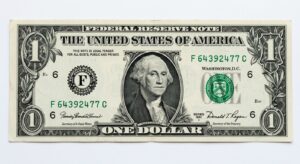
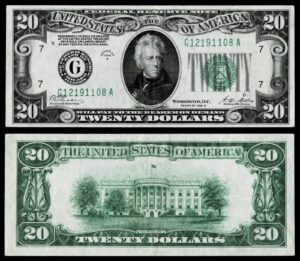
Flip a Federal Reserve Note upside down and the back design should still read correctly relative to the face. That is by design. Bureau of Engraving and Printing (BEP) production intentionally prints U.S. currency so that rotating the note 180 degrees produces a readable back, a feature called “end-to-end” orientation. When that system breaks down and the back is printed rotated 90 degrees relative to the face, the result is an inverted back error, one of the most prized and visually unmistakable mistakes a paper money collector can find.
The Mechanics of an Inverted Back Error
To appreciate why inverted backs exist at all, you need to understand the BEP’s multi-pass printing process. Modern Federal Reserve Notes are produced in three distinct stages. In the first pass, the back design (the green side on most notes) is printed via intaglio onto sheets of 32 subjects. The sheets are then dried, stacked, and fed back into a different press for the face printing, which applies the black portrait and lettering. A third pass adds the green Treasury seal, Federal Reserve district seal, and serial numbers via letterpress.
An inverted back occurs when a sheet that has already received its back printing is accidentally loaded into the face-printing press sideways, rotated 90 degrees from the correct orientation. Because the BEP used separate presses for back and face printing, a sheet that was physically turned the wrong way before being fed into the face press will receive a portrait and face design that is perpendicular to the back. When you hold the finished note with the face upright, the back design appears rotated 90 degrees, either to the left or to the right depending on which direction the sheet was misfed.
It is important to distinguish this from a “flip” error, where a sheet is turned face-down and printed on the already-printed side again. True inverted back errors show the correct two sides of the note, just misaligned rotationally. Collectors and third-party grading services (TPGs) like PCGS Currency and PMG are meticulous about this distinction in their holder labels.
When examining a suspected inverted back error, hold the note face-up and rotate it 90 degrees clockwise. If the back design now reads correctly, you have a genuine inverted back. If it requires a full 180-degree rotation, the note is actually printed in the standard “end-to-end” orientation and is not an error at all.
Historical Context: When Did These Errors Escape the BEP?
The BEP has employed currency inspection systems since the late nineteenth century, but early quality control was far less sophisticated than what exists today. Inverted back errors from the Large Size era (pre-1929) are documented but extraordinarily rare, as hand-inspection of each sheet was common. The transition to Small Size currency in 1929, combined with increased production volumes driven by Depression-era monetary policy, created conditions where occasional misfed sheets could escape notice.
The most widely documented inverted back errors in the modern era come from Series 1963 through the mid-1970s, a period when BEP production expanded dramatically to meet postwar consumer demand. Series 1963A $1 Federal Reserve Notes are among the most frequently encountered inverted backs in today’s market, with examples certified by PMG appearing at major currency auctions every few years. A Series 1963A $1 note from the Federal Reserve Bank of Boston (A-block) in PMG Very Fine 30 sold at a 2019 Heritage Auctions session for approximately $1,560, while a PMG Gem Uncirculated 65 EPQ example from the same series realized $4,800 at Stack’s Bowers in 2021.
Higher denomination inverted backs from this era are genuinely scarce. A Series 1969C $10 Federal Reserve Note with an inverted back, certified PMG Choice Fine 15, sold at Heritage in March 2022 for $3,840. The same error on a $50 or $100 note would command multiples of that figure given the already higher face value and the statistical improbability of the error surviving inspection on a note that would have received greater scrutiny during production.
Large Size Inverted Backs: The Ultimate Rarities
Among Large Size notes, inverted back errors command prices that rival the finest regular-issue collectibles. The 1899 $2 Silver Certificate “Educational” series is occasionally cited in specialist literature as having a small number of known inverted back examples, though authentication is complicated by the age and condition of surviving specimens. More reliably documented are inverted backs among Series 1902 National Bank Notes, where the complex multi-color printing process created additional opportunities for misfed sheets.
The most famous Large Size inverted back error in American numismatics is arguably the 1901 $10 Legal Tender “Bison” note with an inverted back, of which fewer than five examples are believed to exist in any condition. A single example graded PMG Fine 12 by early population reports sold for over $28,000 at a major 2017 auction, demonstrating that the error premium on already desirable type notes can be staggering.
For Large Size inverted back errors, always insist on third-party certification from PCGS Currency or PMG before purchase. The complexity of Large Size printing means that altered or misrepresented notes do exist in the marketplace. A certified holder from either service provides both authentication and a standardized grade that protects your investment at resale.
Small Size Inverted Backs by Series and Denomination
Within the Small Size era (1929 to present), inverted backs cluster in a few specific series windows. The 1928 series Federal Reserve Bank Notes are known with this error in very limited numbers. Moving into the post-World War II period, Series 1950 through 1950E $5, $10, and $20 Federal Reserve Notes occasionally turn up with inverted backs, typically in circulated grades suggesting they spent years in wallets before a collector recognized them.
The single most populated category in TPG census data for inverted back errors is the $1 Federal Reserve Note of the Series 1963 and 1963A issues. PMG’s population report as of late 2024 shows 23 certified examples across all districts for Series 1963A $1 inverted backs, with grades ranging from Fine 12 to Gem Uncirculated 65 EPQ. The distribution across Federal Reserve districts is uneven: Boston (A), New York (B), and Chicago (G) account for over half the known population, likely reflecting the larger print runs assigned to those districts during that series.
Series 1969, 1969A, and 1969B $1 notes also produced documented inverted back errors, though in smaller numbers than the 1963A series. The Series 1969B issue is particularly interesting because it coincided with a period of transition in BEP press equipment, and some specialists believe that mechanical adjustments during this period increased the window during which a misfed sheet could pass undetected.
$2 Federal Reserve Notes and Star Note Inverted Backs
The $2 Federal Reserve Note, introduced in Series 1976, has produced a small but exciting population of inverted back errors. Given the relatively modest print runs for $2 notes compared to $1 notes, an inverted back $2 is statistically rarer than an equivalent $1 error. A Series 1976 $2 FRN from the Federal Reserve Bank of Atlanta (F district) with an inverted back, graded PMG Very Fine 25, appeared at a 2020 Lyn Knight auction and sold for $2,640.
Star note inverted backs represent the holy grail intersection for error collectors. Star notes, printed to replace notes spoiled during production, already have smaller print runs. A star note that also carries an inverted back error combines two desirable attributes into a single note. A Series 1963A $1 star note inverted back from the Federal Reserve Bank of New York (B*) is considered a two-error note and has appeared in published auction records at prices exceeding $9,500 in circulated grades.
If you are building a type set of inverted back errors by denomination, the $1 FRN series from 1963A through 1969B offers the most accessible entry points, with circulated examples often available in the $800 to $2,000 range. Higher denominations and Large Size examples require a significantly larger budget but represent far scarcer collectibles with stronger long-term demand from advanced collectors.
Quality Control: How Do These Notes Escape the BEP?
A question collectors frequently ask is simple: how does a sheet printed 90 degrees off-axis get past federal inspectors? The answer lies in production volume and human factors. During peak output years in the 1960s and 1970s, the BEP printed upward of 4 billion notes annually. Even with mechanical sorters and trained inspectors, a misfed sheet that was otherwise perfectly printed in terms of ink coverage and registration could pass a quick visual check, particularly if the inspector was monitoring for ink defects rather than rotational orientation.
Modern BEP production lines use automated optical inspection systems that are far more sensitive to rotational errors than human inspectors were in mid-century. This is one reason why genuine inverted back errors on notes dated after approximately 1985 are extremely rare and command premium prices even in circulated grades. The window during which these errors could realistically escape into circulation essentially narrowed to near-zero as automated inspection became standard.
Grading Considerations for Inverted Back Errors
Third-party grading of error notes follows the same technical standards as regular issues, with one critical addition: the error itself must be genuine, consistent, and not the result of post-printing alteration. PMG and PCGS Currency both use the term “Inverted Back” on their holder labels and include it as a notation alongside the numerical grade.
For investment purposes, the premium commanded by an inverted back error compresses significantly below Very Fine 20. A circulated example in Fine 12 might sell for one-third of what a Choice Uncirculated 63 example brings, even though both carry the identical error. This compression is less severe than with regular-issue notes because error collectors understand that most inverted backs spent time in circulation before being discovered, but Uncirculated examples with original paper quality still command the strongest premiums at auction.
| Series / Date | Denomination and Type | Est. Known / Certified | Rarity |
|---|---|---|---|
| 1901 | $10 Legal Tender “Bison” LS | Fewer than 5 | Key Date |
| 1902 | $5/$10 National Bank Note LS | 8 to 12 known | Rare |
| 1928B | $5 Federal Reserve Bank Note | 10 to 15 known | Rare |
| 1950E | $20 Federal Reserve Note | 15 to 20 known | Rare |
| 1963A | $1 FRN, all districts | 23 certified (PMG) | Scarce |
| 1963A | $1 FRN Star Note (B*) | 2 to 3 known | Key Date |
| 1969B | $1 FRN, selected districts | 10 to 14 known | Rare |
| 1976 | $2 FRN Atlanta (F) | 6 to 8 known | Rare |
| 1977A | $10 FRN, multiple districts | 18 to 22 known | Scarce |
| Post-1985 | Any denomination FRN | Fewer than 5 total | Key Date |
What Inverted Back Errors Are Worth at Auction
The market for inverted back errors has strengthened considerably since 2015, driven by increased collector interest in error notes generally and the growing profile of currency at major numismatic auctions. Heritage Auctions, Stack’s Bowers, and Lyn Knight (now part of Currency Auctions of America) all regularly feature certified inverted backs in their major sales.
For Series 1963A $1 notes, the market in 2023 and 2024 established a clear value ladder. Fine to Very Fine examples (grades 12 to 30) typically bring $900 to $1,800 depending on district. Extremely Fine examples (grades 40 to 45) range from $2,000 to $3,500. Choice Uncirculated examples (grades 63 to 65) with solid paper quality have pushed past $5,000 when competitive bidding develops between two serious error collectors.
Higher denomination inverted backs from the 1969 and 1977 series command dramatically higher prices. A $50 FRN Series 1969 with a confirmed inverted back in PMG Very Fine 30 would be expected to realize $8,000 to $14,000 at auction based on comparable sales data. A $100 note with the same error in any grade would be considered a significant find justifying immediate professional certification.
Buying, Selling, and Avoiding Fakes
The primary authentication risk with inverted back errors is not outright fakes but rather misidentified notes. Some collectors have presented notes with severe misalignment of the overprint (serial numbers and seals) as inverted back errors when in fact only the third-pass letterpress printing is rotated, not the actual back design. These overprint shift errors are real and collectible in their own right but are less valuable than true inverted backs and should be labeled accurately.
Always purchase inverted back errors in PCGS Currency or PMG holders when spending more than a few hundred dollars. Raw examples can be authenticated, but the process requires examining the note under both raking light and magnification to confirm that the intaglio back printing is genuinely rotated 90 degrees relative to the intaglio face printing, not merely shifted or misregistered.
Before submitting a suspected inverted back error to a TPG, photograph it under raking side light to document the rotation clearly. Both PCGS Currency and PMG include detailed error descriptions in their submission forms, and providing your own photographic evidence of the orientation difference can speed up the verification process and reduce the chance of the note being returned as “inconclusive.”
Conclusion: A Spectacular Error Worth Pursuing
Inverted back errors occupy a unique position in the error note hierarchy. They are visually dramatic, mechanically comprehensible, and historically grounded in the specific production methods of the BEP across more than a century of note printing. Unlike some error types that require a magnifying glass to appreciate, an inverted back is immediately obvious to anyone who picks up the note, which makes it an ideal centerpiece for a display collection or a conversation-starting exhibit note at a club meeting.
The combination of genuine scarcity, strong auction records, and increasing mainstream collector awareness makes inverted back errors a compelling focus for a specialized collection. Whether you are hunting through raw notes at a currency show hoping to spot an unrecognized example, or bidding on a certified specimen at a major Heritage or Stack’s Bowers sale, understanding the mechanics, history, and market values behind these errors gives you a decisive advantage in one of paper money collecting’s most exciting specialties.