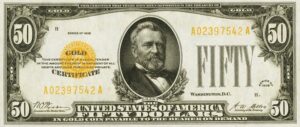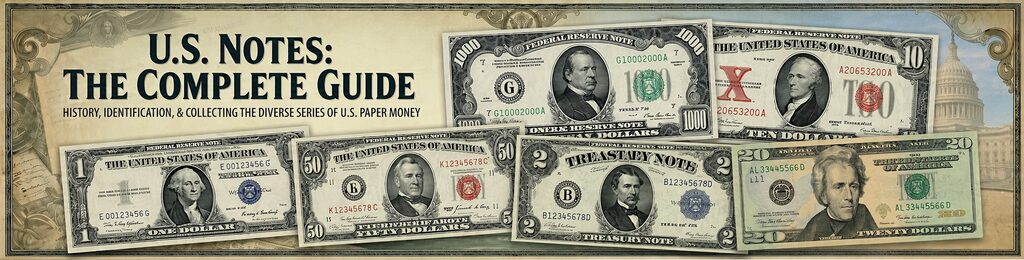
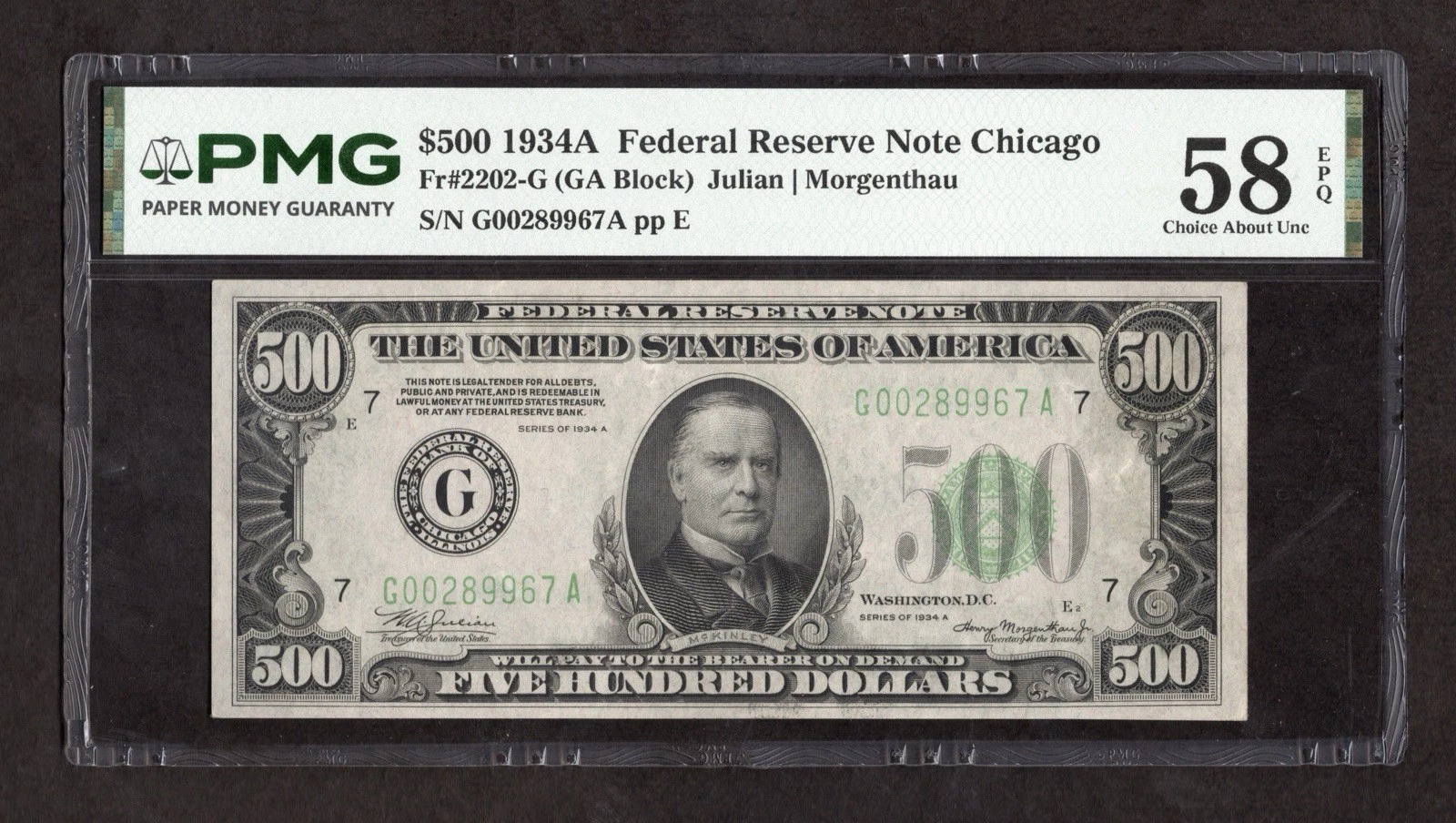
📷 Image source: eBay. Images are selected by AI to represent the article topic and may not depict the exact note(s) described.
Where Money Actually Gets Made
Stand on the public gallery walkway above the BEP’s production floor in Washington, D.C., and you will witness something remarkable: sheets of uncut currency rolling through presses that cost more than most homes, watched over by skilled craftspeople whose trade descends from a tradition stretching back to 1862. The smell of ink is real. The noise is genuine. And the education you receive about American paper money is unlike anything a book can offer.
The Bureau of Engraving and Printing has been formally welcoming visitors for well over a century, evolving from informal tours of a small Treasury annex into one of Washington’s most popular free attractions. Today, the D.C. facility and the newer Fort Worth, Texas plant together host hundreds of thousands of visitors annually, making the BEP one of the most accessible windows into the production of any nation’s currency anywhere in the world.
The Early Days: From Closed Workshop to Public Showcase
When Abraham Lincoln signed the legislation creating a national currency system in 1862, currency production began in a modest basement room of the Treasury Building with just six female employees hand-signing and separating notes. The operation was anything but public. Security concerns and the sheer informality of the early enterprise meant that most Americans had no idea how their money was made.
That began to change after the Civil War. By the 1870s and 1880s, the Bureau had grown substantially and occupied multiple Treasury Building spaces, and informal tours for dignitaries and journalists were documented in period newspapers. Harper’s Weekly ran illustrated features on currency printing as early as 1877, bringing vivid descriptions of the engravers’ work to a mass readership and stoking genuine public fascination.
The construction of the dedicated BEP building at 14th and C Streets SW, completed in 1914, represented a philosophical shift as much as a practical one. The new facility was designed with public access in mind. A formal gallery walkway was incorporated into the building’s upper level so that visitors could observe the production floor without interfering with operations. This was an era of progressive-era transparency, and the federal government was eager to demonstrate the legitimacy and security of the national currency system to an often skeptical public still recovering from decades of wildcat banking and monetary instability.
Educating the Public During the Era of Large-Size Notes
Tours in the 1910s and early 1920s coincided with the final years of large-size currency production. Visitors to the gallery would have watched craftspeople handling sheets printed with the sprawling, ornate designs of Series 1907 Legal Tender Notes, Silver Certificates, and Federal Reserve Notes whose dimensions measured 7.375 by 3.125 inches. These were visually stunning objects, and watching them come off the presses in full sheets before being cut and inspected must have been genuinely awe-inspiring.
Tour guides of the period reportedly explained the intaglio printing process in detail, emphasizing the raised ink texture that distinguished genuine currency from counterfeits. This was a deliberate educational strategy: an informed public was considered a first line of defense against counterfeiting. If ordinary citizens understood what authentic currency felt like and looked like, the theory went, they were less likely to accept fraudulent notes.
If you own any large-size notes from the 1910s or early 1920s, run your fingertip firmly across the portrait and fine-line engraving. The tactile ridge left by intaglio printing is one of the authentication points the BEP has taught gallery visitors about for over a century. Notes that have been washed, pressed, or chemically treated often lose this texture and grade lower as a result.
The 1929 Transition and Renewed Public Interest
The shift to small-size currency in 1928 to 1929 brought sweeping redesigns and a new standardized format that the BEP actively promoted through its public gallery. The move to a uniform 6.14 by 2.61 inch format was itself a major news event, and tour attendance reportedly surged in 1929 as curious Americans came to see the new notes being produced. The BEP capitalized on this interest, updating its gallery displays and educational materials to explain why standardization improved efficiency and reduced counterfeiting opportunities.
Throughout the 1930s, New Deal-era federal programs encouraged civic engagement with government institutions, and the BEP gallery benefited from this cultural moment. School groups from across the region made the tour a standard field trip destination. The exhibit cases lining the gallery walkway were updated to display historical notes alongside current production, giving visitors a compressed sense of monetary history. Some of these display cases, refurbished over the decades, remain part of the visitor experience today.
World War II Disruptions and Security Lockdowns
The Japanese attack on Pearl Harbor in December 1941 forced an immediate reassessment of public access to all federal facilities. The BEP gallery tours were suspended for several years during World War II, as the Bureau took on classified printing contracts alongside its currency work. The facility printed ration books, war bonds, and various classified government documents, and security concerns made public access untenable.
Tours resumed after the war’s end, and a deliberate public-relations effort accompanied the reopening. The BEP recognized that reestablishing public trust in federal institutions was a priority, and the gallery served as a tangible demonstration of transparency. New educational displays were installed explaining the Federal Reserve system and the relationship between currency production and monetary policy, reflecting the more sophisticated economic understanding that the postwar era demanded of its citizens.
Notes produced during the World War II period include several highly collectible varieties. Look for the 1935A Hawaii overprint Silver Certificates (brown seal) and the North Africa Yellow Seal Silver Certificates, both produced as emergency currency with special markings that could be declared worthless if captured by the enemy. These issues were never displayed in BEP gallery exhibits during the war for obvious security reasons, making their backstory especially compelling for collectors who visit the facility today.
The Modern Era: Fort Worth and Dual-Campus Education
By the 1980s, the Washington D.C. facility was operating at capacity, and currency demand was growing with the American economy. Planning for a second production plant began in earnest, and the Fort Worth, Texas facility opened in 1991. From its inception, the Fort Worth plant included a purpose-built visitor center and gallery walkway, reflecting the BEP’s by-then deeply ingrained commitment to public education.
The Fort Worth Visitor Center opened with modern exhibit technology including video displays, interactive currency history timelines, and hands-on demonstrations of paper and ink properties. The facility quickly became a major attraction in the Dallas-Fort Worth area, drawing collectors, school groups, and curious tourists who might never make it to Washington. The Western Currency Facility, as it is officially designated, prints notes carrying the Fort Worth identifier: a small “FW” that appears to the left of the Federal Reserve Bank indicator on notes produced there beginning with certain 1988A series issues.
For collectors, this distinction matters. Notes lacking the “FW” designator from the same series were produced exclusively in Washington, and in some denominations and Federal Reserve districts, one facility’s production significantly outnumbered the other’s, creating genuine scarcity differences that affect market value.
What the Gallery Actually Teaches Collectors
Beyond the spectacle of watching currency being printed, the BEP gallery experience delivers specific numismatic knowledge that serious collectors find genuinely useful. The production sequence the gallery illustrates directly explains why certain note varieties exist and why condition factors matter so much in grading.
Visitors learn that Federal Reserve Notes go through four primary production stages: the face printing using offset lithography for the background colors and fine-line patterns, the back printing using intaglio, the face printing using intaglio for the portrait and fine detail elements, and the overprinting stage where serial numbers, Federal Reserve seals, and Treasury seals are applied. Understanding this sequence explains why misalignment errors, ink smears, and missing overprint varieties occur and why they command substantial premiums in the collector market.
The gallery also illuminates why star notes exist. When a note is damaged or misprinted during production, it must be replaced to maintain accurate accounting of serial number sequences. A star is substituted for the final letter suffix in the serial number to flag the replacement without disrupting records. Star note print runs are typically far smaller than regular runs, which is why they are generally more valuable, with certain key-date star notes representing genuinely rare collector items.
When visiting the BEP gallery, pay close attention to the overprinting station demonstration. This is where the Treasury seal color you see on notes is applied. Understanding that seal color changed with currency type (red for Legal Tender Notes, blue for Silver Certificates, green for Federal Reserve Notes, gold for Gold Certificates) helps collectors instantly identify note types when examining raw, uncertified material without relying solely on the reverse legend.
The Gift Shop and Collectible Products
The BEP’s gallery gift shops have themselves become a significant part of collector culture. Uncut currency sheets, available in configurations of 4, 16, and 32 notes, have been sold directly to the public since 1981. These sheets, which bypass the cutting process entirely, represent a form of currency that never existed in everyday circulation and occupy a fascinating gray area in the collector market. A 32-note uncut sheet of current $1 Federal Reserve Notes retails for well over face value, and vintage sheets from the program’s early years now command meaningful premiums.
The BEP also sells specialty items including currency products embedded in acrylic, shredded currency bags, and specially packaged collector sets. While purists sometimes debate the numismatic legitimacy of these products, they have introduced countless visitors to the hobby of currency collecting, serving as gateways that led many of today’s serious collectors to their first note purchase.
| Series / Issue | Type or Variety | Estimated Surviving Examples | Rarity |
|---|---|---|---|
| 1934A | $500 Federal Reserve Note, Chicago (G) | Under 1,000 known | Rare |
| 1935A | Hawaii Overprint $1 Silver Certificate (Brown Seal) | Moderate, many hoarded at end of WWII | Scarce |
| 1935A | North Africa Yellow Seal $1 Silver Certificate | Moderate, widely collected | Scarce |
| 1988A | $1 FRN, First Fort Worth Production Run (with FW mark) | Widely available in circulated grades | Common |
| 1993 | $100 FRN, Star Notes, New York (B*) | Approximately 640,000 printed | Scarce |
| 1995 | $1 FRN, Atlanta Star (F*) | 128,000 printed | Key Date |
| 1996 | $100 FRN, First Series with New Security Features | Very common in circulated grades | Common |
| 2003A | $20 FRN, Minneapolis Star (I*) | Approximately 640,000 printed | Scarce |
| 2009 | $100 FRN, First “New Benjamin” Production Run | Widely available | Common |
| 1928 | $1 Legal Tender (Red Seal), First Small-Size Issue | Circulated examples relatively available; gem UNC rare | Rare |
Planning Your Visit as a Collector
For the serious collector, a BEP tour is best approached with preparation. Both facilities offer free timed-entry passes that should be reserved in advance, particularly for the Washington D.C. location during the peak spring and summer tourist season. The D.C. tour typically lasts 35 to 45 minutes and covers the production floor gallery walkway plus the Visitor Center exhibits. Fort Worth tours follow a similar format.
Bring a jeweler’s loupe or a small magnifier. The exhibit cases display historical notes and production samples, and the gallery viewing windows overlook production equipment closely enough that you can observe ink application and sheet handling with some detail. The experience of watching a sheet of $100 notes travel through a press while holding an example of the same series in your hand (in its display case) creates a numismatic connection that no auction catalog or grading service report can replicate.
Consider timing your visit around a series transition if possible. When the BEP begins producing a new series, the early production runs often become collectible items in their own right, and visiting during this window sometimes means purchasing examples from the gift shop with particularly low serial numbers or early print run characteristics.
A Living Monument to American Currency History
The BEP public gallery is more than a tourist attraction. It is a functioning educational institution that has shaped how generations of Americans understand their money. For collectors, it provides irreplaceable context: the sights, sounds, and processes behind every note in your album come to life on that production floor. The raised ink you feel on a 1950 $5 Federal Reserve Note, the star replacing that final letter suffix in a 1969C replacement note, the precise green of a Federal Reserve seal applied in a fraction of a second by a thundering overprinting press, all of it connects back to the gallery walkway that has welcomed curious visitors for over a century.
Whether you are a first-time collector drawn in by a crisp $2 bill or a specialist hunting key-date star notes and mule varieties, making the journey to 14th and C Streets in Washington or to the Fort Worth facility is one of the most rewarding things you can do for your numismatic education. The Bureau has been telling the story of American currency for more than a hundred years. It is well worth an afternoon of your time to listen.