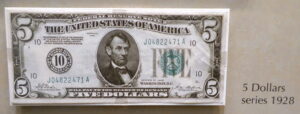
Pick up two copies of the same 1928 $20 Gold Certificate, one graded VF-30 and one graded EF-40, and you might struggle at first to explain the difference to a friend. Both notes have that warm, golden-orange Treasury seal. Both have clean paper with no tears. Both look, frankly, pretty nice to the untrained eye. But flip open a recent Heritage Auctions or Stack’s Bowers catalog and you will find a gap of $150 to $400 between those two grades on a common date, and thousands of dollars on a key date note. Learning to see that difference is one of the most valuable skills a paper money collector can develop.
Why the Sheldon Scale Matters for Paper Money
The 70-point numerical grading scale was originally developed by Dr. William Sheldon for large cents in 1949, but the paper money community adapted it starting in the 1970s and it became the dominant standard by the time PMG (Paper Money Guaranty) launched in 2005 and PCGS Currency formalized its operations around the same period. Before that, collectors relied on adjectival grades like Fine, Very Fine, and Extremely Fine, which meant different things to different dealers. Standardization was badly needed.
The Sheldon scale for currency runs through the same adjective bands that coin collectors know: Poor (P-1), Fair (F-2), About Good (AG-3), Good (G-4 through G-6), Very Good (VG-8 through VG-10), Fine (F-12 through F-15), Very Fine (VF-20 through VF-35), Extremely Fine (EF-40 through EF-45), About Uncirculated (AU-50 through AU-58), and Mint State (MS-60 through MS-70, called Crisp Uncirculated or CU in paper money parlance). The grades we are examining today, VF-30 and EF-40, sit right at the boundary between two bands, which is precisely why they cause so much confusion.
Defining VF-30: What It Actually Looks Like
A note graded Very Fine-30 has clearly seen circulation, but it has held up with some dignity. The PMG standard for VF-30 describes a note with eight or fewer folds, moderate wear on the portrait and other raised design elements, and paper that retains some body and crispness. Critically, the paper still has a degree of original stiffness. It does not flop around like a used paper towel.
Folds are the primary counting mechanism at this grade level. A fold is any crease that goes all the way across the note, corner to corner, or center fold lines from being stored in a wallet. At VF-30, you might see a strong horizontal center fold, two or three vertical folds from wallet storage, and perhaps a couple of corner folds. The intersections of those creases will show lightening of the ink, sometimes called fold brightening, and the paper fibers at those intersections may begin to show slight separation when held to a strong light.
On the portrait of a VF-30 note, the fine detail in hair, clothing, and lettering is still largely visible, but the very finest lines have begun to flatten out from handling. On a Series 1934 $100 Federal Reserve Note (Friedberg catalog number F-2152 for common district signatures), the fine crosshatching in the Treasury Building on the reverse will be slightly softened at VF-30 but still readable. The Treasury seal will show no missing color, though the serrated points of a red seal may show slight rounding.
When examining a note for fold count, hold it up to a single light source at a 45-degree angle and slowly rotate it. Folds that are invisible under flat lighting will cast faint shadows under raking light. Graders at PMG and PCGS Currency use exactly this technique to catch light folds that affect grade assignment.
Defining EF-40: The Critical Distinctions
Extremely Fine-40 is where a note begins to feel like it belongs in a more serious collection. PMG defines EF-40 as a note with three or fewer folds, sharp design details, and paper that retains much of its original crispness. That reduction from eight folds to three is the single most important mechanical distinction between the two grades.
In practical terms, an EF-40 note most commonly shows one center fold (the classic horizontal wallet fold) combined with one or two light vertical folds. Or it may show three light diagonal corner folds without a major center crease. What it should not show is the crisscross grid pattern of multiple deep folds that characterizes a hard VF note.
The surfaces of an EF-40 note tell an equally important story. Under magnification, the fine lines in the engraved portrait should still show clear separation. On a Series 1923 $1 Silver Certificate (Fr. 237, the popular large-size “Horse Blanket” note), the finely engraved lines in George Washington’s coat should still be individually distinguishable at EF-40, where they start to merge at VF grades. The paper itself at EF-40 will have noticeable remaining crispness. When you carefully flex the corner of the note, it should spring back rather than simply fold over limply.
Color retention is another major differentiator. The inks used in 19th and early 20th century notes, particularly the distinctive green of Federal Reserve Note backs, the red of Legal Tender seals, and the gold-orange of Gold Certificate seals, retain significantly more vibrancy at EF-40 than at VF-30. On a Series 1922 $10 Gold Certificate (Fr. 1173), the difference in the warmth of that orange-gold Treasury seal between a solid VF-30 and an EF-40 example is immediately visible side by side.
Do not confuse a lightly pressed note for a naturally EF note. A VF-30 that has been ironed or lightly pressed may have fewer visible fold lines, but the paper body will feel soft and slightly waxy rather than crisp and springy. Professional graders can detect pressing, and artificially pressed notes are notated with a “Pressed” qualifier that significantly reduces their value and desirability.
The Feel Test: Paper Body as a Grading Tool
Experienced dealers and graders often make a preliminary grade assessment within three seconds of picking up a note, largely based on how it feels. This intuitive response is trainable, but it takes deliberate practice. Paper money is printed on a cotton-linen blend that has remarkable longevity, but circulation progressively breaks down the fiber structure.
A truly Uncirculated note feels like a freshly printed business card: firm, slightly stiff, with a resistance to bending. As a note circulates and accumulates folds, the fibers at the crease points break down and the overall stiffness decreases. A VF-30 note has lost a meaningful portion of its original body. It will droop noticeably when held at one corner. An EF-40 note, by contrast, will hold itself more horizontally when held at a corner, though it will not stand fully rigid the way a CU note would.
On classic large-size notes, paper body is even more critical because the heavier paper stock used before 1929 degrades in a very distinctive way. A circulated Series 1901 $10 Legal Tender Note (the iconic “Bison” note, Fr. 114-122 depending on signature combination) at VF-30 will feel distinctly limp compared to an EF-40 example of the same type. Given that EF-40 examples of the more common Napier-McClung signature combination (Fr. 120) trade in the $2,500 to $4,000 range versus $1,200 to $1,800 for VF-30, developing your sense of paper body pays real dividends.
Real-World Examples: Where the Grade Difference Shows Up
Let us walk through three specific note types where understanding VF-30 versus EF-40 has direct collecting implications.
1928 $20 Gold Certificate (Fr. 2402)
The Series 1928 $20 Gold Certificate with Woods-Mellon signatures is a favorite type note for its historical significance and attractive design. At VF-30, collectors typically pay $275 to $375 for a problem-free example. At EF-40, prices jump to $500 to $700. The difference is visible in the sharpness of the eagle on the reverse and the crispness of the distinctive orange Treasury seal on the face. The serial numbers in black on these notes also show ink flattening at VF that remains crisp at EF.
1935-A $1 Silver Certificate Hawaii Emergency Note (Fr. 2300)
The HAWAII overprint notes issued during World War II are among the most historically significant small-size notes. The brown Treasury seal and large HAWAII overprints on the reverse were intended to allow rapid demonetization if the islands fell to Japanese forces. At VF-30, these run $150 to $225. At EF-40, prices climb to $350 to $500. The bold brown overprint ink shows wear and slight cracking at fold intersections on VF examples, while EF examples retain the full depth of that distinctive brown color.
Series 1963-A $100 Federal Reserve Note (Fr. 2163 series)
For collectors focused on modern small-size notes, the grade distinction is equally meaningful. A common-district 1963-A $100 FRN at VF-30 is essentially a spendable note worth face value plus a small premium. At EF-40, the same note begins to have meaningful collector value, particularly for notes from the Federal Reserve Bank of Minneapolis or Dallas which had lower print runs in certain signature combinations. The engraved portrait of Franklin and the fine crosshatching on the reverse Treasury Building are the key detail areas to examine.
Before submitting a note to PMG or PCGS Currency, spend time with their published grading standards and photo grade examples on their websites. Both services provide free online grading guides with actual scanned images at each grade level. Comparing your note to these reference images before paying a $20 to $30 submission fee can save you money and sharpen your eye considerably.
Common Grading Mistakes at the VF/EF Boundary
Several recurring mistakes trip up collectors when assessing notes in this grade range. The first is overgrading due to attractive eye appeal. A note with beautiful, vibrant color and clean margins can look spectacular while still technically grading VF-30 because of its fold count or paper softness. Eye appeal matters enormously to collectors, and PMG does award a “Choice” designation within grade bands, but it does not substitute for mechanical grade criteria.
The second common mistake is undergrading notes with minor issues. A note with a tiny corner fold that was not present at time of issue but otherwise grades EF might be correctly placed at EF-40, not bumped down to VF-30 simply because of one small imperfection. Graders assess the total picture according to established criteria, not by applying a penalty for every single blemish.
Third, collectors sometimes confuse light soiling with wear. A note that circulated minimally but picked up a faint counting smudge or light handling marks near the borders might appear worn when it is actually EF or better in terms of fold count and paper body. This is why professional grading services note specific issues like “Counting Smudges” or “Stain” as qualifiers rather than automatically downgrading the numeric grade by a full band.
| Note / Series | Friedberg Number | VF-30 Value (approx.) | EF-40 Value (approx.) | Rarity at EF+ |
|---|---|---|---|---|
| 1901 $10 Legal Tender “Bison” (Napier-McClung) | Fr. 120 | $1,400 | $3,200 | Scarce |
| 1922 $10 Gold Certificate | Fr. 1173 | $350 | $750 | Scarce |
| 1928 $20 Gold Certificate (Woods-Mellon) | Fr. 2402 | $325 | $575 | Common |
| 1935-A $1 Silver Certificate Hawaii | Fr. 2300 | $185 | $425 | Scarce |
| 1923 $1 Silver Certificate “Horse Blanket” | Fr. 237 | $275 | $550 | Scarce |
| 1928-B $2 Legal Tender (Julian-Morgenthau) | Fr. 1511 | $65 | $140 | Common |
| 1934 $500 Federal Reserve Note (any district) | Fr. 2201 series | $1,800 | $3,500 | Rare |
| 1890 $1 Treasury Note “Watermelon” | Fr. 347 | $1,600 | $4,000 | Key Date |
| 1963-A $100 FRN Minneapolis (low print run) | Fr. 2163-I | face value | $175 | Scarce |
Building Your Grading Eye: A Practical Training Plan
The fastest way to internalize the VF-30 versus EF-40 distinction is deliberate comparison practice. Start by requesting auction archives from Heritage Auctions, Stack’s Bowers, or Lyn Knight Currency Auctions. These archives include high-resolution scans of every lot with the certified grade visible. Search for the same Friedberg number in both VF-30 and EF-40 and study the images side by side. Pay particular attention to the portrait area, the Treasury seal, and the corners.
If you have access to a local coin club or currency show, handle as many notes as possible and ask dealers to confirm grades on notes you examine. Most professional dealers are happy to explain their assessment, and a few minutes of hands-on mentoring is worth hours of reading. The Great American Coin and Currency Show, the ANA World’s Fair of Money, and regional PCDA-affiliated shows all offer excellent opportunities for this kind of practical education.
Consider building a deliberate reference set: purchase one certified example each of a common type note (something like a Series 1957 $1 Silver Certificate, Fr. 1619) at every grade from F-12 through AU-55. The total cost for this exercise on a common type will run $40 to $150 depending on grades and source, and the tactile and visual education you gain from handling all those grades of the same note is invaluable.
When buying raw (uncertified) notes in the VF to EF range, apply what dealers call the “honest grade” discount: assume the note grades one level below what the seller represents and price accordingly. If the note turns out to grade higher upon professional submission, you have a pleasant surprise. This conservative approach protects you from overpaying for optimistically graded material and makes your buying decisions more systematic.
Conclusion: Why This Grade Boundary Matters Most
The VF-30 to EF-40 boundary is arguably the most financially consequential grade transition in all of paper money collecting, more so even than the jump from AU-58 to MS-63, because it affects the largest volume of collectible notes. Most classic US currency that survived the 20th century in collections ended up in exactly this grade range. Understanding precisely what separates these grades means you can buy with confidence, sell with accuracy, and build a collection whose grading integrity stands up to scrutiny over decades.
Count the folds carefully. Assess the paper body honestly. Examine portrait detail under proper lighting. And when in doubt, submit to a major third-party grading service before making a significant transaction. The $25 submission fee is cheap insurance on any note worth more than $100, and the education you get from seeing your own assessments confirmed or corrected by professionals will sharpen your eye faster than almost any other investment in your collecting education.