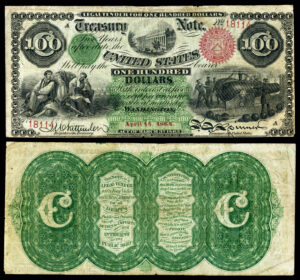
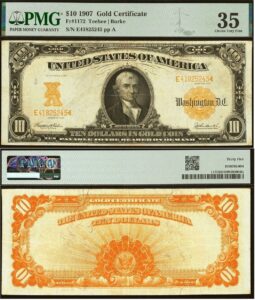
Few chapters in American monetary history carry the weight, drama, and hard-won lessons of Continental Currency. Issued between 1775 and 1779 by the Continental Congress, these notes represent the very first paper money of a nation that did not yet exist in any legal sense. They were printed to fund a revolution, backed by little more than faith and the promise of future taxation, and they collapsed so completely that the phrase “not worth a Continental” entered the American vernacular as a synonym for worthlessness. Yet for currency collectors, these same notes are among the most desirable and historically significant pieces of American paper money ever produced, with high-grade examples commanding thousands of dollars at auction today.
The Birth of a Revolutionary Currency
When the Second Continental Congress convened in Philadelphia in May 1775, its delegates faced an immediate and existential problem: how do you pay for a war when you have no treasury, no taxing authority, and no gold? The answer, born of desperation as much as ingenuity, was paper money. On June 22, 1775, Congress authorized the first emission of Continental Currency totaling $2,000,000 in denominations ranging from $1 to $20, denominated in Spanish milled dollars, the most widely recognized hard currency of the era.
The printing was contracted to Hall and Sellers of Philadelphia, the same firm that printed Benjamin Franklin’s Pennsylvania Gazette. The notes themselves were surprisingly sophisticated for their time. Franklin, deeply involved in the design process, incorporated nature printing on the backs of many denominations, pressing actual leaves against the printing plates to create patterns nearly impossible to counterfeit by hand. Botanical specimens used included sage, Queen Anne’s lace, and various ferns, and the specific leaf impressions visible on a given note can help attribute it to the correct emission.
The leaf impressions on the reverse of early Continental Currency notes (1775 through early 1776 emissions) are a key authentication tool. Genuine notes show crisp, organic vein patterns. Counterfeits, including British-sponsored forgeries of the era, often have blurrier or mechanically regular leaf prints. Under a loupe at 10x magnification, genuine impressions reveal asymmetric, naturally irregular vein branching.
Six Emissions, Six Stories
Continental Currency was not a single issuance but a series of six distinct emissions authorized between 1775 and 1779, each responding to escalating wartime financial pressure. Understanding the emissions is essential for collectors because value, rarity, and authenticity issues vary significantly across them.
The First Emission (June 22, 1775) authorized $2,000,000 in denominations of $1, $2, $3, $4, $5, $6, $7, $8, $20, and $30. These notes bear handwritten signatures of two signers and a serial number, requirements Congress instituted to slow counterfeiting. The signers were chosen from among Philadelphia merchants and civic figures, not Congress members, for security reasons. Today, first-emission notes in Fine condition typically realize $400 to $900 at auction, with exceptional VF and EF examples of the rarer denominations pushing past $2,000.
The Second Emission (November 29, 1775) added $3,000,000 to the money supply, with the same denominations and similar production methods. Notes from this emission are distinguishable by their authorization text referencing the November date. By this point, inflation was already beginning to nibble at purchasing power.
The Third Emission (February 17, 1776) introduced the $1/6, $1/3, $1/2, and $2/3 fractional denominations for the first time, alongside larger values up to $8. Congress also authorized a larger quantity, $4,000,000, reflecting the widening scope of the war after the siege of Boston.
By the Fourth Emission (May 9 and July 22, 1776), cracks were appearing. Congress authorized $5,000,000, and the total paper money in circulation was becoming difficult for state economies to absorb. The first systematic depreciation began in late 1776.
The Fifth Emission (November 2, 1776 through early 1777) dramatically escalated to authorizations totaling $13,000,000. These are among the most commonly encountered Continental notes today, partly because so many were printed and partly because the British counterfeiting campaign, operated out of New York City and coordinated through Tory newspapers, flooded the colonies with convincing forgeries of these specific denominations. Distinguishing genuine fifth-emission notes from period counterfeits remains one of the great challenges for Continental Currency collectors.
The Sixth and Final Emission (September 26, 1778 through January 14, 1779) represented an act of financial desperation. Congress issued another $63,530,000 in notes, pushing the total Continental Currency in circulation to a staggering nominal sum. By 1779, the exchange rate had degraded to roughly 40:1 against hard money. The notes authorized on January 14, 1779, the $35, $40, $45, $55, $60, $70, and $80 denominations printed by Claypoole and Dunlap, are among the highest-denomination American paper money from any early period and are highly prized by collectors today.
When purchasing Continental Currency, always request documentation of the specific emission date and printing house. Hessler’s “Comprehensive Catalog of U.S. Paper Money” and Eric Newman’s “The Early Paper Money of America” are the two indispensable references. Newman’s catalog numbers are the standard used by major grading services like PMG and PCGS Currency when they encapsulate Continental notes.
The Counterfeiting War
Britain’s counterfeiting campaign against Continental Currency was, by any modern standard, an act of economic warfare. Starting in 1776, the British government actively facilitated the production of counterfeit Continental notes, primarily at a printing operation in New York City under occupation. These forgeries were then distributed through Tory networks, advertised openly in loyalist newspapers, and even handed out to American prisoners of war upon their release, presumably so they would spend them and further destabilize the money supply.
The forgeries were disturbingly good. Many used paper quality and ink formulations nearly identical to genuine notes. The primary tells on known period counterfeits include slightly different typefaces, particularly in the serif structures of the authorization text, marginally different spelling or abbreviation conventions in the boilerplate legal language, and leaf impressions that, while passable, lack the fine capillary detail of genuine nature-printed specimens. Modern collectors should treat any Continental Currency purchase as suspect until examined by an expert or encapsulated by a major grading service, both of which will note “Counterfeit” or “Altered” on the holder if applicable.
Why the Currency Collapsed
The failure of Continental Currency is a case study in the dangers of fiat currency without a credible backing mechanism. Several structural weaknesses doomed the experiment from the start.
First, Congress had no independent power to tax. Revenue was supposed to come from the states requisitioning funds from their citizens, but states were slow, unreliable, and sometimes simply unable to collect. The notes were backed by a promise of future tax revenue that never materialized in adequate quantities.
Second, the printing presses became the default solution to every budget shortfall. Each emission was larger than the last, and the total money supply grew far beyond what the colonial economy could support. Basic quantity theory of money, understood even by 18th-century economists, predicts that this trajectory leads to inflation, and inflation is exactly what occurred, accelerating through 1778 and 1779.
Third, and crucially, there was no central redemption mechanism. Individual states were supposed to collect Continental notes in tax payments and return them to Congress for retirement, but this system functioned poorly and inconsistently. Notes accumulated in circulation rather than being retired.
In March 1780, Congress attempted a restructuring, offering to exchange old Continental notes for new ones at the deeply punishing rate of 40:1, and the new notes were themselves backed by state taxes with a hard money component. By 1781, Continental Currency had essentially ceased to circulate as money at all. The final redemption in 1790, authorized under Hamilton’s funding plan, offered Continental note holders one cent on the dollar in new federal bonds, a bitter outcome for the soldiers and civilians who had accepted these notes in good faith.
The highest-denomination Continental notes from the January 14, 1779 authorization, the $55, $60, $70, and $80 values, are genuinely scarce in any grade and often appear only a handful of times per decade at major auction houses. If budget allows, VG or Fine examples of these denominations represent outstanding long-term numismatic investments. Verified examples in Fine have realized $3,000 to $6,500 at Heritage Auctions in recent years.
What to Look for as a Collector
Continental Currency collecting rewards patience, research, and a willingness to study historical context. Here is what separates informed buyers from novices in this market.
Grading standards for 18th-century paper money differ from modern notes. Paper from this era was hand-laid and rag-based, giving it a different feel and aging pattern than wood-pulp paper. Foxing, toning, and old folds are expected and do not penalize a note as severely as they would a modern Federal Reserve Note. PMG and PCGS Currency both encapsulate Continental notes and apply standard numerical grades, but the population reports for high-grade examples are thin: genuine EF or better specimens are extremely rare, and most collector-grade examples fall in the VG-20 to Fine-30 range.
The handwritten signatures on Continental notes add a personal dimension unique in American numismatics. Some signers went on to notable careers, and notes bearing their signatures carry a premium. Collectors with an interest in autograph material sometimes cross over into Continental Currency specifically for this reason.
Provenance matters enormously in this field. Notes with documented histories, especially those traced to major 19th or early 20th-century collections, carry both a premium and a measure of authentication assurance. Look for auction house tickets, collector stamps on holders, or catalog citations in old Heritage, Stack’s Bowers, or Spink sale records.
| Emission / Date | Denomination | Approx. Notes Authorized | Rarity |
|---|---|---|---|
| June 22, 1775 (1st) | $30 | Est. 25,000-40,000 | Scarce |
| February 17, 1776 (3rd) | $1/6 Fractional | Est. 60,000-80,000 | Scarce |
| February 17, 1776 (3rd) | $8 | Est. 50,000-70,000 | Common |
| November 2, 1776 (5th) | $30 (Counterfeit variety) | Unknown (British-produced) | Rare (as genuine) |
| September 26, 1778 (6th) | $20 | Est. 500,000+ | Common |
| January 14, 1779 (6th) | $55 | Est. 30,000-50,000 | Rare |
| January 14, 1779 (6th) | $70 | Est. 20,000-35,000 | Rare |
| January 14, 1779 (6th) | $80 | Est. 15,000-25,000 | Key Date |
| Any emission, EF or better | Any denomination | Very few survive | Key Date |
The Legacy: How Continental Currency Shaped U.S. Monetary Law
The catastrophic failure of Continental Currency left deep scars on the American political psyche. The framers of the Constitution, many of whom had lived through the depreciation firsthand, were determined to prevent a repeat. Article I, Section 10 of the Constitution explicitly prohibits states from making anything other than gold and silver coin legal tender for debts, and the original Constitution contained no explicit grant of authority for the federal government to issue paper money, a deliberate omission that sparked legal controversy for nearly a century.
When the Civil War forced the federal government to issue greenbacks starting in 1862, the ghost of Continental Currency haunted the debate. Opponents of the Legal Tender Acts warned that unbacked paper money always collapsed. The Supreme Court ultimately upheld the greenbacks, but the memory of the Continental experience shaped every argument made on both sides.
For collectors, this legacy adds a dimension of meaning that goes beyond numismatic curiosity. Every Continental Currency note in a collection is a primary source document from one of history’s great monetary experiments, a tangible artifact of a young nation learning, painfully and expensively, the rules that govern money.
Building a Continental Currency Collection
A focused Continental Currency collection can take many forms. Some collectors pursue one example from each of the six emissions. Others focus on a single denomination across all emissions to trace the design evolution. Still others specialize in the fractional denominations of the third emission, or in notes bearing signatures of historically significant individuals.
Entry-level collectors can acquire genuine, graded Continental Currency notes for $150 to $400 for common denominations from the larger fifth and sixth emissions in VG condition. This makes Continental Currency one of the more accessible areas of early American paper money, especially compared to colonial state notes or early federal issues. However, the upper end of the market is limitless: a high-grade $80 from the January 1779 emission in EF condition could realistically fetch $10,000 or more if one were to appear at a major auction.
The Continental Currency market is served by a small but passionate community of specialist dealers and auction houses. Heritage Auctions, Stack’s Bowers, and Lyn Knight all handle these notes regularly. The Society of Paper Money Collectors (SPMC) is the primary collector organization, and its journal, Paper Money, publishes ongoing research on Continental Currency varieties, newly identified counterfeits, and auction records that are invaluable for pricing and attribution.
More than two centuries after the last Continental note ceased to circulate as money, these pieces of rag paper carry a story that no modern Federal Reserve Note can match. They were printed in crisis, spent in hope, and lost in failure, but they survived to remind us that the promise behind any currency is only as strong as the institution that stands behind it. That lesson, learned at enormous cost in the 1770s, remains as relevant today as it was when a soldier at Valley Forge accepted a $4 Continental note for a month of his life.