Pick up any piece of American paper money, from a tattered 1863 Demand Note to a crisp 2023 Federal Reserve Note, and you are holding an artifact shaped as much by law enforcement history as by Treasury policy or printing technology. The agency that once hunted counterfeiters through gaslit back alleys of Civil War-era Washington now operates under the umbrella of the Department of Homeland Security, yet its foundational mandate has never changed: protect the integrity of United States currency. For collectors, that history is not abstract. It explains why certain notes were withdrawn from circulation, why specific design elements were mandated, and why the legal rules around reproducing currency imagery still carry teeth more than 150 years after the Secret Service’s founding.
A Nation Awash in Fakes: The Crisis of 1865
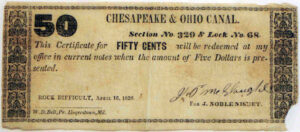
To understand why the Secret Service was born, you have to understand just how catastrophically fragmented American currency had become by the end of the Civil War. Before the National Banking Acts of 1863 and 1864, more than 1,600 state-chartered banks issued their own notes. Counterfeiters thrived in this chaos. Publications called “Counterfeit Detectors” were published weekly, and merchants kept dog-eared copies behind every counter because a note that was genuine in Cincinnati might be unrecognizable in Philadelphia. The introduction of Legal Tender Notes (“Greenbacks”) beginning with the Act of February 25, 1862 created, for the first time, a single national currency, but it also created a single high-value target for organized counterfeiters.
By 1865, Treasury Secretary Hugh McCulloch estimated that between one-third and one-half of all currency in circulation was counterfeit. Congress authorized the Secret Service on July 5, 1865, originally housed within the Treasury Department. William P. Wood, a resourceful former superintendent of the Old Capitol Prison, was appointed as the first chief. Within a year, Wood’s small force of operatives had arrested more than 200 counterfeiters and seized plates, dies, and printing equipment across a dozen states.
Legal Tender Notes from the 1862-1863 series, the first notes the Secret Service was created to protect, are among the most historically significant pieces in American numismatics. Fr. 16 through Fr. 49 cover the $1 through $1,000 denominations of the original Legal Tender issues. Even circulated examples of Fr. 16 (the $1 1862 Legal Tender) catalog in the $150-$250 range in VG condition, making them accessible entry points for collectors who want a tangible connection to this founding era.
The Woodcut Era and the Battle Over Printing Technology
The early Secret Service quickly learned that counterfeiters were not lone criminals scratching away with engraving tools. The most dangerous operations used sophisticated steel-plate engraving and, by the 1870s, photographic processes that could produce remarkably accurate facsimiles of Bureau of Engraving and Printing (BEP) output. The agency responded by working directly with the BEP to introduce security features that were difficult to photograph or replicate, including fine-line geometric lathe work (the intricate patterns in note borders), silk fibers embedded in paper, and Treasury seal color variations that differed across note types.
The colored seal system familiar to collectors today has its roots in this anti-counterfeiting strategy. Red seals on United States Notes (Legal Tender Notes), blue seals on Silver Certificates, and brown or yellow seals on Gold Certificates were not arbitrary design choices. They were deliberate differentiation strategies intended to make fraudulent substitution immediately obvious to trained eyes. The Secret Service distributed inspection guides to banks and post offices detailing exactly what color the seal should be on each class of note.
From Greenback Chasers to Presidential Guardians: The 1901 Pivot
The assassination of President William McKinley on September 6, 1901, in Buffalo, New York, transformed the Secret Service’s public identity overnight. Congress, though it did not immediately pass formal protective legislation (that would not happen until 1906), directed the agency to assume full-time protection of the President. For the next several decades, the Service wore two hats simultaneously: investigating currency crimes and guarding the nation’s chief executive.
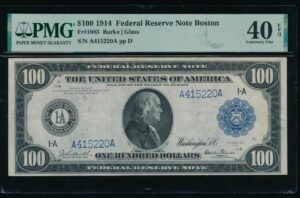
Collectors sometimes ask why certain note series from the early twentieth century show sudden mid-series design modifications. The Federal Reserve Note series of 1914 (Fr. 832-1132), for example, included rapid vignette and border changes partly in response to Secret Service intelligence about counterfeiting operations that had successfully reproduced early printings. The 1914 $10 Federal Reserve Note featuring Andrew Jackson on the obverse (before Hamilton took that position on the $10) was particularly targeted, and collectors who examine Fr. 893-902 closely can observe subtle border modifications introduced as anti-counterfeiting countermeasures.
When examining Federal Reserve Notes from the 1914 and 1918 large-size series, pay close attention to the district letter and number in the four corners of the note. The Secret Service and BEP introduced incremental plate number tracking improvements during this era specifically to help investigators trace counterfeit notes back to specific fraudulent plate batches. Original BEP plate records, some now digitized through the Smithsonian’s National Numismatic Collection archives, can help advanced collectors authenticate notes and understand production context.
Superdollars and the Cold War Counterfeiting Threat
The transition to small-size notes in 1928 created a new challenge: a standardized, widely recognized format that was, paradoxically, easier for sophisticated counterfeiters to target at scale. The Great Depression era saw a surge in domestic counterfeiting operations, and the Secret Service budget and staffing expanded accordingly under Franklin Roosevelt’s reorganization of federal law enforcement.
The Cold War introduced a genuinely alarming new dimension: state-sponsored counterfeiting. Intelligence gathered from the 1960s onward indicated that certain foreign governments, most notably North Korea (and possibly Iran in later decades), were producing what agents came to call “superdollars,” extremely high-quality $100 Federal Reserve Notes printed on authentic cotton-linen paper with intaglio printing processes nearly indistinguishable from genuine BEP output. The superdollar threat, which peaked in the 1980s and 1990s, directly drove the landmark redesigns of the $100 note.
The Series 1990 $100 Federal Reserve Note introduced the first modern security thread (a polyester strip embedded in the paper reading “USA 100” and visible under ultraviolet light) and microprinting around the portrait of Benjamin Franklin. These features were mandated after Secret Service analysis of superdollar specimens confirmed that intaglio replication was feasible but that embedded security threads could not yet be economically duplicated at scale. Collectors should note that Series 1990 $100 notes in uncirculated condition (Fr. 2174 for the most common districts) remain modestly priced at $115-$175 in CU-63, making them excellent examples of a genuine anti-counterfeiting milestone at an accessible price point.
The 1996 Redesign: A Secret Service-BEP Collaboration
The most dramatic visual transformation in twentieth-century American currency came in 1996, when the redesigned $100 Federal Reserve Note entered circulation. This was the product of years of collaboration between the Secret Service’s Counterfeit Division, the BEP, and the Federal Reserve. The enlarged, off-center portrait of Franklin, the color-shifting ink in the numeral “100” at the lower right (which shifts from green to black when tilted), the revised security thread now reading “USA 100” with ultraviolet glow in pink, and the fine-line printing patterns behind the portrait all represented specific Secret Service-identified vulnerability mitigations.
The Series 1996 $100 (Fr. 2175) was followed by similar redesigns cascading down through denominations: the $50 in 1997, the $20 in 1998, the $10 and $5 in 2000. Each redesign was preceded by a Secret Service vulnerability assessment of the outgoing series. For collectors, the last-series notes of each old design, particularly star notes from the final print runs, often carry a modest premium as transitional pieces. The Series 1995 $100 star notes from the San Francisco district (Fr. 2174-L*) had a print run of only 640,000, giving them genuine collector interest in the $200-$350 range in CU-63.
The Counterfeit Detection Act of 1992 and subsequent amendments to 18 U.S.C. Section 504 govern what collectors and publishers can legally reproduce in print or digital form. One-sided reproductions are permitted if they are less than 75 percent or more than 150 percent of the genuine note’s size. Two-sided reproductions require additional restrictions. If you are building a catalog, writing a blog, or creating auction lot photography, familiarize yourself with the current Secret Service guidelines, which are published on the agency’s official website, to stay compliant.
The 2003 Transfer to the Department of Homeland Security
The Homeland Security Act of 2002, signed by President George W. Bush on November 25, 2002, reorganized 22 federal agencies into the new Department of Homeland Security. Effective March 1, 2003, the Secret Service was transferred from the Treasury Department, its home for 138 years, to DHS. The currency protection mission was formally retained, though critics at the time argued that the prestige of presidential protection might gradually overshadow the investigative currency work that had justified the agency’s founding.
In practice, the Secret Service’s Financial Crimes Division has continued to operate robustly. The agency maintains 42 domestic field offices and works with Interpol and foreign law enforcement to disrupt international counterfeiting networks. The 2013 arrest of a sophisticated Los Angeles-based ring that had produced an estimated $1.2 million in counterfeit $20 and $50 Federal Reserve Notes using high-resolution inkjet printing was a landmark DHS-era case, illustrating how digital printing technology had replaced engraving as the primary counterfeiting method.
What the 2004-2013 Color Era Means for Collectors
The introduction of subtle background colors to Federal Reserve Notes, beginning with the redesigned $20 in Series 2004 and continuing through the $100 Series 2009A (the “Big Head” Franklin that entered circulation in October 2013), represented the Secret Service’s response to color inkjet and laser printing threats. The blue security ribbon woven into the 2009A $100, the bell in the inkwell feature, and the 3D security ribbon incorporating micro-printed images of bells and 100s that shift as the note is tilted were all direct Secret Service vulnerability study outcomes.
For collectors, the Series 2009A $100 (Fr. 2184) is historically significant as the most technologically complex note ever issued by the United States. First-day-of-issue examples with serial numbers below B00000100B, while not formally tracked in Friedberg, carry enthusiast premiums at shows and online auctions, sometimes reaching $250-$500 depending on the serial number’s desirability.
| Series / Date | Denomination and Variety | Est. Print Run or Survivors | Rarity |
|---|---|---|---|
| 1862 (Fr. 16) | $1 Legal Tender, First Issue | Unknown; survivors est. under 10,000 | Rare |
| 1914 (Fr. 893) | $10 FRN, Boston, Red Seal | Under 2 million printed | Scarce |
| 1928 (Fr. 1500) | $1 Silver Certificate, First Small Size | 638,296,908 total series | Common |
| 1990 (Fr. 2174) | $100 FRN, First Security Thread Issue | All districts combined, billions | Common |
| 1995 (Fr. 2174-L*) | $100 FRN Star, San Francisco | 640,000 | Scarce |
| 1996 (Fr. 2175) | $100 FRN, First Color-Shift Ink | Multiple billions across districts | Common |
| 2004 (Fr. 2090) | $20 FRN, First Colorized Background | Multiple billions across districts | Common |
| 2009A (Fr. 2184-B*) | $100 FRN Star, New York, 3D Ribbon | 3,200,000 | Scarce |
| 2009A (Fr. 2184-L*) | $100 FRN Star, San Francisco, 3D Ribbon | 640,000 | Key Date |
Practical Implications for Today’s Collector
The Secret Service’s 158-year currency protection legacy shapes the collector’s world in three concrete ways. First, the legal reproduction rules governed by 18 U.S.C. Sections 474 and 504 affect how you can display, scan, or publish images of notes in your collection, both modern and obsolete. Second, the agency’s ongoing vulnerability assessments mean that new security features continue to appear on circulating notes, making each major redesign series a potential future collectible milestone worth setting aside in uncirculated condition. Third, for collectors who deal in reproductions, replicas, or educational facsimiles, understanding what the Secret Service defines as a permissible copy versus a criminal counterfeit is not merely academic knowledge.
The history of American paper money cannot be fully told without the Secret Service at the center of it. Every security thread, every color-shifting numeral, every microprinted motto is a chapter in an ongoing story that began in a Treasury office in Washington on a July afternoon in 1865, when William Wood accepted his commission and set out to save the nation’s money from itself.