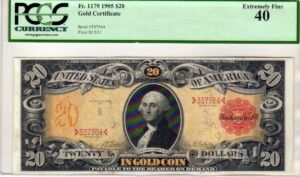
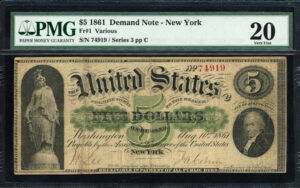
Walk through any major currency show floor and you will inevitably spot them: PMG-holdered notes in those older, slightly yellowed slabs with the blocky font on the label. Maybe a dealer has one priced at a premium, or perhaps you have a few in your own collection gathering dust. The question that comes up again and again, especially among collectors who have been in the hobby for more than a decade, is deceptively simple: should I crack it out and resubmit? The answer, as with most things in numismatics, is complicated, and it depends heavily on understanding what PMG actually changed around 2009 to 2011 and why those changes matter to collectors today.
What Actually Changed at PMG Around 2010
PMG was established in 2005 as a sister company to NGC (Numismatic Guaranty Corporation) and quickly became one of the two dominant third-party grading services for paper money, alongside PCGS Currency. In its early years, PMG was still refining exactly how it weighted various grading criteria, including eye appeal, paper quality, originality of surfaces, and centering. By 2009 and into 2010, PMG undertook a meaningful internal standards review that resulted in two distinct changes collectors notice today: a physical holder redesign and a tightening of certain grading standards, particularly around paper originality and the presence of counting wrinkles.
The physical change is the easiest to spot. The pre-2010 PMG holders used a slightly different font on the certification labels, with blockier lettering and a different layout for the grade, denomination, and series information. The newer holders introduced a cleaner, more modern typography and a refined green color on the label border. Collectors began colloquially calling notes in the earlier slabs “old holder” notes, a term that carries real implications at auction.
More significant than the cosmetic update, however, was the underlying shift in how PMG graders evaluated paper quality and surface originality. Notes that had been pressed, lightly cleaned, or had very faint counting folds began receiving more scrutiny. A note that earned a PMG 64 EPQ (Exceptional Paper Quality) in 2007 might come back as a 63 EPQ or even a 64 without the EPQ designation on a modern resubmission, because the criteria for awarding that coveted EPQ qualifier became more stringent.
Before cracking any old PMG holder, photograph the note through the slab from both sides under good raking light. This gives you a baseline record and helps you spot any counting folds, pressed areas, or surface issues that a modern grader might penalize more heavily than the original submission received.
The EPQ Qualifier: Why It Matters More Now Than It Did in 2007
PMG introduced the EPQ (Exceptional Paper Quality) and PPQ (Premium Paper Quality) designations to help collectors identify notes with original, unaltered surfaces and strong paper body. In the early PMG years, some graders awarded EPQ somewhat liberally to notes that, under today’s standards, would receive only the standard grade or perhaps a PPQ qualifier instead. The distinction is financially significant. A 1928 $100 Federal Reserve Note graded PMG 64 EPQ in an old holder might carry a catalog value and realized auction price meaningfully higher than the same note graded 64 EPQ in a current holder, but if resubmitted it risks losing that qualifier entirely.
Heritage Auctions and Stack’s Bowers both noted in their auction archives from 2012 through 2015 that old-holder PMG notes with EPQ qualifiers were generating buyer hesitation precisely because sophisticated bidders understood the resubmission risk. A 1934A $500 Federal Reserve Note (Fr. 2202) in PMG 64 EPQ old holder, for example, might trade at a slight discount to the same note in a current holder, even if the underlying quality appeared comparable to the untrained eye.
Which Notes Are Most Affected
Not all currency types carry equal resubmission risk. The notes most frequently discussed in collector forums as potential “crossover risks” fall into several categories.
Large-Size Type Notes (Pre-1929)
Large-size notes, including Legal Tender Notes (United States Notes), Silver Certificates, Gold Certificates, Federal Reserve Notes, and National Bank Notes issued before the 1929 small-size conversion, are among the most commonly resubmitted. These notes are genuinely old, frequently circulated, and often show signs of cleaning, pressing, or rust stains from old albums. A 1902 National Bank Note graded PMG 35 in an old holder is probably safe to resubmit; the grade is modest enough that the standards tightening is unlikely to affect it dramatically. But a 1902 National graded PMG 64 EPQ in an old holder represents a real gamble, because EPQ standards for century-old paper are now applied quite carefully.
Early Small-Size Star Notes
Star replacement notes from the 1928 through 1950 era are another high-risk resubmission category. These notes were often saved by collectors precisely because they were in excellent condition, and many were pressed or cleaned by earlier generations of collectors who did not understand that such interventions would be detectable and penalized. A 1934 $1 Silver Certificate star note (Fr. 1606*) or a 1928B $2 Legal Tender star (Fr. 1502*) in an old PMG holder graded 65 EPQ deserves very careful examination before any resubmission attempt.
High-Grade Small-Size Type 1928 to 1950
The broader 1928 to 1950 small-size era notes in grades of 65 and above with EPQ qualifiers are the sweet spot of resubmission concern. These notes are old enough to show paper aging, common enough that many examples exist for comparison, and valuable enough in high grade that a one-point drop or loss of EPQ qualifier can cost a collector hundreds to thousands of dollars in realized value.
For notes valued above $500 in their current holder, consider sending a high-resolution scan to a trusted dealer or fellow collector with PMG grading experience before committing to a resubmission. Many experienced eyes reviewing images can give you a reasonable consensus on whether the EPQ qualifier is likely to hold up under modern standards.
The “Crack Out” Calculus: A Practical Framework
Deciding whether to crack an old PMG holder requires honest answers to three questions. First, is there a meaningful price differential between the current grade in an old holder and the same grade in a new holder for this specific note? For common type notes like a 1957 $1 Silver Certificate (Fr. 1619) in PMG 66 EPQ, the old versus new holder premium is minimal because the note is common and easily re-submitted. For a key-date note like a 1928 $500 Federal Reserve Note (Fr. 2200), the differential can be substantial.
Second, does the note show any characteristics that might concern a modern grader? Hold the note up to raking light through the slab. Look for any faint vertical or horizontal creases that might indicate counting folds, any sheen inconsistency on the surface suggesting light pressing, and any color variations at the margins suggesting trimming. If you see any of these, resubmission risk rises sharply.
Third, what is your actual goal? If you are a long-term collector holding the note for personal enjoyment and eventual estate purposes, the old holder is fine. If you are actively trying to sell the note at maximum realized value to a sophisticated buyer, a current-holder grade almost always commands more confidence at auction, provided you are reasonably sure the grade will hold.
Auction Market Signals and What the Data Shows
Heritage Auctions currency auction archives, accessible at ha.com, provide an excellent longitudinal record of how old-holder versus new-holder notes perform. Searching realized prices for specific Friedberg numbers across multiple years reveals a consistent pattern: high-grade notes in current PMG holders with EPQ qualifiers outperform old-holder equivalents by roughly 8 to 15 percent on average across most large-size and early small-size type categories. For key dates and star notes in the same condition tier, that premium can reach 20 to 25 percent.
A useful case study is the 1929 $100 National Bank Note, Type 1 (Fr. 1804-1). In old PMG 64 EPQ holders, these realized an average of approximately $420 to $480 in Heritage auctions from 2013 through 2016. The same note in current-holder PMG 64 EPQ was consistently realizing $500 to $560 over the same period. For a collector buying to resell, the resubmission cost (typically $25 to $50 per note depending on PMG service tier) was easily justified if the note held its grade, but catastrophic if the EPQ qualifier was lost, dropping realized value to the $300 to $350 range for a plain-grade 64.
PMG’s current standard economy tier service (as of 2024) runs approximately $25 per note for notes valued under $1,000. For valuable notes above $2,500 in declared value, use the appropriate higher tier service and declare the value accurately. Undervaluing notes on submission forms to save on fees is not only against PMG’s terms but leaves you without adequate compensation if anything goes wrong during the grading process.
The PCGS Currency Parallel
It is worth noting that PMG is not alone in having evolved its standards over time. PCGS Currency, which has gone through several ownership and operational changes since its founding in the early 2000s, has similarly tightened and in some cases loosened criteria across different eras. Notes in very early PCGS Currency holders from the 2003 to 2007 period carry their own crossover considerations, though the PCGS Currency collector base is somewhat smaller than PMG’s, making the old-holder discount less systematically documented in auction data.
For collectors holding notes in both services’ older holders, the same general framework applies: the higher the grade, the more valuable the note, and the more critical the qualifying designation, the more carefully any resubmission decision deserves to be evaluated.
| Friedberg Number | Description | Typical Grade Range of Concern | Resubmission Risk |
|---|---|---|---|
| Fr. 2200 | 1928 $500 FRN (All Districts) | PMG 63-66 EPQ | High Risk |
| Fr. 1502* | 1928B $2 Legal Tender Star Note | PMG 64-67 EPQ | Elevated Risk |
| Fr. 1606* | 1934 $1 Silver Certificate Star | PMG 65-67 EPQ | Elevated Risk |
| Fr. 1804-1 | 1929 $100 National Bank Note Type 1 | PMG 63-65 EPQ | Moderate Risk |
| Fr. 2202 | 1934A $500 FRN (All Districts) | PMG 63-66 EPQ | High Risk |
| Fr. 1619 | 1957 $1 Silver Certificate | PMG 66-68 EPQ | Low Risk |
| Fr. 2231-H | 1934 $1000 FRN, St. Louis | PMG 62-65 EPQ | High Risk |
| Fr. 408 | 1901 $10 Legal Tender (Bison Note) | PMG 63-66 EPQ | Elevated Risk |
| Fr. 1173 | 1922 $1 Gold Certificate | PMG 64-67 EPQ | Moderate Risk |
| Fr. 2300 | 1928 $1 Federal Reserve Note (All) | PMG 65-68 EPQ | Low Risk |
Practical Advice for Buying Old-Holder Notes
If you are on the buying side, old-holder PMG notes can represent genuine value opportunities, provided you know what you are looking at. When purchasing an old-holder note at auction or from a dealer, request or examine high-resolution images carefully. Look for the specific characteristics that might trigger a modern downgrade: pressing evidence (unnatural flatness, surface sheen inconsistency), counting folds (tight diagonal creases from bank teller handling), and corner treatments (do the corners look artificially crisp for the stated grade?).
For common type notes where a one-grade drop is merely a minor inconvenience, buying old-holder notes at a modest discount to current-holder prices is a perfectly reasonable strategy. For key dates, star notes, and high-denomination notes in gem grades, however, the smarter approach is to pay the premium for a current-holder grade or to accept the resubmission risk as a calculated part of your purchase price negotiation.
When negotiating price on an old-holder note, a useful rule of thumb is to mentally price the note one grade tier lower than stated and see if that price still works for you. If a PMG 65 EPQ old-holder note priced at $800 would still be a fair buy at the current-holder PMG 64 EPQ value of roughly $550, then the resubmission gamble has an acceptable floor. If losing the EPQ or dropping a grade would leave you underwater, pass or negotiate harder.
Conclusion: Knowledge Is the Best Protection
The PMG holder font change and the accompanying standards refinement of 2010 created a genuine two-tier market for certain categories of holdered US currency. For new collectors, the key takeaway is straightforward: always verify which generation of holder a note occupies before bidding aggressively on high-grade, high-value pieces. For experienced collectors, the nuance runs deeper. Old-holder notes are not inherently inferior, but they carry an uncertainty premium that rational market participants discount, and that discount is real money.
Understanding the mechanics of why PMG’s standards evolved, which notes are most vulnerable to resubmission grade changes, and how to build a practical decision framework for crack-out choices puts every collector in a meaningfully stronger position. Whether you are assembling a type set of twentieth-century small-size notes or hunting for gem large-size rarities, treating third-party grading holders as living documents rather than permanent verdicts will serve your collection and your wallet well for years to come.