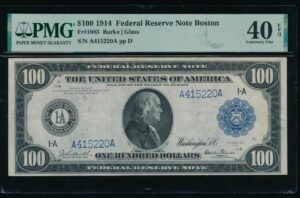
Most currency collectors know Susan B. Anthony from the small-dollar coin the U.S. Mint released in 1979, a coin famously confused with the quarter and quickly relegated to vending machines and post office counters. But fewer collectors realize that Anthony nearly appeared on paper money first. Between 1974 and 1978, a serious, well-documented legislative and administrative effort unfolded in Washington to place her portrait on a circulating Federal Reserve Note. The Bureau of Engraving and Printing produced internal design proposals. Congressional subcommittees held hearings. Treasury officials testified. And then, quietly, the whole initiative collapsed, leaving no issued note and only archival records and a handful of proof-stage design mockups to tell the story.
The Political Climate That Made It Possible
To understand why the Anthony currency proposal gained traction, you have to place it firmly in its historical moment. The Equal Rights Amendment had passed Congress in March 1972 and was actively being ratified by states throughout the mid-1970s. The women’s movement was at a peak of mainstream political visibility. Members of Congress, particularly in the House Banking Committee, were fielding constituent pressure to recognize women’s contributions in visible, symbolic ways. Currency, used by everyone every day, was an obvious candidate.
Representative Leonor K. Sullivan of Missouri, one of the longest-serving women in Congress at the time, had raised the issue of women on currency as early as the late 1960s. But it was the combination of the ERA debate and the approaching 1976 U.S. Bicentennial that gave the idea new urgency. Several legislators argued that redesigning currency to honor women would be a fitting Bicentennial gesture, paralleling the commemorative coin programs already being planned by the Mint.
Susan B. Anthony was the consensus choice almost from the beginning. Her role in the suffrage movement was unambiguous, her historical stature was beyond serious dispute, and she had a well-known portrait in the public domain: the 1870 photograph by Napoleon Sarony that had become the standard reference image for her likeness. Harriet Tubman was also mentioned in some discussions, though her moment on currency would have to wait until the 21st century.
If you want context for what a 1970s-era Anthony note might have looked like in hand, examine a Series 1977 $1 Federal Reserve Note (Blumenthal-Morton signature combination). The engraving style, seal placement, and serial number typography of that series represent exactly the production standards the BEP would have applied to any Anthony note issued in that window. High-grade examples, graded PMG 66 EPQ or better, are surprisingly affordable at under $20 and make excellent reference pieces.
What the BEP Actually Proposed
The Bureau of Engraving and Printing does not publicize its internal design work for proposals that never reach production, and the Anthony currency studies are no exception. However, archival documents obtained through Freedom of Information Act requests and cited in numismatic research confirm that BEP engravers produced at least two portrait vignette studies for a hypothetical Anthony note, most likely in 1977. These were not full note designs in the sense of complete face and back layouts. They were portrait studies, the first step in the BEP’s design process, intended to test how Anthony’s likeness would render in the intaglio engraving style used on Federal Reserve Notes.
The primary denomination under discussion was the $1 note. This made practical sense: the $1 was the highest-circulation denomination, meaning the most people would encounter Anthony’s image on a daily basis. Some legislators and Treasury staffers also floated the $2 note, which had been reissued in April 1976 as a Bicentennial note featuring John Trumbull’s Declaration of Independence scene on the back. The $2 was already a novelty item, and there was a school of thought that pairing it with a new portrait in a subsequent series might give it more traction as a circulating note. Neither denomination ultimately moved forward.
The back design question was also raised in internal discussions. The existing $1 back, with the Great Seal imagery established in the Series 1935 redesign, was considered essentially untouchable by many Treasury officials given its deep cultural familiarity. Any Anthony $1 would presumably have kept the existing back, substituting only the obverse portrait of Washington.
The Martha Washington Silver Certificates that preceded this debate by nearly a century are genuine collector landmarks. The Series 1886 $1 Silver Certificate (Friedberg catalog number Fr. 215 through Fr. 221, depending on signature combination) features Martha Washington’s portrait on the face and is the last issued U.S. paper money to depict a woman. Fine examples trade in the $150 to $400 range, while Choice Uncirculated specimens with strong paper quality can reach $800 or more at auction. The Series 1891 $1 (Fr. 222 through Fr. 225) is more common in higher grades. Both are essential context pieces for any collection focused on portrait history in U.S. currency.
The Congressional Hearings: 1975 to 1978
The legislative record is more detailed than the BEP’s internal design files. Between 1975 and 1978, at least three separate bills were introduced in the House that would have mandated the Treasury Department to place a woman’s portrait on circulating Federal Reserve Notes. The most substantive hearings took place before the House Subcommittee on Consumer Affairs and Coinage in 1976 and again in 1977.
Treasury Department witnesses, including representatives from the BEP and the Office of the Secretary, consistently expressed what might be called cooperative reluctance. They testified that the agency could produce such a note if Congress mandated it, but they raised practical concerns about the cost of a mid-series redesign, the disruption to existing production schedules, and the potential for public confusion if portrait changes were made too frequently. The BEP pointed out that major redesigns required between 18 and 24 months from final design approval to first delivery, meaning a congressional mandate passed in 1977 would not produce circulating notes until 1979 at the earliest.
Opposition came from several directions. Some members argued that changing Washington’s portrait on the $1 bill was culturally inappropriate, essentially displacing the Father of the Nation. Others raised the practical concern that the public was already confused by design changes following the Series 1976 $2 note launch. A minority of members, working against the ERA more broadly, used the currency debate as a proxy argument, framing Anthony’s placement on money as an unwanted politicization of neutral government instruments.
Supporters, including Representative Patsy Mink of Hawaii and several members of the Congressional Women’s Caucus (formally organized in 1977), pushed back forcefully, noting that the currency had always been political in the sense that every portrait choice reflects a judgment about whose legacy deserves recognition. They also pointed to the international precedent: Canada, the United Kingdom, and numerous other countries routinely featured women on circulating paper money.
Why the Coin Won and the Note Lost
The proximate reason the paper currency effort died was the success of the coin initiative. By late 1977, legislative momentum had shifted decisively toward the small-dollar coin as the vehicle for honoring Anthony. The dollar coin had practical advocates beyond the women’s movement: the Treasury and Federal Reserve had long wanted to replace the $1 note with a coin, because coins last roughly 30 years in circulation while paper notes last less than two years on average, producing enormous long-term savings. Anthony’s portrait gave the coin political support it would not otherwise have had.
The Susan B. Anthony Dollar Coin Act was signed into law by President Carter on October 10, 1978 (Public Law 95-447), with production beginning at the Philadelphia, Denver, and San Francisco Mints in December 1978 and the coin entering circulation on July 2, 1979. Once the coin was authorized, support for the parallel paper currency initiative essentially evaporated. Legislators who had backed Anthony’s recognition were satisfied with the coin. Treasury officials were relieved not to face a costly mid-series note redesign. And the broader political window was closing: the ERA ratification effort was stalling, and the cultural momentum of the mid-1970s women’s movement was shifting.
While no Anthony Federal Reserve Note exists to collect, you can build a thematic collection around this historical episode. Consider assembling: a Martha Washington $1 Silver Certificate (Fr. 215-225) as the last issued U.S. note with a woman’s portrait; a Series 1977 $1 FRN as a representative note of the design that would have been modified; a 1979-P, 1979-D, or 1979-S Proof Susan B. Anthony dollar; and any available printed primary sources or numismatic journal articles from 1975 to 1980 covering the debate. The Numismatist and Paper Money magazine both ran coverage during this period that is now historically significant in its own right.
The Engraving Legacy and What Might Have Been
For currency collectors specifically, the most tantalizing aspect of this story is the question of what an Anthony Federal Reserve Note would look like as a collectible. Based on the production standards of the late 1970s, a Series 1977-A or Series 1979 Anthony $1 would have carried the signatures of Secretary of the Treasury W. Michael Blumenthal and Treasurer Azie Taylor Morton (the first African American Treasurer, whose own appointment was historically significant) or the subsequent pairing of G. William Miller and Morton. It would have been printed at the Washington, D.C. facility and later the Fort Worth facility as production demands required. Star replacement notes would have been produced for each Federal Reserve district, and these would now be the supreme rarities of the type.
The note’s collectibility would have been extraordinary. A first-series Anthony FRN in Gem Uncirculated condition, particularly a star note from a low-print-run district like Minneapolis or Kansas City, would today rival or exceed the values of the most prized modern currency rarities. The very fact that it was never issued makes the design studies that do exist in archival form historically significant documents, though they remain in government custody and have not been publicly offered for sale.
Collectors interested in pursuing the documentary side of this history should contact the BEP’s Historical Resource Center, which maintains archival records of design proposals, and the National Archives, which holds relevant Treasury Department correspondence from the 1975 to 1978 period under Record Group 56.
| Item / Series | Denomination or Type | Notes on Availability | Rarity |
|---|---|---|---|
| Fr. 215 (Series 1886) | $1 Silver Certificate, Martha Washington, Rosecrans-Jordan signatures | Estimated survivors in all grades: scarce; VF examples uncommon at auction | Rare |
| Fr. 222 (Series 1891) | $1 Silver Certificate, Martha Washington, Rosecrans-Nebeker signatures | More available than 1886 in mid-grades; CU examples command significant premiums | Scarce |
| Fr. 225 (Series 1891) | $1 Silver Cert., Bruce-Roberts signatures, last Martha Washington issue | Lowest-print combination of the 1891 type; rarely seen above VF | Rare |
| Series 1976 $2 FRN | $2 Federal Reserve Note, Bicentennial reverse | Widely hoarded uncirculated; common in high grades, though star notes are scarce | Common |
| Series 1977 $1 FRN (Star) | $1 FRN Star Note, Blumenthal-Morton signatures | Low-print districts (Minneapolis, Kansas City) in Gem CU: genuinely scarce | Scarce |
| 1979-P SBA Dollar (Wide Rim) | Susan B. Anthony Dollar Coin, Philadelphia Mint | Near-date to rim variety; key first-year collectible, limited distribution | Scarce |
| 1979-S SBA Dollar Proof (Type 2) | Susan B. Anthony Dollar, clear S mintmark | Rarer of two proof varieties from 1979; significant premium over Type 1 | Key Date |
| BEP Anthony Portrait Studies (circa 1977) | Internal design documents, not publicly issued | Remain in government archival custody; not available on collector market | Key Date |
The Longer Shadow: Harriet Tubman and the Lesson of the 1970s
The Anthony currency episode did not end the question of women on U.S. paper money. It simply deferred it by four decades. When the Obama administration announced in April 2016 that Harriet Tubman would replace Andrew Jackson on the $20 Federal Reserve Note, the announcement was met with both celebration and the same categories of resistance that had faced the Anthony proposal in 1975. The subsequent delay of that redesign under the Trump administration and its partial revival under the Biden administration traced a remarkably similar arc of political momentum, bureaucratic friction, and competing priorities.
For currency collectors, this history is not merely academic. It explains why the composition of our currency portraits is never simply a design decision. Every portrait on a Federal Reserve Note represents a concluded argument, one that was won against real opposition. The Anthony note that was never issued is, in its absence, a document of that argument at a moment when the outcome went the other way. And the Martha Washington Silver Certificates that sit in collectors’ albums today are the bookends of a story that is, as of this writing, still being written.
Whether you collect 19th-century type notes, modern Federal Reserve issues, or the documentary history of currency design, the Anthony episode of the 1970s deserves a place in your understanding of how American paper money gets made, and sometimes does not get made, at all.