📷 Image source: AI generated. Images are selected by AI to represent the article topic and may not depict the exact note(s) described.
🎧 Listen to this article
Narrated by Alnilam · 11,840 characters
Walk into any serious currency dealer’s case and you’ll spot them immediately: banknotes with a small five-pointed star replacing the last letter of the serial number. These are star notes, the Federal Reserve’s solution to a century-old printing problem, and they represent one of the most accessible yet surprisingly deep specialties in US paper money collecting. Whether you’re a newcomer who just found one in your change or a seasoned numismatist hunting district rarities, understanding the mechanics, history, and key dates of star notes can dramatically sharpen your collecting focus.
Why Star Notes Exist: The Replacement Note System
The Bureau of Engraving and Printing (BEP) prints currency in sheets, typically 32 or 50 subjects at a time. During the complex intaglio printing process, individual notes are occasionally damaged, torn, or printed with defects serious enough to require destruction. The problem is that the BEP must account for every serial number it issues. If a note bearing serial number B12345678B is destroyed, the agency cannot simply skip that number, as gaps create accounting nightmares and potential counterfeiting vulnerabilities.
The solution, formalized in the early twentieth century, is elegant: destroy the defective note and replace it with a substitute bearing an entirely different serial number series, one identified by a star suffix. This way the original serial sequence remains intact on paper, while the replacement note carries its own trackable identifier. Star notes are printed in discrete runs, logged separately by the BEP, and inserted into packs to replace the spoiled sheets.
A Brief History: From 1910 to the Modern Era
The star replacement system predates Federal Reserve Notes entirely. The first documented use of a star suffix on US currency appears on 1910-series United States Notes, though some researchers believe the practice began informally as early as 1898 on certain Silver Certificates. By the time the Federal Reserve System issued its first notes in 1914 (the large-size Series of 1914 Federal Reserve Notes), the star suffix was standard practice for replacements.
Large-size star notes (issued through 1928) are their own collecting specialty entirely, with many classified as rare to extremely rare in the Standard Catalog of United States Paper Money (Krause-Lemke). The transition to small-size currency in 1928 brought a cleaner, more consistent star note program that continues to this day, making the modern small-size era the primary focus for most active collectors.
Always verify a star note’s print run using the BEP’s free online Star Note Run Lookup Tool before assigning a rarity premium. A note with a small run in one district can look identical to a common note from another district, but the value difference can be enormous.
Reading a Star Note Serial Number
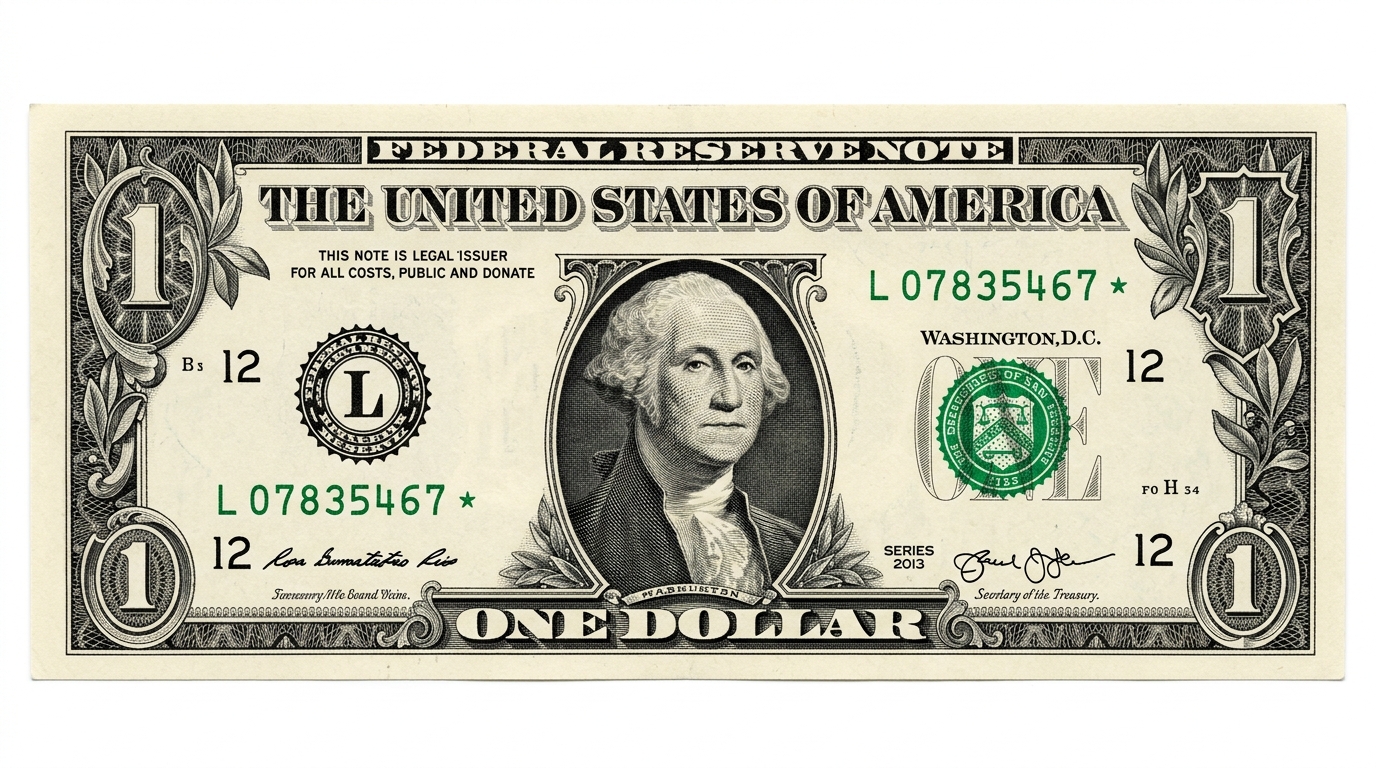
On modern Federal Reserve Notes, the serial number follows a precise format. For a standard note it reads: [FRB Letter][8 digits][Run Letter]. A star note replaces that final run letter with a star symbol. So a standard Atlanta note might read F12345678A, while its star replacement counterpart reads F12345678*. The prefix letter identifies the Federal Reserve Bank: A for Boston, B for New York, C for Philadelphia, D for Cleveland, E for Richmond, F for Atlanta, G for Chicago, H for St. Louis, I for Minneapolis, J for Kansas City, K for Dallas, and L for San Francisco.
This district letter is critical for collectors because print runs vary enormously by district. New York (B) and the Federal Reserve Bank of Atlanta (F) historically receive some of the largest currency allocations, so their star note runs tend to be larger. Smaller districts like Minneapolis (I) or Kansas City (J) often see smaller orders, producing star runs that are inherently scarcer even within the same series year.
Modern Series Key Dates and Rarity Tiers
The single most important resource for modern star note collectors is the BEP’s own production data, made public through FOIA requests and now maintained in searchable databases by collector communities. Run sizes can range from fewer than 100,000 notes (extremely scarce) to over 3.2 million (common). Understanding where a note falls in this spectrum is the foundation of intelligent collecting.
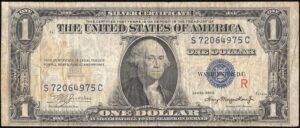
Among small-size Federal Reserve star notes, several series years stand out as perennial collector favorites. The Series 1935A $1 Silver Certificates with star suffixes remain popular crossover collectibles. In the Federal Reserve Note era proper, the Series 1963 and 1963A $1 notes generated modest star runs, and the Series 1969, 1969B, and 1969C issues all have districts with challenging star populations. The 1974 and 1977 series produced some districts with runs under 640,000 notes, which today grade as scarce to rare in high condition.
The modern era, roughly Series 1988 onward, is where the BEP’s published run data becomes most complete and reliable. The Series 1995 $1 notes are the holy grail of this period: the Atlanta district (F*) star run totaled only 128,000 notes, making it the rarest small-size $1 Federal Reserve star note in the entire modern series. A CU example of the 1995 Atlanta star routinely sells for $400 to $800 at auction, with exceptional Gem examples crossing $1,000.
When buying high-value star notes, insist on PCGS Currency or PMG certification. Raw star notes are occasionally altered or misrepresented, and the holder’s holder notation will confirm the series, district, and grade independently.
Higher Denominations: $5, $10, $20, $50, and $100 Stars
Most collectors begin with $1 star notes because of their low acquisition cost and enormous variety of districts and series to pursue. However, higher denomination star notes offer their own compelling collecting opportunities, often with dramatically lower print runs relative to their standard-issue counterparts.
The Series 1950 through 1963 $5, $10, and $20 Federal Reserve star notes are particularly interesting because the smaller total currency orders of that era produced star runs that were correspondingly modest. A Series 1950B $20 star from Minneapolis (I*), for instance, had an estimated run of fewer than 180,000 notes. In Very Fine condition, such a note might retail for $150 to $300; in Gem Uncirculated, prices can reach $800 or beyond depending on the specific block.
The $100 denomination presents unique challenges. Because $100 notes are printed in smaller quantities relative to $1 notes in the first place, their star replacements are inherently scarcer by raw numbers. Series 2006A $100 star notes from the San Francisco district (L*) had a particularly small run of approximately 640,000, while some 2013 series districts produced runs under 320,000 notes. High-denomination stars in CU condition are actively sought by type collectors and registry set builders alike.
The 2009 and 2013 Small-Size Era Stars
The redesigned $100 note (Series 2009A, released to circulation in October 2013) introduced new security features including the 3-D Security Ribbon and Bell in the Inkwell motif. Star notes for this series were produced across multiple FRB districts, and early production runs for some districts were quite limited due to printing difficulties that actually required additional replacement notes, creating an interesting feedback loop in the star supply. The Series 2013 $1 notes are notable for producing several district stars with runs at or below 640,000, including the Richmond (E*) and Kansas City (J*) districts, both of which carry modest premiums in top grades.
Build a district set of star notes for a single series year. Completing all 12 Federal Reserve districts with matching signatures and series designation for a single denomination is a recognized completion goal that dramatically increases a collection’s cohesion and potential resale value.
Fancy Star Notes: A Bonus Specialty
Within the star note specialty, collectors also prize notes with interesting serial number patterns. A star note with a serial number like B00000100* (a near-solid zero) or a radar star (the digits reading the same forward and backward) carries a premium beyond its standard replacement note status. These “fancy” star notes sit at the intersection of two popular collecting specialties and can command significant premiums from crossover bidders at major auctions. Heritage Auctions and Stack’s Bowers regularly catalog fancy star notes as separate catalog lots precisely because of this dual-demand effect.
Grading Considerations Specific to Star Notes
Grading star notes follows the same Sheldon-scale standards as all US currency, with PMG and PCGS Currency as the dominant third-party grading services. However, collectors should be aware of a few nuances. Because star notes often sat in BEP inventory longer than standard notes before being inserted into packs, it is not uncommon to find slight counting marks or handling evidence even on notes that were technically never circulated. The EPQ (Exceptional Paper Quality) and PPQ (Premium Paper Quality) designations from PMG and PCGS respectively are especially meaningful for star notes, confirming original surfaces without cleaning or pressing.
For the key-date 1995 Atlanta star and other low-run modern issues, the population reports from both grading services are essential reading. As of recent census data, fewer than 50 examples of the 1995 Atlanta star have been graded by PMG in grades of 65 EPQ or above, making population-report research as important as print run research for serious collectors.
| Series | District / Denomination | Approx. Print Run | Rarity |
|---|---|---|---|
| 1995 | Atlanta (F*) $1 | 128,000 | Key Date |
| 1988A | Minneapolis (I*) $1 | 448,000 | Rare |
| 1977 | Kansas City (J*) $1 | 512,000 | Rare |
| 2013 | Richmond (E*) $1 | 640,000 | Scarce |
| 2009A | San Francisco (L*) $100 | 640,000 | Scarce |
| 1950B | Minneapolis (I*) $20 | ~180,000 | Rare |
| 1969C | Dallas (K*) $1 | ~640,000 | Scarce |
| 1963A | Chicago (G*) $1 | ~1,024,000 | Scarce |
| 2006 | New York (B*) $1 | 3,200,000 | Common |
| 2017A | Atlanta (F*) $1 | 3,840,000 | Common |
Building a Star Note Collection: Practical Strategies
New collectors often ask whether to pursue a broad type collection (one star note from each series) or a narrow specialty (all 12 districts for a single denomination and series). Both approaches are valid, but specialists consistently report deeper satisfaction and stronger long-term value appreciation from the focused approach. Completing a 12-district set of Series 1995 $1 star notes, for instance, requires acquiring the rare Atlanta note as the centerpiece, which gives the collection a genuine challenge and a clear narrative.
Budget-conscious collectors can build excellent collections entirely from circulated examples. A Very Fine 1995 Atlanta star, while not the showpiece of a gem example, is still a legitimate key-date note at a fraction of the Gem CU price. Many district stars from the 1960s and 1970s can be acquired in Fine to Very Fine condition for $25 to $75 each, making a complete-set project achievable for collectors at virtually any budget level.
Check your pocket change and cash transactions regularly. While the odds are slim, low-run star notes do occasionally circulate. The 1995 Atlanta star is so rare that examples in Good condition, obviously worn from circulation, still sell for $100 or more, because the print run was simply that small.
Conclusion: A Specialty That Rewards Serious Study
Star notes occupy a uniquely rewarding position in US paper money collecting. They are abundant enough that every collector can readily acquire examples, yet the rarity spectrum runs so wide that even advanced numismatists can spend years chasing the key dates and population-report toppers that define a great collection. The discipline rewards research: knowing your print runs, understanding district allocations, tracking PMG and PCGS population data, and staying current with BEP production releases all translate directly into better buying decisions and a more cohesive, valuable collection. Whether your focus is a single Gem 1995 Atlanta star or a comprehensive 12-district run across decades of Federal Reserve history, the star note specialty offers depth, accessibility, and genuine historical connection to the mechanics of American currency production.