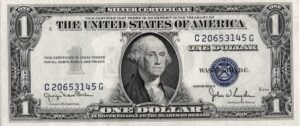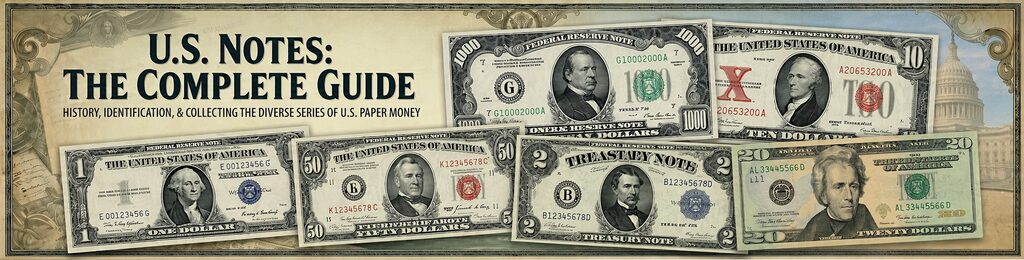
Run your fingertip slowly across a crisp, uncirculated Federal Reserve Note fresh from the Bureau of Engraving and Printing, and something unmistakable happens. The ink rises off the paper in tiny ridges, almost like a miniature topographic map pressed into the fiber. That sensation, that almost sandpaper-like resistance under your skin, is intaglio embossing, and for serious currency graders it is one of the most reliable, hardest-to-fake indicators of a note that has never spent a single day in a cash drawer. Understanding what embossing is, how to evaluate it, and why the major third-party grading services reward it so consistently is essential knowledge for anyone who wants to buy or sell at the top of the market.
The Science Behind Intaglio Printing
To appreciate embossing, you first need to understand why it exists at all. Intaglio printing, derived from the Italian word meaning “to engrave,” involves cutting or etching the design directly into a steel die. Ink is then forced into those recessed lines under enormous pressure. When the dampened cotton-linen paper is pressed against the plate, it literally flows down into the engraved grooves, picks up the ink, and is then pulled away. What remains on the paper surface is a three-dimensional ridge of ink that mirrors every engraved line in the die.
The Bureau of Engraving and Printing has used this process for U.S. currency since the first $1, $2, $5, $10, $20, $50, and $100 Legal Tender Notes issued in 1862. Modern currency notes are printed in two intaglio passes: one for the back design and one for the face. The face printing, which includes the portrait, the Treasury seal, the Federal Reserve seal, and the fine ornamental scrollwork, tends to produce the heaviest embossing because those elements carry the deepest engraving on the master die. By contrast, the back printing, while still intaglio, is generally slightly shallower in relief on modern notes.
What Original Embossing Actually Looks Like
Under raking light at about a 15-degree angle, an uncirculated note with full original embossing looks almost three-dimensional. The portrait of Lincoln on a 1963A $5 Federal Reserve Note, for example, will appear to have actual depth and shadow. The fine engraved lines in his coat, the crosshatching in the background, and the lettering of “FIVE DOLLARS” will each cast tiny shadows when you tilt the note slightly. This is not a trick of the eye. The ridges genuinely rise above the paper plane, sometimes by as much as 0.1 to 0.2 millimeters on a freshly printed note.
The color of the ink itself is also a clue. On an embossed, uncirculated note the ink has a certain depth and saturation, almost glossy in the recesses of each ridge, because the oil-based vehicle in the ink has not yet had a chance to fully migrate into the paper fibers. On a circulated note the ink looks flatter and slightly duller, even under the same lighting conditions, because constant handling has both physically abraded the ridges and accelerated ink absorption into the substrate.
To evaluate embossing without touching the note, hold it at a very low angle under a single-point light source such as a desk lamp, not overhead fluorescent lighting. Raking light will reveal relief that is completely invisible under flat, diffuse illumination. This technique works equally well on large-size notes from the 1880s and small-size notes from the 1990s.
How to Feel Embossing Correctly
Every experienced dealer and grader will tell you the same thing: feeling for embossing is an art, and doing it incorrectly can actually damage the note you are trying to evaluate. Never drag a fingernail across the surface. Never press with the pad of your fingertip. The correct technique is to place the note on a clean, firm surface and draw the edge of a single fingertip, using almost no downward pressure at all, across a high-embossment area such as the portrait, the large numeral denomination, or the Treasury seal lettering.
What you are feeling for is resistance, a subtle catch-and-release sensation as the ridges interrupt the smooth path of your skin. On a fully embossed Gem note this feels almost like dragging your finger across very fine sandpaper. On a circulated Fine-15 note the same area will feel glassy smooth, or at best produce only the faintest tickle. On a pressed or cleaned note that has been artificially introduced to the market as uncirculated, the paper fibers will feel slightly stiff or boardy, and the ink ridges will be absent even though the corners look sharp.
Portrait areas are typically the best test zones because they carry the most complex engraving and thus the most surface area of raised ink. On small-size notes, check the face plate serial number numerals as well. On a truly uncirculated note these will feel noticeably higher in relief than the background printing. On any note that has been folded even once, the fold crease itself will show as a distinct valley under raking light, but the embossing on the unfolded portions should still be largely intact if the note saw only minimal handling.
When evaluating a raw note at a coin show, ask the dealer’s permission before handling, and always hold the note by its edges with clean cotton gloves or at minimum dry, oil-free fingertips. Skin oils are the primary chemical enemy of embossing: they accelerate ink absorption into the paper and can leave permanent contact points that flag a note as “finger-touched” under ultraviolet light during third-party grading.
Large-Size Notes and the Embossing Advantage
Collectors of large-size currency (issued from 1861 through 1928) have a particular relationship with embossing because the notes were printed on much heavier paper stock and with slightly different ink formulations than modern small-size currency. A high-grade Series 1880 $1 Legal Tender Note, for instance, exhibits a remarkable tactile quality in the ornate lathe work surrounding the portrait of George Washington. The face plate printing on these notes used a stiffer, more resinous ink that cured harder than modern formulations, meaning that surviving Gem examples from dealer holdings or original bank wraps can still show relief after 140 years.
The PMG population report is instructive here. Among Series 1880 $1 United States Notes with the Large Brown Seal, Bruce-Gilfillan signature combination, fewer than a handful of examples grade 65 EPQ (Exceptional Paper Quality) or above, largely because full embossing surviving across more than a century of storage is extraordinarily rare. When a note like that does appear at auction, the embossing premium is not theoretical. A 65 EPQ example will routinely sell for two to three times the price of a 64 EPQ example of identical type, a gap that exists almost entirely because of surface preservation, of which embossing is the primary indicator.
How Third-Party Graders Evaluate Embossing
Both PMG (Paper Money Guaranty) and PCGS Currency include surface preservation as a formal component of their grading criteria, though neither company publishes a precise numerical rubric for embossing specifically. In practice, the EPQ designation from PMG and the PPQ (Premium Paper Quality) designation from PCGS Currency both require that a note show no signs of cleaning, pressing, or artificial enhancement, and full original embossing is treated as the strongest single evidence that none of those interventions have occurred.
Pressing, the practice of using heat and pressure to flatten a lightly circulated note and simulate uncirculated condition, is the most common form of currency fraud in the hobby. A pressed note will look visually sharp but will feel completely flat under tactile examination. Graders at both major services are trained to identify this condition, and a pressed note submitted as uncirculated will almost always be designated “Apparent” grade with a net grade reduction, or in extreme cases will be body-bagged with a “Pressed” notation.
The graders also cross-reference embossing with paper flexibility. An unprocessed Gem note will have both full embossing and natural paper suppleness. A pressed note will feel boardy and rigid because the pressing process partially gelatinizes the paper sizing. A note that has been chemically cleaned to remove stains will sometimes retain partial embossing (because the cleaning agent did not physically abrade the ridges) but will show telltale fluorescence under UV light and a stripped appearance to the paper surface. Embossing alone is not sufficient for a premium designation, but the absence of embossing on a note claimed to be uncirculated is, on its own, sufficient to deny one.
If you are building a type set and working with a limited budget, prioritize EPQ or PPQ grades over raw higher-grade notes whenever the price spread is less than 40 percent. A certified 64 EPQ note with documented full embossing will almost always be a better long-term investment than a raw note claimed to grade 66, because the certification removes uncertainty about surface treatment and supports a more liquid resale market.
Star Notes, Replacement Notes, and Embossing Differences
One nuance that surprises newer collectors is that star notes (replacement notes, indicated by a star suffix or prefix in the serial number) can occasionally show slightly different embossment characteristics than regular-run notes from the same series. This happens because replacement notes are sometimes printed on different press runs, potentially with slight variations in ink viscosity or plate pressure adjustments. On scarce star notes such as the 1995 $1 Federal Reserve Note from the Atlanta district (F-star block, with a print run of only 128,000), even minor surface differences between the star note and the regular issue can affect whether a given example qualifies for EPQ designation. Collectors pursuing high-grade star notes should be especially attentive to embossing quality, since the rarity premium already baked into the price makes condition sensitivity extreme.
Storing Notes to Preserve Embossing
Once you own a note with full original embossing, protecting that surface quality is an ongoing responsibility. The primary enemies are humidity, physical pressure, and acidic materials. Notes stored in polyvinyl chloride (PVC) holders will eventually suffer plasticizer migration that softens and ultimately destroys the raised ink ridges, sometimes within just a few years in warm storage conditions. Mylar D (biaxially oriented polyester) or approved polypropylene sleeves are the industry-standard choices. Avoid stacking notes face-to-face without an interleaving barrier, as even very light sustained pressure over months will begin to transfer embossment impressions from one note onto the surface of the adjacent one, creating a ghosting effect that graders flag as contact marks.
Ideal storage conditions are 65 to 70 degrees Fahrenheit and 45 to 55 percent relative humidity. Notes stored in safe deposit boxes in climate-controlled bank vaults often retain their embossing remarkably well across decades, which is one reason why original bank-wrapped currency rolls discovered in old estate collections so frequently grade at the top of the population reports.
| Series / Date | Denomination and Type | Approx. High-Grade Pop (EPQ/PPQ) | Rarity |
|---|---|---|---|
| 1862 | $1 Legal Tender, First Obligation | Under 5 known in 64 EPQ or above | Key Date |
| 1880 | $1 United States Note, Large Brown Seal, Bruce-Gilfillan | Fewer than 10 in 65 EPQ | Key Date |
| 1928 | $500 Federal Reserve Note, Small Size, First Year | Fewer than 20 in 64 PPQ or above | Rare |
| 1934A | $1000 Federal Reserve Note, Yellow Seal (North Africa) | Approximately 15-25 in 63 EPQ or above | Rare |
| 1963A | $5 FRN, Dallas (K) Star Note | Moderate; full embossing survivorship roughly 30-40 pct of Gem examples | Scarce |
| 1976 | $2 Federal Reserve Note, First Day Issue (officially stamped) | Embossing often compromised by postal handling; clean Gems are scarce | Scarce |
| 1995 | $1 FRN, Atlanta (F) Star Block | 128,000 printed; perhaps 50-75 certified Gem EPQ | Key Date |
| 1996 | $100 FRN, First Year of New Large-Portrait Design | Common in high grade; full embossing widely present in original BEP packs | Common |
| 2003A | $1 FRN, Minneapolis (I) Star, Low Print Run | 512,000 printed; Gem EPQ examples disproportionately scarce relative to print run | Scarce |
| 2009 | $100 FRN, First Year of “Bluebell” Security Ribbon Design | Large print run; embossing quality highly consistent, Gems plentiful | Common |
Practical Takeaways for Building a Premium Registry Set
The collectors who consistently assemble high-registry type sets share one habit: they evaluate embossing before they evaluate anything else. Eye appeal is subjective. Centering can be debated. But embossing is binary in the way that matters most to a grader. Either the original printing surface is present and intact, or it has been worn, pressed, or otherwise compromised. Learning to read it quickly and reliably is a skill that pays for itself many times over in avoided mistakes at auction and in better negotiating leverage with dealers who know that an informed buyer cannot be talked into a pressed note at a Gem price.
Start by handling as many certified notes as possible, both the premium-designated examples and the non-EPQ or non-PPQ notes of the same type, and train your fingers to distinguish between them. Ask dealers at major shows if you can compare a 65 EPQ and a 65 non-designated example side by side. The difference, once you have felt it, is never forgotten. That tactile education, built on the simple physics of ink pressed into engraved steel under 20 tons of pressure, is the foundation of genuinely expert currency collecting.