Pull a stack of circulated notes from an old collection and you might thumb past dozens of bills before spotting something that stops you cold: a serial number where one digit appears to have been stamped on top of itself, leaving a ghostly double impression that no machine was ever supposed to produce. These are doubled serial number digit errors, and they occupy a uniquely compelling corner of U.S. currency error collecting. They are not the result of ink smearing, not a trick of the light, and not a post-printing alteration. They are mechanical failures frozen in paper, each one a small record of the moment something went wrong inside a Bureau of Engraving and Printing numbering machine.
How the BEP Numbering Process Works, and Where It Breaks
To understand why doubled digit errors exist, you need a basic picture of how the Bureau of Engraving and Printing applies serial numbers. For most of the twentieth century and into the present, serial numbers were applied during a dedicated letterpress numbering pass, separate from the intaglio face and back printing. Sheets of already-printed notes were fed through high-speed Heidelberg or Stokes numbering presses, where a set of typographic numbering wheels rotated incrementally with each sheet advance, stamping a fresh serial number in green or yellow-green ink (for Federal Reserve Notes), blue ink (for Silver Certificates and older Legal Tender Notes), or red ink (for United States Notes and some Legal Tender issues).
Each numbering wheel contains the digits 0 through 9 plus a repeat position, and the wheel advances exactly one increment after each impression. When everything functions correctly, this is a flawless mechanical ballet. But when a sheet hesitates in the feed, when a wheel fails to advance cleanly, or when the sheet momentarily rebounds after the impression stroke, the wheel can strike the same position twice without advancing. The result is two impressions of the same digit overlaid at a slight offset, creating that characteristic blurred or shadowed double image. In some cases the offset is only a fraction of a millimeter; in dramatic examples it can be 1 to 2 millimeters, making the doubling unmistakable to the naked eye with no magnification needed.
Doubled Digit vs. Other Serial Number Errors: Getting the Terminology Right
New collectors frequently confuse doubled serial number digit errors with several related but distinct error types. Understanding these distinctions matters both for accurate attribution and for knowing what you are actually paying for.
A mismatched serial number occurs when the two serial numbers printed on opposite corners of a note differ from each other, indicating a misaligned sheet or a wheel that failed to advance between the two numbering heads. A skipped digit or missing digit error results from a wheel that advanced past a position without inking. An inverted serial number happens when a numbering head is installed upside down. None of these are the same as a doubled digit, though all four can occasionally appear on the same note in catastrophic mechanical failure scenarios, which are extremely rare and enormously valuable.
A doubled serial number digit is specifically the double impression of a single digit at a single position caused by a double strike of the same wheel. It affects one position, sometimes two, rarely three. When it affects the prefix letter or the suffix star, collectors take particular notice, as those characters are slightly more difficult to double without the error being caught during quality control.
Before purchasing any doubled serial number error, examine the doubling under 5x to 10x magnification. Genuine mechanical doubled digits show consistent ink layering, with both impressions in the same color and density. If one impression appears lighter or in a slightly different ink tone, be cautious: post-printing tampering with stamps or rollers does occur, and third-party grading by PMG or PCGS Currency is strongly recommended for any note priced above $200.
Which Denominations and Series Show Up Most Often
Doubled serial number digit errors have been documented across virtually every modern denomination, but certain series and face plates produce more confirmed examples than others, partly due to print volume and partly due to the mechanical condition of the numbering equipment used during specific production runs.
On Series 1963 and 1963-A Federal Reserve Notes, the transition to the new smaller-format numbering presses introduced minor calibration challenges, and small doubled digit errors on $1 and $5 notes from this era appear periodically in dealer stock. These early post-transition examples in VF to XF condition typically bring $150 to $350 depending on clarity.
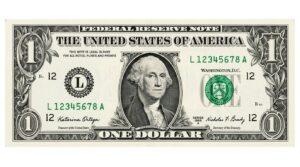
Series 1969 through 1977 $1 Federal Reserve Notes represent the most commonly encountered denomination for this error type, simply because billions of $1 notes were printed during those years. The sheer volume of production increased the statistical probability of feed errors surviving quality control. A well-centered Series 1974 $1 with a clearly doubled third or fourth digit in CU (Crisp Uncirculated) condition sells in the $85 to $175 range today, making these an accessible entry point for new collectors.
Higher denominations command dramatically higher premiums. A Series 1977 $20 Federal Reserve Note with a crisp, offset doubled digit in the third position, graded PMG 64 EPQ, sold at a 2022 Heritage Auctions currency sale for $480. A comparable error on a Series 1985 $50 note in PMG 65 EPQ brought $920 at a Stack’s Bowers 2021 auction. The logic is straightforward: high-denomination error notes always carry a multiplier relative to the face value risk the printer took in letting them leave the facility.
Star note variants of doubled digit errors occupy their own premium tier. Star notes already carry a scarcity premium because they represent replacement notes printed in smaller quantities. When a star note also carries a doubled serial digit, you have two error attributes on one piece of paper. A Series 1981-A $1 Boston district star note (B*) with a clearly doubled fifth-position digit sold for $675 at a 2023 Great Collections auction, a significant multiple over a comparable non-star example.
Star note doubled digit errors are particularly worth hunting in lower Federal Reserve districts with smaller star note print runs. The 1995 series produced some of the smallest district-level star note print runs in the modern era, and any 1995 star note with a confirmed serial error is worth submitting to PMG or PCGS Currency immediately, regardless of grade, because the combination can be catalog-significant.
United States Notes and Silver Certificates: Older Examples with Red and Blue Ink
Before Federal Reserve Notes became the dominant currency format, United States Notes (Legal Tender Notes) bore red serial numbers and Treasury seals, and Silver Certificates carried blue serials. Doubled digit errors on these older series exist but are considerably scarcer in confirmed, attributed examples simply because fewer notes survive in collectible condition and quality control documentation from that era is less systematic.
A Series 1928 $2 Legal Tender Note with a doubled digit in the red serial number, graded PMG 30 Very Fine, is a museum-quality piece that would likely fetch $800 to $1,500 at major auction depending on the visibility of the doubling and eye appeal. The red ink used on Legal Tender Notes tends to show mechanical doubling with particularly high contrast against the white paper margins, making strong examples visually dramatic.
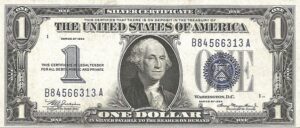
Series 1935 and 1957 $1 Silver Certificates with blue serial doubling errors surface occasionally and represent excellent mid-range collectibles. A clean Series 1957-B $1 Silver Certificate with a doubled digit in the blue serial in AU-55 or better condition typically trades in the $200 to $450 range, which is reasonable given the certificate’s age and the inherent difficulty of surviving at high grade in circulation.
Grading Considerations Specific to This Error Type
Standard grading criteria apply to doubled serial number errors just as they do to any note: paper quality, centering, folds, ink brightness, and surface preservation all feed into the technical grade. But this error type adds two additional factors that experienced collectors weigh heavily.
The first is doubling visibility. A note graded PMG 65 EPQ with doubling that requires a loupe to confirm will often trade below a PMG 63 example where the doubling is immediately obvious at arm’s length. Dramatic, wide-offset doubling is the premium condition here, not merely pristine paper. Some auction houses and dealers now informally describe this as the error’s “drama factor,” and while that term does not appear on any slab label, it absolutely influences realized prices.
The second factor is position within the serial number. A doubled prefix letter or a doubled suffix character (especially the star on replacement notes) is rarer and more desirable than a doubled interior digit. Interior digits at positions 3, 4, or 5 are most common; positions 1, 2, 7, or 8 are less common; prefix letters and suffix characters are the most desirable of all.
When submitting a doubled serial digit note to PMG or PCGS Currency, write a detailed submission note describing the specific position and visible offset direction of the doubling. Grading services use this information when writing the label description. A well-described error label, for example “Doubled Serial Digit, Position 2, NW Offset” versus a generic “Serial Number Error” designation, can meaningfully affect resale value because it signals authenticated specificity to future buyers.
Authentication Red Flags and Common Fakes
Unfortunately, the value of confirmed doubled digit errors has attracted attempts at artificial replication. The most common fake involves pressing a rubber stamp or using a ballpoint pen to add a second impression of a digit after the note has left the BEP. These post-printing alterations can be identified through several means.
First, genuine BEP serial number ink is a specific water-based letterpress formula that bonds with the surface fibers of the currency paper differently than any aftermarket ink or rubber stamp compound. Under UV light, genuine serial ink fluoresces in a characteristic way; alien ink often shows a different fluorescence signature or none at all. Second, genuine doubled digits show paper compression consistent with a mechanical strike: the paper fibers directly under both impressions will show slight indentation from the numbering wheel die. Post-printing stamp additions sit on top of the paper surface with no compression. Third, the offset angle and distance of genuine doubled digits is almost always consistent with the mechanical direction of sheet travel through the press, typically horizontal or slightly diagonal. Randomly placed second impressions that do not align with that mechanical axis are suspect.
Building a Focused Collection: Entry Points and Targets
For collectors entering this niche, the best starting strategy is to focus on authenticated examples in the $100 to $400 range: Series 1970s to 1980s Federal Reserve Notes in circulated to lightly circulated condition, graded by PMG or PCGS Currency, with clearly visible doubling. These notes are liquid, well-documented, and available through Heritage Auctions, Stack’s Bowers, Great Collections, and established error note dealers such as Fred Bart and the Paper Money Guaranty (PMG) registry sale partners.
Intermediate collectors targeting the $500 to $2,000 range should focus on higher denominations ($20, $50, $100), star note variants of any denomination, and pre-Federal Reserve issues in Silver Certificate or Legal Tender format. These require more patient searching but reward the collector with genuinely scarce pieces.
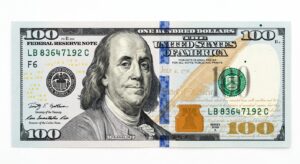
Advanced collectors and investors should watch major auction archives for high-grade examples on $100 Federal Reserve Notes, any confirmed doubled prefix letter error, or multi-position errors where two adjacent digits both show doubling, a mechanical event so unlikely that confirmed examples are essentially one-of-a-kind. A Series 1996 $100 FRN with confirmed doubled digits at positions 3 and 4 simultaneously, graded PMG 67 EPQ, would represent a five-figure note in today’s market without question.
| Series / Date | Denomination and Variety | Est. Known Examples | Rarity |
|---|---|---|---|
| 1974 | $1 FRN, interior digit doubled, any district | 200+ | Common |
| 1981-A | $1 FRN Star Note, doubled interior digit | 30 to 60 | Scarce |
| 1985 | $20 FRN, doubled interior digit, any district | 40 to 80 | Scarce |
| 1995 | $1 FRN Star Note, doubled digit, small-run district | Under 15 confirmed | Rare |
| 1977 | $50 FRN, doubled interior digit, any district | 15 to 30 | Scarce |
| 1957-B | $1 Silver Certificate, doubled blue serial digit | 20 to 40 | Scarce |
| 1928 | $2 Legal Tender Note, doubled red serial digit | Under 10 confirmed | Rare |
| 1996 | $100 FRN, doubled prefix letter | Under 5 confirmed | Key Date |
| Any series | Any denomination, two adjacent positions doubled simultaneously | Fewer than 5 total known | Key Date |
| 1969-C | $1 FRN, doubled digit, circulated grade | 100+ | Common |
Current Market Prices: What These Actually Sell For in 2024
Based on realized auction prices through Heritage Auctions, Stack’s Bowers, and Great Collections from 2021 through early 2024, the following price benchmarks reflect where the market currently stands for authenticated, third-party graded examples:
$1 Federal Reserve Notes (Series 1963 to 1995), non-star, interior digit doubled, PMG 63 or better: $85 to $200. These are the entry-level pieces and represent good value for new collectors building a type collection of error notes.
$1 Federal Reserve Notes, star variant, interior digit doubled, PMG 64 or better: $300 to $750. Premium for the star designation is consistent and well-supported by demand.
$5 to $10 Federal Reserve Notes (any series), interior digit doubled, PMG 62 or better: $150 to $450. These denominations are slightly underrepresented in error collections relative to $1 and $20 notes, which some specialists see as a buying opportunity.
$20 Federal Reserve Notes (any series), interior digit doubled, PMG 63 or better: $350 to $900. Strong collector interest in this denomination given its common circulation status historically.
$50 and $100 Federal Reserve Notes, any confirmed doubled digit, any grade: $600 to $3,500+. The upper end of this range reflects high-grade (65 EPQ or better) examples with dramatic, wide-offset doubling.
Pre-Federal Reserve issues (Silver Certificates, Legal Tender Notes), any confirmed doubled digit: $200 to $1,500+ depending on series, denomination, and grade. These are the most historically significant pieces in the category and tend to attract both error specialists and type collectors simultaneously, driving competitive bidding.
Conclusion: A Mechanical Story Worth Collecting
Doubled serial number digit errors are more than curiosities. Each one is a documented mechanical event, a moment when the relentless precision of BEP production slipped for a fraction of a second and left a permanent record on a piece of U.S. currency. The best examples are visually compelling, historically grounded, and increasingly well-supported by third-party grading infrastructure that makes buying and selling with confidence easier than ever before.
Whether you are spending $100 on your first authenticated error note or tracking down a six-figure doubled-prefix $100 for a specialized collection, the fundamental appeal is the same: you are holding the physical evidence of a machine’s mistake, preserved on paper that was supposed to be perfect. In numismatics, imperfection has rarely been more interesting.