
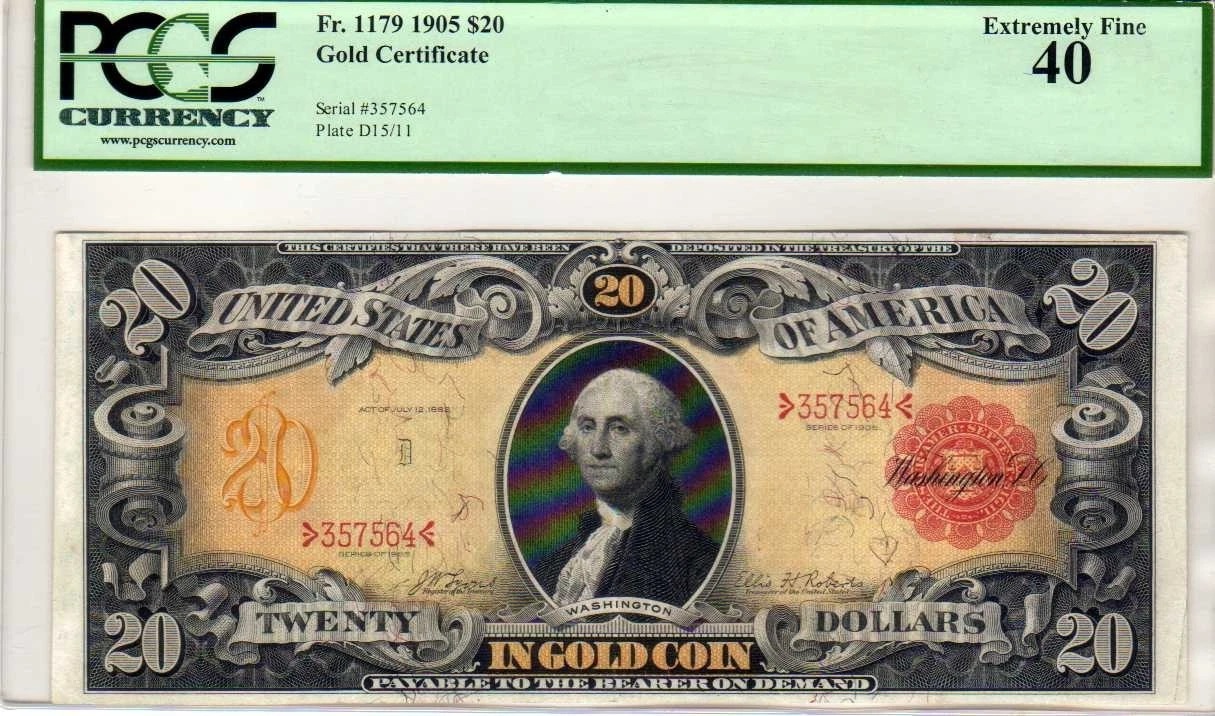
📷 Image source: eBay. Images are selected by AI to represent the article topic and may not depict the exact note(s) described.
Two Notes, Two Histories, Two Very Different Grades
Imagine two 1928 $100 Federal Reserve Notes sitting side by side on a grading table. Both show visible impairment. Both are clearly not Uncirculated. But one will grade VF-25 while the other receives a “Net” or “Details” designation that dramatically reduces its market value. The difference lies not in how much damage each note shows, but in what kind of damage it shows and how that damage got there.
This is one of the most nuanced judgments in all of paper money grading, and it trips up collectors at every level. Graders at PCGS Currency, PMG, and legacy services like NASCA all apply a conceptual framework that separates organic, use-related wear from artificial or human-caused impairment. Learning to see through their eyes is essential for anyone buying, selling, or submitting notes for certification.
The Fundamental Distinction: Organic vs. Artificial Impairment
Graders use the concept of organic impairment to describe the natural, expected deterioration that results from a note fulfilling its intended purpose as a medium of exchange. Every fold, every softening of fiber along a crease line, every gentle fading of ink where fingers contacted the same spot hundreds of times, every minor edge nick from a cash register, all of these tell a story of legitimate use. They are honest. They are expected. And they are graded on the standard numeric scale from Poor-1 through Fine-35 and beyond.
Artificial impairment, by contrast, is anything that happened to the note outside the normal commerce cycle. A collector pressing a note under a hot iron to remove folds, someone washing a note with water or chemicals to brighten its appearance, a child writing a name in pencil across the face, a hole punch made by a Federal Reserve Bank canceling the note for destruction, rubber-stamp markings from a bank or business, adhesive tape applied over a tear, and even sophisticated paper repairs performed by professional conservators all fall into this category. These are details that must be disclosed because they represent an alteration of the note’s original state or an impairment not caused by normal use.
Before submitting a note to PMG or PCGS Currency, examine it under a raking light source held at a low angle to the surface. This side-lighting technique reveals pressed folds (which appear as creases without surface fiber disruption), counting machine marks, and subtle chemical cleaning that would not be visible under direct overhead light.
How Circulation Wear Presents Under Magnification
Understanding what honest wear actually looks like is the foundation of this entire discussion. When a note circulates, the paper fibers along fold lines compress and eventually begin to separate. Under 5x to 10x magnification, a genuine circulation fold shows a gradient of fiber stress, with disruption concentrated at the crease center and gradually tapering outward. The ink along that fold line may show fine fracturing or crazing that matches the fiber disruption exactly.
Heavy circulation produces overall limpness and a loss of paper body that collectors describe as the note having “no crispness.” This is caused by the absorption of skin oils, moisture, and general environmental contamination over thousands of transactions. The note’s surface develops a uniform, slightly gray patina. Color, particularly on older National Bank Notes, Legal Tender issues, and Silver Certificates with intricate engravings, fades evenly across the entire face rather than in isolated patches.
Edge wear on a circulated note is also revealing. True circulation produces micro-fraying and rounding along the entire edge perimeter, not just at corners. Corners themselves show a characteristic rounded compression from being pushed across counters and into wallet slots repeatedly. The wear is holistic and consistent, matching the grade you would assign based on fold count and surface quality.
The Telltale Signs of Artificial Impairment
Pressing is one of the most commonly encountered forms of artificial impairment in the hobby, and it is also one of the most deceptive. When a note is pressed, heat and pressure are used to flatten existing folds. The result is a note that appears crisper than its circulation history warrants. But graders know what to look for. A pressed note will typically show fold lines that are flat but lack the natural body of a truly uncirculated note. Under raking light, the ghost of the original crease is still visible as a slight valley in the paper surface. Critically, the fiber disruption along that ghost crease does not match what an uncirculated fold line would show. There may also be microscopic flattening of the printing ink that indicates the note was subjected to pressure after manufacture.
Cleaning is equally problematic and somewhat easier to detect. Chemical cleaning, whether with water, solvents, or commercial currency-cleaning products, strips the natural aging compounds from the paper surface and can cause the fibers to stiffen artificially. A cleaned note often shows an unnaturally bright or bleached appearance in areas where original toning should exist. Under UV light, cleaned notes frequently fluoresce differently than untouched examples, sometimes glowing more intensely or showing uneven fluorescence patterns that suggest selective treatment. The 1902 Plain Back National Bank Notes and the large-size Gold Certificates of 1905 through 1922 are particularly susceptible to cleaning attempts given their high collector values.
A long-wave UV lamp (365nm) is an inexpensive and invaluable grading tool. Most modern banknote papers fluoresce with a consistent blue-white glow. Areas that have been chemically treated, taped, or repaired will fluoresce differently, often appearing as dark patches, bright spots, or with a distinctly different color tone. This is the same technology professional graders use as a first-pass screening tool.
The Gray Zone: Impairments That Graders Debate
Not every case is clean-cut. There exists a genuine gray zone where graders must exercise professional judgment, and where reasonable experts can disagree. Consider a 1929 Type 1 National Bank Note that shows clear circulation wear consistent with a Fine-15 grade, but also has a small, faint pencil notation in a corner, possibly a bank teller’s counting mark from the 1940s. Is this a “Writing” details qualifier, or is it so minor and period-appropriate that it can be considered part of the note’s organic history?
PMG and PCGS Currency both have internal guidelines for these edge cases, but the published standards allow for grader interpretation. Generally speaking, contemporary markings made during the note’s circulation life (bank stamps, counting marks, Federal Reserve cancellations) are treated differently than post-issue collector-era alterations. A large purple Federal Reserve Bank handstamp canceling a note as “redeemed” is disclosed on the slab label but may not prevent a numeric grade in some contexts, while a collector’s penciled grade estimate on the back of a Gem CU note will almost certainly trigger a Writing qualifier.
Pinholes present another interesting case. A single pinhole on a pre-Federal Reserve era note might be considered consistent with typical bank storage practices, where notes were bundled and pinned together. Multiple pinholes, or pinholes in an unusual location, suggest something different. Context and period matter enormously.
How This Affects Market Value
The financial stakes of this distinction are significant. A 1923 $1 Silver Certificate (the famous “Porthole” note with the large portrait of George Washington) in VF-25 with no problems might sell for $300 to $500 in today’s market. The same note in VF-25 Details with a “Cleaned” designation might bring $80 to $150. At the high end, a 1928 $500 Federal Reserve Note graded PMG 64 EPQ can command five figures, while a 64 Details example of the same note might struggle to reach half that value.
For common-date notes where even problem-free examples are modestly priced, the details penalty is less dramatic in absolute dollar terms but often represents an even larger percentage discount. Collectors building type sets on a budget sometimes deliberately seek details-graded notes for affordable examples of rare types, provided the impairment is minor and visually acceptable.
When buying raw (ungraded) notes at shows or from dealers, ask specifically whether the note has been pressed, cleaned, or repaired. Reputable dealers will disclose known issues. If you plan to submit for grading, be aware that a note purchased as “original” that comes back with a Details designation is typically not returnable under most dealers’ policies, so do your own due diligence first.
Special Considerations for Specific Note Types
Certain series and types present unique grading challenges when it comes to this organic versus artificial distinction. Large-size notes from 1861 through 1928 were printed on heavier, rag-content paper with greater fiber density. These notes circulate differently and show wear patterns distinct from the lighter small-size notes introduced in 1929. A fold on an 1880 $1 Legal Tender Note creates fiber disruption that looks quite different under magnification than a fold on a 1935 Silver Certificate.
Confederate and obsolete bank notes, while outside the strict Federal currency category, are frequently encountered in mixed collections and present their own grading considerations. The paper quality varied enormously by issuer and period, and many Southern notes were intentionally “washed” or otherwise treated during the Reconstruction era to remove Confederate markings, creating a class of artificially impaired notes with a long history.
Error notes and star notes deserve special mention. Because these notes carry significant premium value, they attract a disproportionate share of pressing and cleaning attempts. A Gem CU misprint note is worth substantially more than a Fine example, creating strong financial incentive for artificial enhancement. Graders at major services report that high-value error notes receive additional scrutiny as a matter of standard practice.
| Note Type / Series | Impairment Concern | Problem-Free Value (VF) | Frequency of Issues |
|---|---|---|---|
| 1928 $500 FRN | Cleaning, pressing common | $3,500 to $6,000 | Highly Targeted |
| 1923 $1 Silver Cert. (Porthole) | Cleaning to brighten gray surfaces | $300 to $500 | Frequently Seen |
| 1905 $20 Gold Certificate (Technicolor) | Chemical cleaning of orange seal | $2,500 to $5,000 | Highly Targeted |
| 1902 Plain Back Nationals | Cleaning, tape repairs to splits | $150 to $600 | Frequently Seen |
| 1869 $1 Legal Tender (Rainbow) | Pressing, edge repairs | $500 to $1,200 | Frequently Seen |
| 1934 $1000 FRN | Pressing most common impairment | $4,000 to $8,000 | Highly Targeted |
| 1935A Hawaii $1 Silver Cert. | Writing, pinholes, light cleaning | $90 to $180 | Occasionally Seen |
| 1929 Type 1 Nationals (common banks) | Rubber stamps, teller markings | $40 to $100 | Very Common |
| Pre-1900 Demand Notes / Interest Bearing | Hole punches, margin repairs | $1,000 and above | Highly Targeted |
Practical Steps for Collectors Evaluating Raw Notes
Developing an eye for this distinction takes time and deliberate practice. The single most valuable exercise is handling certified notes at both ends of the spectrum: notes in holders designated as problem-free with EPQ or PPQ designations, and notes in holders with specific Details qualifiers. Comparing them directly, under different lighting conditions and with magnification, builds the visual vocabulary that makes independent assessment possible.
Build a reference library. The Standard Catalog of United States Paper Money by Schwartz and Shafer, the PCGS Banknote Grading Standards guide, and PMG’s published grading standards are all essential references. The American Numismatic Association’s grading standards for paper money, while somewhat dated in their application to modern slabbed notes, provide an excellent conceptual foundation.
When attending currency shows, take advantage of the opportunity to watch experienced dealers examine raw notes. Ask questions. Most veteran collectors are generous with their knowledge, and there is no substitute for real-world mentorship when developing grading skills in this nuanced area.
Conclusion: The Story a Note Tells
At its core, the distinction between handling damage and circulation wear is about honesty and provenance. A note that circulated through a small-town bank in rural Nebraska for thirty years before retirement tells one kind of story. A note that sat in a collection for decades, was pressed by an optimistic seller, and entered the market misrepresented as something finer than it is, tells a very different story. The grader’s job is to read both stories accurately and reflect them truthfully in the grade.
For collectors, understanding this distinction means making smarter purchases, submitting notes with realistic expectations, and ultimately building collections whose quality is genuine and whose value is sustainable. In a hobby built on authenticity, knowing the difference between a note that was well-used and one that was poorly handled is not just a technical skill. It is the foundation of the entire enterprise.