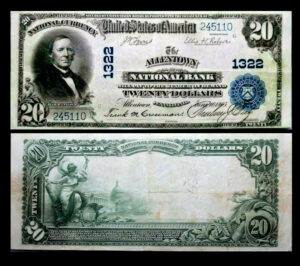
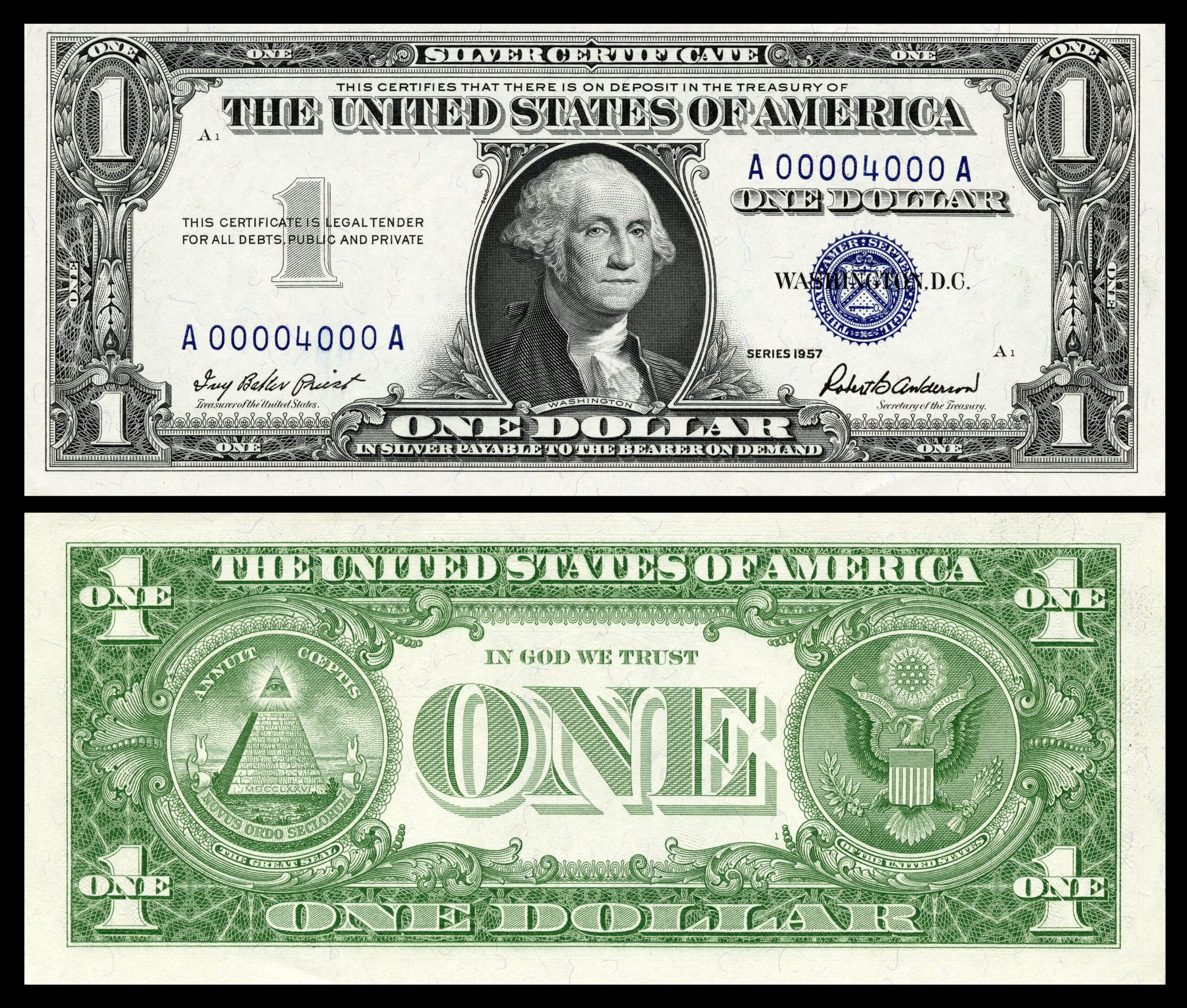
📷 Image source: AI generated. Images are selected by AI to represent the article topic and may not depict the exact note(s) described.
A collector once brought a stunning 1899 $5 Silver Certificate, the iconic “Running Antelope” note, to a major auction house expecting a strong grade. The paper looked crisp, the colors vivid, the margins wide. The graders’ UV lamp told a different story: the entire obverse had been chemically washed, the reverse pressed under heat, and a faint fold running diagonally across Lincoln’s portrait had been skillfully erased. What should have graded Fine 15 sold as a raw note at a fraction of its potential value once the treatment was disclosed. That single experience illustrates why every collector, from someone who just bought their first $1 Legal Tender to a seasoned specialist in Territorial National Bank Notes, must understand paper conservation at a deep level.
Why This Topic Matters More Than Ever
The currency market has never been more sophisticated, and paradoxically, that sophistication cuts both ways. Third-party grading services like PMG (Paper Money Guaranty) and PCGS Currency have elevated standards enormously since PMG’s founding in 2005 and PCGS Currency’s expansion through the 2000s. But the same market forces that reward high-grade notes, a PMG 65 EPQ (Exceptional Paper Quality) 1901 $10 Bison Legal Tender, Fr. 122, can command $18,000 to $30,000 compared to $2,500 for a Fine example, create powerful financial incentives for deceptive alteration. Understanding what is acceptable, what is disclosed, and what is outright fraud is not optional knowledge. It is self-defense.
The Paper Money Paper Itself: A Foundation for Understanding
United States currency from the Civil War era through today has been printed on a distinctive linen-cotton fiber blend, supplied under contract originally by Crane and Co. of Dalton, Massachusetts, a relationship dating to 1879. This paper is fundamentally different from wood-pulp papers in its aging characteristics, its response to moisture and chemicals, and its behavior under ultraviolet light. Pre-Federal Reserve large-size notes printed between 1861 and 1928 used paper with slightly varying fiber compositions and sizing agents, which affects how they respond to treatments. Modern small-size notes since Series 1928 incorporate additional security features including embedded security threads from Series 1990 onward, color-shifting inks introduced in 1996, and microprinting that can be disturbed or destroyed by aggressive cleaning.
Understanding the substrate is the starting point for understanding conservation. Paper degrades through three primary mechanisms: acidic hydrolysis (breakdown from internal acid content or environmental acid exposure), oxidative yellowing from lignin compounds and pollution, and physical damage including tears, folds, and losses. Legitimate conservation addresses these mechanisms without altering the note’s fundamental character. Fraudulent restoration tries to mask evidence of these mechanisms to deceive buyers about the note’s actual condition.
Before purchasing any large-size note valued above $500, ask the seller specifically whether the note has been “conserved, cleaned, or treated in any way.” A reputable dealer will answer directly. If the response is evasive or the note is raw (ungraded), factor the cost of third-party grading into your offer price, and be prepared for a conservation designation to reduce value significantly.
Legitimate Archival Conservation: What Is Actually Acceptable
The numismatic community, following the lead of museum conservation practice, recognizes a narrow set of treatments as legitimate provided they are disclosed. The American Institute for Conservation (AIC) publishes ethics guidelines that professional paper conservators follow, and the leading third-party grading services use these standards as a framework for their own policies.
Humidification and Flattening
A note that has been stored folded, rolled, or under pressure for decades may have deeply set creases or a pronounced curl. Professional humidification, introducing controlled moisture vapor into a sealed chamber to relax the paper fibers, followed by gentle drying under light pressure between blotters, is considered acceptable archival practice. Crucially, this process does not remove folds that have broken paper fibers; it only relaxes the paper to lie flat. A proper humidification does not improve a note’s grade, because the fiber damage from the original fold remains visible. When done correctly, humidification is essentially invisible and is rarely noted by graders unless overdone. The distinction: a properly humidified note lies flat but retains all evidence of its actual wear. A fraudulently pressed note has had fiber damage mechanically obscured or chemically treated before pressing.
Removal of Surface Contaminants
Professional conservators may use dry methods, such as soft natural-hair brushes, soft vinyl erasers designed for archival use, or specific dry cleaning sponges, to remove loose surface dirt without disturbing the paper or printed inks. This is analogous to dusting a painting. This type of treatment is generally not disclosable in the numismatic context because it does not alter the paper’s condition characteristics. The critical boundary is the word “loose.” Grime embedded in the paper fibers, staining from oils or biological matter, and foxing cannot be addressed by dry cleaning without crossing into chemical treatment territory.
Backing and Tear Repair
For notes with tears, losses, or areas of fragile paper, a conservator may apply archival Japanese tissue from the reverse using a reversible adhesive such as wheat starch paste or methylcellulose. This treatment is considered acceptable and is fully disclosed by grading services, who will note “repaired” or “restoration” on the certification label. A note with a professionally repaired tear on a rare variety, say a Fr. 330a 1880 $500 Legal Tender of which fewer than a dozen are known, may still be highly collectible and catalogued by major auction houses at strong prices, provided the repair is fully disclosed and documented. The 2013 Heritage Auctions sale of a PMG 15 NET (Net grade, repaired) example of the Fr. 330a realized $282,000, demonstrating that even restored rarities command serious money when the restoration is honest.
PMG uses the designation “NET” (Net Grade) when a note has problems that affect its grade, and adds specific qualifiers like “Repaired,” “Restored,” or “Cleaned” to the label. A note graded “PMG 35 NET Restored” is not the same as a PMG 35. The NET grade reflects what the note would grade if the problems were removed, but the actual market value reflects the restored status. Always read the full PMG or PCGS label, not just the numeric grade.
Deacidification
For notes stored in acidic environments or showing early signs of acidic degradation (browning, brittleness), professional conservators may apply deacidification sprays or solutions using compounds such as magnesium bicarbonate or Bookkeeper spray, a magnesium oxide-based product developed by the Library of Congress. This treatment neutralizes existing acid and deposits an alkaline buffer to prevent future degradation. Properly applied to the reverse of a note, this is considered archival best practice for long-term preservation and does not typically affect numismatic grade assessment. However, amateur application of deacidification products directly to the obverse of a note, or using incorrect concentrations, can leave visible residue or alter surface sheen.
Fraudulent Restoration: The Practices That Destroy Value and Trust
The line between conservation and fraud is not always obvious to the untrained eye, which is precisely the point. The most sophisticated alterations are designed to be undetectable without laboratory-grade equipment. Here are the key fraudulent treatments collectors must recognize.
Chemical Washing and Bleaching
Washing a note in dilute sodium hypochlorite (bleach), hydrogen peroxide solutions, or various proprietary chemical mixtures can dramatically brighten yellowed or soiled paper. The results can look spectacular to the naked eye. Under UV light, however, chemically treated areas fluoresce differently from untreated paper, creating patterns that experienced graders identify immediately. Chemical washing also alters the paper’s pH, makes fibers brittle, can lighten or alter printed ink colors, and destroys the original surface “body” of the paper that contributes to the EPQ designation. No chemical washing of any kind is considered acceptable by PMG or PCGS Currency, regardless of how well it is done.
Pressing and Ironing
Applying heat and pressure to a circulated note can temporarily reduce the visibility of folds and give worn paper a false crispness. Heat irons, hydraulic presses, and heated platens have all been documented in fraud cases. The deception works because fold lines in paper involve both a crease in the outer fibers and compression of inner fibers; heat and pressure can temporarily re-expand the compressed fibers. Under magnification, however, the fiber structure at a fold point never fully recovers, and the characteristic “waffling” pattern from pressed folds is detectable. Additionally, artificially pressed notes often show microscopic ink cracking where the printed surface was stressed by the pressing process.
Trimming
Perhaps the simplest and most common form of large-size note fraud involves trimming the margins with a sharp blade to make a note appear to have wider, more uniform margins consistent with a higher grade. A skilled trimmer can remove as little as 0.5mm from one or more edges while keeping the cut lines imperceptible. Experienced graders use calipers and note-specific measurement references, because standard dimensions for large-size notes (approximately 7.42 x 3.13 inches for pre-1928 issues) and small-size notes (6.14 x 2.61 inches from 1928 onward) are well-documented. A note that measures even 0.1 inches short in any dimension is suspect.
Color Enhancement and Ink Touching
Faded red Treasury seals on Series 1878 through 1880 Legal Tenders, or worn blue serial numbers on early National Bank Notes, are sometimes “touched up” with period-matching inks or watercolors. This is outright fraud and significantly criminal in the context of notes that derive part of their value from authentication of original government printing. Infrared reflectography, available to major grading services, can distinguish original Bureau of Engraving and Printing inks from any applied supplemental coloring, even when visually indistinguishable.
Build a basic detection toolkit: a 10x loupe or jeweler’s loupe, a 365nm UV flashlight (available for under $20), and a fine digital caliper. The UV light is particularly valuable for detecting chemical washes on older notes and for checking whether serial numbers or seals have been enhanced. Always examine raw notes under UV before purchasing, and compare margins against published measurements for the specific series.
Storage as the Best Conservation
The most effective conservation is prevention. Currency stored improperly for decades arrives at auction with problems that no legitimate treatment can fully address. The archival standard for currency storage calls for individual holders made of inert polyethylene, polypropylene, or Mylar (biaxially-oriented polyester), kept at 65-70 degrees Fahrenheit with 30-50% relative humidity, away from light and atmospheric pollutants. PVC-based plastic sleeves, still commonly sold at general hobby stores, off-gas hydrochloric acid over time and will cause irreversible damage to paper fibers and inks. The Mylar D sleeves used by major grading services in their slabs are archival grade. For raw storage, Currency Protective Sleeves from BCCS or similar archival-grade products are appropriate. Albums with pages marketed specifically for paper money, such as those from Lighthouse or Guardhouse using archival-grade materials, are acceptable for display storage provided the collection is kept in a climate-controlled environment.
| Series / Fr. Number | Description | Est. Known Examples | Risk Level |
|---|---|---|---|
| Fr. 1 (1861 $5 Demand Note) | “Payable at” New York, Boston, Philadelphia, Cincinnati, St. Louis | Fewer than 150 total | Key Date |
| Fr. 122 (1901 $10 Bison Legal Tender) | Teehee-Burke or Napier-McClung signatures | Approx. 3,000-5,000 | Rare |
| Fr. 330a (1880 $500 Legal Tender) | Rosecrans-Huston brown seal | Fewer than 12 known | Key Date |
| Fr. 379a (1890 $1,000 Treasury Note) | Rosecrans-Huston, “Watermelon” reverse design | Approximately 6 known | Key Date |
| Fr. 224 (1869 $1 Legal Tender “Rainbow”) | Bright multicolor inks, commonly washed | Several hundred | Rare |
| Fr. 547 (1896 $2 Silver Certificate “Educational”) | Science presenting Steam and Electricity | Approximately 1,000-2,000 | Rare |
| National Bank Notes, 1st Charter Period (1863-1882) | Original Series and Series 1875, territorial banks especially | Varies; some banks: 1-5 notes | Scarce |
| Fr. 2221-g (1934A $500 FRN, Atlanta) | High-denomination, low survival rate | Fewer than 200 confirmed | Scarce |
| Fr. 2410 (1918 $500 FRN, Large Size) | All districts combined scarce | Under 100 across all districts | Key Date |
| Fr. 91 (1878 $50 Silver Certificate) | Counterfeit and restoration attempts documented | Approximately 20-30 known | Key Date |
Working With Professional Paper Conservators
For collectors who own genuinely significant notes in need of legitimate conservation, the American Institute for Conservation maintains a directory of certified paper conservators at culturalheritage.org. A conservator who specializes in works on paper and documents will be familiar with currency-specific considerations. Expect a written treatment proposal before any work begins, a condition report documenting the note’s state before treatment, and complete treatment records including materials used and techniques applied. This documentation is invaluable for any future third-party grading submission, as graders may ask about prior treatment history on submitted items. Legitimate conservators will not perform treatments intended to deceive; if you request a wash or press to improve the apparent grade, any ethical conservator will decline.
The Third-Party Grading Protection
The single most effective protection against buying fraudulently restored notes is third-party grading through PMG or PCGS Currency. Both services use multi-stage examination protocols combining visual inspection under variable magnification, UV fluorescence examination at multiple wavelengths, and in cases of suspected alteration, additional analytical techniques. Notes that have been chemically treated, pressed, trimmed, or otherwise altered will receive a NET grade with explicit notation of the problem, or in cases of severe fraud, will be returned un-graded (“body-bagged”) with a note explaining why certification was declined. For notes valued above $300, the cost of grading ($20-$65 per note depending on service tier and declared value) is almost always worth the protection and the market liquidity that a slabbed note provides. The EPQ (Exceptional Paper Quality) designation, awarded to notes that show no evidence of cleaning, pressing, or other treatments AND retain original paper quality consistent with their grade, commands meaningful premiums: typically 20-40% above non-EPQ examples at the same numeric grade for desirable series.
When inheriting or purchasing a collection of raw notes, submit the highest-value pieces to PMG or PCGS Currency before attempting to sell or trade them. Not only does this protect buyers, but it protects you: if a previously treated note is later discovered to have problems, undisclosed at point of sale, the seller may face legal liability under fraud statutes. Third-party grading provides a documented baseline that protects all parties in subsequent transactions.
A Practical Decision Framework
When a collector encounters a note that has received some form of treatment, the decisions are not always black and white. A disclosed, professionally conserved 1869 $1 Rainbow Legal Tender (Fr. 18 or Fr. 19) with a Japanese tissue repair on a reverse corner loss may still be a worthwhile acquisition at the right price, given that fewer than a few hundred examples are known across all signature varieties. A chemically washed common Series 1963 $1 Federal Reserve Note, of which billions were printed, is simply not worth buying at any significant premium. The framework is: rarity first, disclosure second, price adjustment third. The rarer the note, the more acceptable legitimate disclosed conservation becomes, because perfect examples may not exist. The more common the note, the less tolerance there should be for any alteration, because pristine originals exist and are affordable.
Conclusion: Integrity Is the Foundation of the Hobby
Paper money collecting rewards patience, knowledge, and integrity in equal measure. The collector who takes time to learn detection techniques, to demand disclosure from sellers, and to store their own collection properly is not just protecting their investment. They are contributing to the authenticity and trustworthiness of the market that makes the hobby viable for everyone. Fraudulent restoration is not a victimless crime; it erodes the premium that honest, original notes deserve and makes every raw note transaction slightly riskier. Whether you collect $1 Silver Certificates from the 1890s or Series 2017 $100 Federal Reserve Notes, the principles are identical: original is irreplaceable, disclosure is non-negotiable, and knowledge is the only reliable protection against deception.