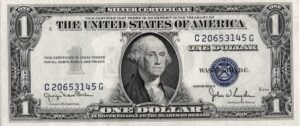
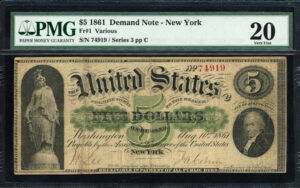
Walk into any major currency show and you will find collectors clustered around the error note dealers, squinting through loupes at miscut margins and ink smears, debating whether a particular fold-over qualifies as a dramatic specimen or merely a mediocre one. Error notes attract a devoted following precisely because they sit at the intersection of two collecting disciplines: condition grading and error type identification. Understanding how the major third-party grading services, Professional Coin Grading Service Currency (PCGS Currency) and Paper Money Guaranty (PMG), handle these unusual pieces is essential knowledge for anyone serious about building a meaningful error note collection.
The Fundamental Question: Does the Error Change the Grade?
The short answer is yes, but not in the way many newer collectors assume. Both PMG and PCGS Currency apply the standard 70-point Sheldon scale to error notes exactly as they would to a normal Federal Reserve Note or United States Note. A miscut $1 Series 1995 Federal Reserve Note with full original paper crispness will receive a grade of 65 Gem Uncirculated or better if its surfaces are free of handling marks. The miscut itself is not a grading deficiency; it is a manufacturing characteristic. This distinction is foundational.
Where confusion arises is that some printing errors inherently involve physical characteristics that graders must interpret carefully. A dramatic board break, for instance, leaves the paper with a rigid, embossed texture where the blanket roller pressed against a broken printing plate. That texture is part of the error, not a post-production crease. Similarly, a wet ink transfer, sometimes called a butterfly or ink smear error, may leave irregular ink deposits that look superficially like a handling flaw. Both services train their graders to distinguish between manufacturing-origin characteristics and collector-caused damage.
When submitting an error note, always include a brief description of the error type on your submission form. Both PMG and PCGS Currency graders appreciate the context, and it reduces the risk of a manufacturing characteristic being misidentified as post-production damage. Use Frederick Bart’s catalog terminology for precision.
How PMG Labels Error Notes
PMG uses a two-part designation system on error notes. The numeric grade appears in the upper portion of the label, and the error type descriptor appears below it in a separate line. PMG recognizes approximately thirty distinct error categories in its published holder descriptions, ranging from the broad (“Printing Error”) to the highly specific (“Inverted Third Print,” “Offset Printing,” “Mismatched Serial Numbers,” and “Insufficient Inking”). For particularly dramatic or compound errors, PMG may add a “Spectacular” or “Major” qualifier.
PMG’s Exceptional Paper Quality (EPQ) designation is awarded separately and carries significant weight in the error note market. An error note graded PMG 64 Choice Uncirculated EPQ commands a meaningfully higher premium than the same grade without EPQ, because it certifies that the paper has not been pressed, cleaned, or chemically treated. Given that error notes were often passed around in amazement before being set aside, finding examples with full original surfaces is genuinely challenging.
How PCGS Currency Handles Errors
PCGS Currency similarly applies its standard grading scale and appends error descriptors to the holder label. One notable difference is that PCGS uses its Banknote Grading Standards (BGS) framework, which emphasizes a somewhat more granular approach to surface quality assessment. PCGS Currency holders for error notes include the grade, error type, and in many cases a brief visual descriptor of what the error entails. PCGS also awards a PPQ (Premium Paper Quality) designation analogous to PMG’s EPQ.
For collectors building registry sets, both services maintain separate error note registry categories, which has driven competitive grading of high-quality specimens since the mid-2000s. The PCGS Currency registry for error notes was substantially expanded in 2009 to include sub-categories for fold errors, cutting errors, and overprint errors separately.
If you own a raw error note that you believe grades 64 or higher with original paper, EPQ or PPQ designation can add 20 to 40 percent to market value in many error categories. The submission fee is almost always worth it for genuinely uncirculated examples from pre-2000 series.
Major Error Categories and How Grading Interacts with Each
Fold Errors and Fold-Over Errors
Fold errors occur when the paper feeds into the press with an unintentional fold, resulting in an unprinted area on one side and a mirror image printed on the flap. These are among the most visually dramatic errors and also among the most grade-sensitive. The fold crease itself is a manufacturing feature, but the condition of the paper on either side of that crease matters enormously. A fold-over error on a Series 1977A $10 Federal Reserve Note (Fr. 2025-B, for example) where the unprinted tab is crisp and the crease sharp will grade significantly higher than one where the flap has been repeatedly opened and closed by a previous owner. Graders examine the fold crease under magnification to distinguish a single, sharp manufacturing fold from evidence of post-production handling.
Miscut and Butterfly Cuts
Miscut notes are produced when the cutting guillotine misaligns between sheets, resulting in a note that is either too narrow, too wide, or shows portions of adjacent notes on one or more edges. PCGS Currency and PMG both label these as “Miscut” with descriptors indicating the severity (minor, major, or dramatic) and direction. A dramatic miscut showing the full serial number of an adjacent note is far rarer and more valuable than a note that is simply a few millimeters off-center. The grade reflects condition of the actual note paper, while the label communicates the error’s visual drama.
Offset Printing Errors
Offset errors occur when wet ink from one sheet transfers to the reverse of the next sheet passing through the press, or when the printing blanket picks up and deposits ink incorrectly. The 1990s and early 2000s produced a notable number of offset errors on Series 1988A and 1993 small-size Federal Reserve Notes. A dramatic offset showing a nearly complete face design printed offset on the back of the note is a major error. Graders must assess whether the offset deposit is evenly adhered to the paper fiber (manufacturing origin) or sits on the surface in a way suggesting a post-production rubber-stamp or ink stamp, which would be an alteration requiring a “Details” designation.
Inverted Overprints
Arguably the most celebrated error category, inverted overprints occur when the third printing pass (the one that applies the Federal Reserve District seal, Treasury seal, serial numbers, and signatures) runs with the note oriented 180 degrees from its correct position. The result is a note where the overprint is upside down relative to the face design. These errors are cataloged specifically in the Friedberg reference: the famous Series 1963A $1 Federal Reserve Notes with inverted overprints (Fr. 1900-B*) from the New York district have sold for $3,500 to $9,000 depending on grade and whether the example is a star note. The 1969C $100 inverted overprint that realized $396,000 at Heritage Auctions in January 2021 was graded PMG 40 Extremely Fine, demonstrating that dramatic rarity can overcome circulated grade in pricing.
For inverted overprint notes, always cross-reference the serial number against published census data before purchasing. Both PMG and PCGS Currency maintain population reports, and for rare errors like inverted overprints, knowing how many examples exist in each grade is critical to evaluating dealer asking prices. A note graded PMG 30 Very Fine might still be the finest known for that district and series.
Missing Print Errors
Notes that are missing one of their three printing passes (face, back, or overprint) are classified by which print is absent. Back-print-missing errors, where the entire green reverse is absent and the note is blank on one side, are frequently encountered on Series 1977 through 2003 small-size notes. The condition of the blank side is especially important: original paper surface with no handling rubs will earn EPQ or PPQ designation, while a blank side that shows evidence of having been used as scrap paper will limit the grade regardless of the front’s condition.
Mismatched Serial Numbers
Mismatched serial number errors, where the two serial numbers on the face of a note do not match, are produced when a numbering wheel in the overprinting press skips a position or malfunctions. These are graded entirely on their physical condition, with the mismatch noted on the label. The most dramatic examples show serials that differ by more than one digit. A Series 1985 $1 Federal Reserve Note (Fr. 1910-L) with mismatched serials in PMG 65 EPQ sold for $2,640 at a Stack’s Bowers auction in 2022.
The Details Designation and Error Notes
Both PMG and PCGS Currency use a “Details” grade when a note has been cleaned, pressed, repaired, or otherwise altered after leaving production. This is where the distinction between error characteristics and damage becomes critical for error notes. A fold-over error note that was subsequently pressed flat by a previous owner will receive a “Details – Pressed” designation. A miscut note with a small pen mark added by a prior owner receives “Details – Writing.” The Details designation removes the note from competition in most registry categories and dramatically reduces market value.
The practical implication for buyers is to be cautious when purchasing raw error notes. Some sellers, knowingly or not, have subjected dramatic error notes to amateur pressing or cleaning to make them more visually appealing, inadvertently destroying their gradeable status. Purchasing already-slabbed examples from reputable auction houses for significant error purchases is strongly advisable.
| Series / Date | Error Type | Approx. Known Examples | Rarity |
|---|---|---|---|
| 1963A $1 FRN (Fr. 1900-B) | Inverted Overprint, New York | Fewer than 20 confirmed | Key Date |
| 1969C $100 FRN | Inverted Overprint | 5 to 8 known | Key Date |
| 1988A $1 FRN (Various Districts) | Offset Face on Back | Dozens known per district | Scarce |
| 1977 $10 FRN | Fold-Over Error, Major | Several dozen across districts | Scarce |
| 1985 $1 FRN (Fr. 1910-L) | Mismatched Serial Numbers | Under 50 confirmed | Rare |
| 1993 $20 FRN (Various) | Back Print Missing | 100 to 200 known | Scarce |
| 1995 $1 FRN (Multiple Districts) | Miscut, Dramatic | Fairly plentiful | Common |
| 2003 $2 FRN | Face Print Missing | Under 30 known | Rare |
| 1974 $1 FRN (Various) | Board Break Error | Moderate supply | Scarce |
| 2009 $100 FRN | Insufficient Inking (Major) | Under 15 confirmed | Key Date |
Pricing Dynamics: Grade vs. Error Severity
In most areas of currency collecting, grade is the primary driver of value. With error notes, the relationship is more complex. A dramatic inverted overprint in PMG 20 Very Fine will almost always outsell a minor miscut in PMG 65 Gem Uncirculated. The community has developed an informal hierarchy of error desirability: inverted overprints and missing prints at the top, followed by major fold-overs and mismatched serials, then significant offsets and board breaks, and finally minor miscuts and edge-only errors at the more accessible end of the market.
Within a given error type and series, however, grade becomes decisive. Two examples of a Series 1993 $20 back-print-missing error will differ sharply in price if one grades PMG 58 Choice About Uncirculated EPQ and the other grades PMG 20 Very Fine. Population report data from both services consistently shows that most circulated-grade error notes were spent and retrieved from circulation, meaning uncirculated examples of any error type carry a substantial premium.
Check the PMG and PCGS Currency population reports before bidding competitively on any error note. For popular error types like back-print-missing $1 notes from the 1990s, the populations can be surprisingly large, which moderates premiums. For unusual denominations like $50 or $100 with the same error type, populations are often a fraction of the size, and prices reflect that scarcity accordingly.
Building an Error Note Collection with Graded Examples
For collectors approaching error notes systematically, slabbed examples offer several advantages beyond authentication. The holder protects fragile areas of the note, particularly important for fold-over errors where the tab can be vulnerable. Registry competition, while sometimes criticized for driving prices artificially, also provides a transparent benchmark of what the finest known examples look like. And when it comes time to sell, a PMG or PCGS Currency holder with a clear error designation and grade removes the authentication burden from the buyer, expanding your potential audience substantially.
A focused collection might target a single error type across multiple series and denominations, such as assembling all known graded examples of mismatched serial number notes from Series 1977 through 2003. Alternatively, a district-focused approach targets all gradeable error types from a single Federal Reserve Bank, such as the Chicago (G) or San Francisco (L) districts. Either approach benefits from the standardized vocabulary and population data that PMG and PCGS Currency provide.
Conclusion
Grading error notes is genuinely a specialized skill, and the major third-party grading services have developed nuanced standards that reward collectors who understand the distinction between manufacturing characteristics and post-production damage. The grade matters, the error type matters, and the combination of the two determines value in ways that make error note collecting one of the most intellectually engaging pursuits in the hobby. Whether you are attracted to the visual drama of a $100 inverted overprint or the more accessible entry point of a crisp miscut $1 in Gem Uncirculated, understanding how PMG and PCGS Currency think about these notes will make you a more confident buyer, a more effective seller, and ultimately a more satisfied collector.